




Entuziast Blog
0
17
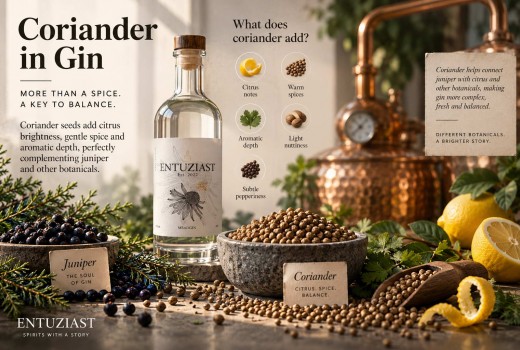
When people talk about gin, juniper is almost always the first thing they mention.
And that makes sense: juniper character defines the category itse..
0
15
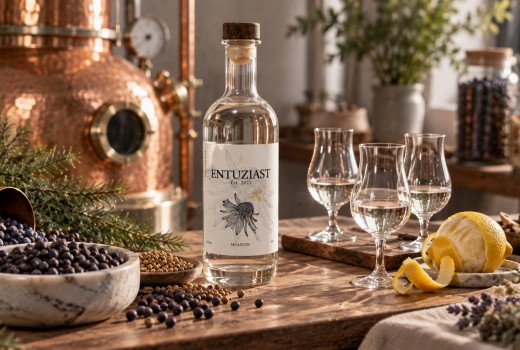
On gin labels, you may see different terms:
Gin;
Distilled Gin;
London Dry Gin;
Dry Gin;
Craft Gin;
Contemporary Gin.
It ..
0
27
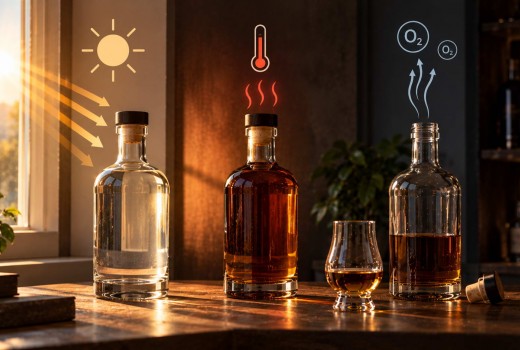
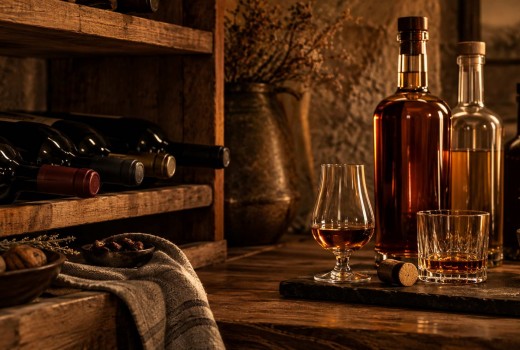
Strong alcohol seems like a very stable product.
A bottle can sit on a shelf for months or even years, and nothing appears to happen.
But that does..
0
27
With wine, you often hear the familiar rule:
a bottle sealed with natural cork should be stored on its side.
Sometimes this advice is automatically..
0
32
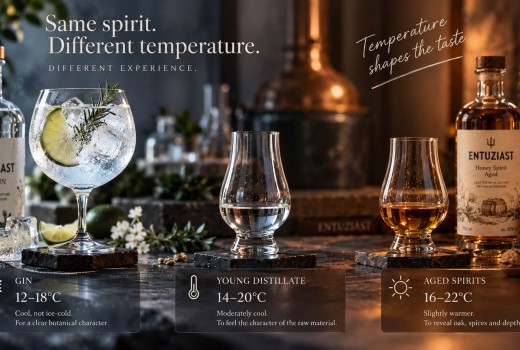
Temperature has a major effect on how we perceive alcohol.
The same drink can feel completely different at 5°C, 15°C and 22°C.
Cold suppresses arom..
0
27
You open a bottle of gin, whisky or distillate, pour a few glasses and put it back in the cabinet.
Six months later, you find it again.
Or a year l..
0
29
An opened bottle of strong alcohol can sit for months.
Sometimes — for years.
But that does not mean the drink remains completely unchanged the ent..
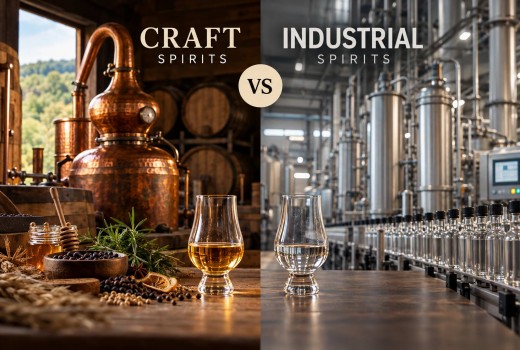
0
28
The word “craft” is everywhere today.
Craft beer.
Craft gin.
Craft distillate.
Craft liqueur.
Craft rum.
And it is very easy to start treating ..
0
29
On a bottle of aged spirits, the age statement can look very convincing.
3 years.
8 years.
12 years.
18 years.
And it is easy to come to a simpl..
0
29
On the label of a strong alcoholic drink, there is almost always one number people notice immediately.
40%.
43%.
46%.
50%.
And very often, that ..
0
30
A bottle of strong alcohol may contain dozens of words, numbers and designations.
Brand name, type of drink, strength, volume, country of origin, in..
0
33
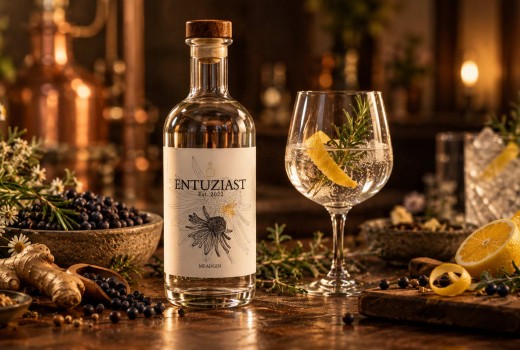
On a store shelf, gin may seem like a fairly simple category.
There is a clear bottle, the word Gin on the label, an alcohol strength somewhere arou..
0
26
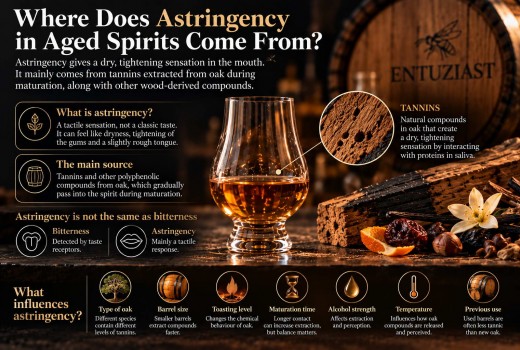
You take a sip of an aged distillate and notice an unusual sensation.
The mouth seems slightly drier.
The tongue and gums feel as though they have ..
0
32
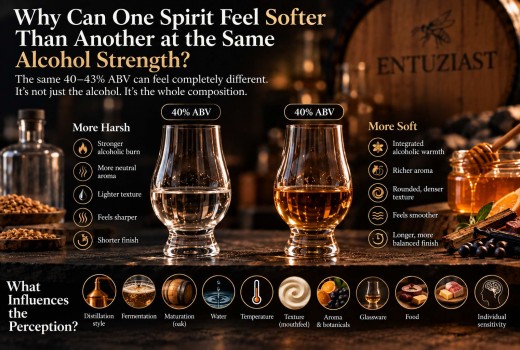
Two bottles show the same number on the label.
For example — 40%.
Or 43%.
You take a sip of the first drink, and it feels sharp, burning and stron..
0
40
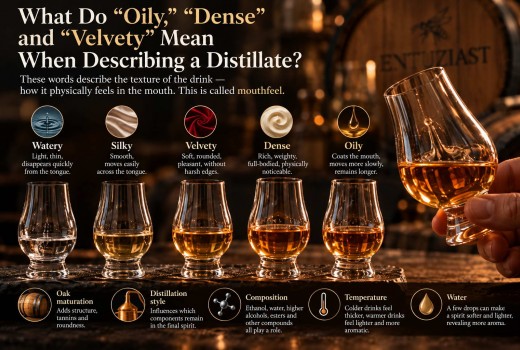
When tasting strong spirits, you may hear some strange-sounding words.
“Oily.”
“Dense.”
“Velvety.”
“Silky.”
“Watery.”
But there is no cooking o..
0
30
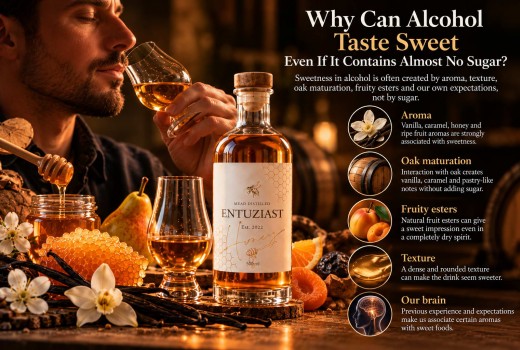
You take a sip of a distillate and think: “It tastes slightly sweet.”
Then you look at the ingredients and see no sugar, no syrup and no honey added..
0
32
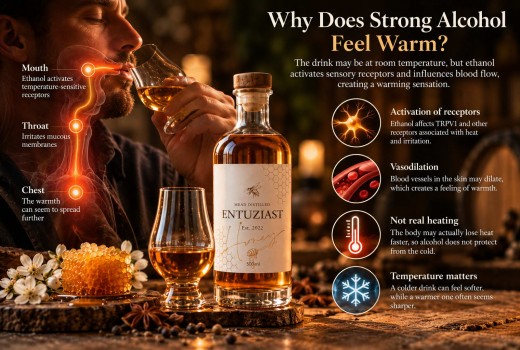
You take a sip of a strong distillate — and almost immediately you feel warmth.
First in the mouth.
Then in the throat.
A few seconds later, the w..
0
34
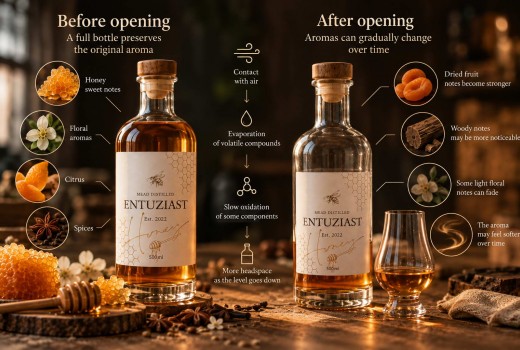
You open a bottle, pour the first glass and clearly remember the aroma.
A few weeks later, you return to the same bottle — and the drink seems sligh..
0
34
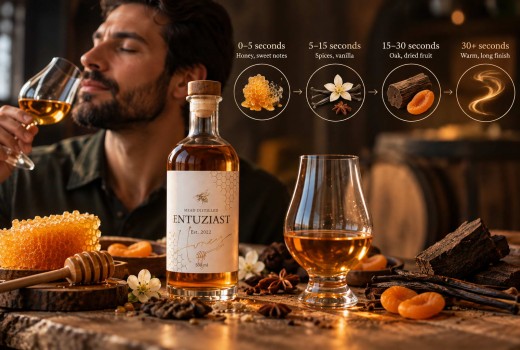
You take a sip, swallow the drink — but the flavour does not disappear.
For a few more seconds, you may still notice fruit.
Then spice appears.
Af..
0
35
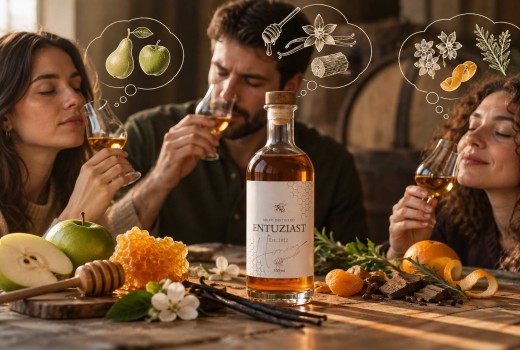
One person smells the glass and says, “Apple.”
Another immediately replies, “No, that’s pear.”
A third person detects flowers, honey or citrus peel..
0
29
In tasting notes for whisky, brandy, rum or another aged distillate, you will often see words such as vanilla, caramel, coconut, spices, chocolate or..
0
30
You pour a spirit into a glass, bring it to your nose — and suddenly you smell apple.
Or pear. Banana. Peach. Apricot. Citrus peel. Ripe berries.
T..
0
37
You pick up a bottle of craft spirit, hold it up to the light — and notice a small amount of sediment at the bottom.
Sometimes it is just a few tiny..
0
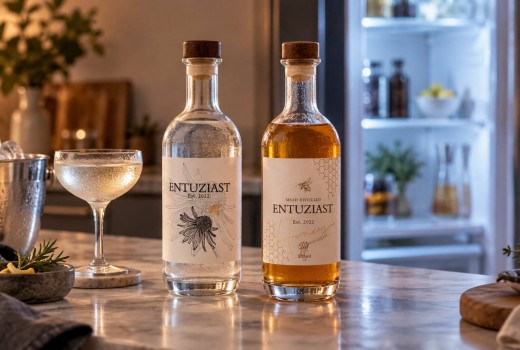
72
A bottle of gin is standing on the shelf, but before serving you want to chill it properly. This raises a perfectly reasonable question: can you simp..