





Tasting
Learn how to enjoy spirits at their best. Explore tasting techniques, serving temperatures, glassware, aroma evaluation, water addition, and the art of appreciating fine spirits.
0
91
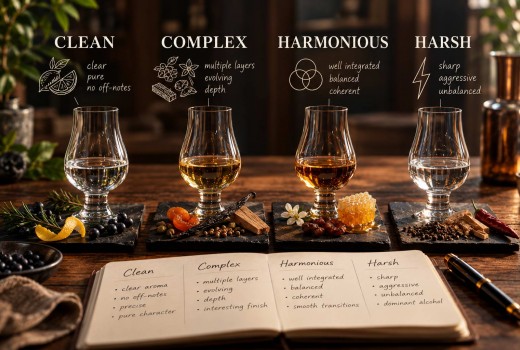
In tasting notes for strong spirits, certain words appear again and again.
They sound familiar — but in practice, different people may use them slig..
0
84
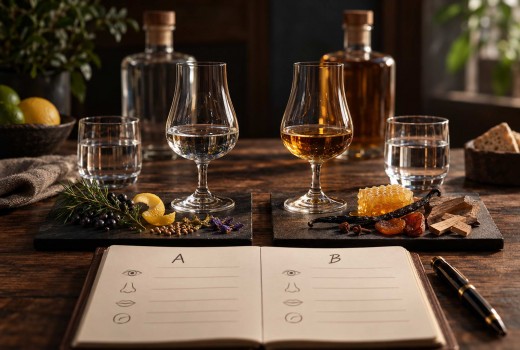
Comparing two strong spirits seems very simple.
Pour the first.
Taste it.
Pour the second.
Then choose the one you like more.
But if you want to..

0
95
During a tasting of strong spirits, the same situation happens surprisingly often.
The first sip feels:
sharp;
hot;
alcohol-forward;
..
0
87
The word “balance” appears constantly in tasting notes.
“A well-balanced gin.”
“A harmonious aged distillate.”
“The alcohol is well integrated.”
..
0
97
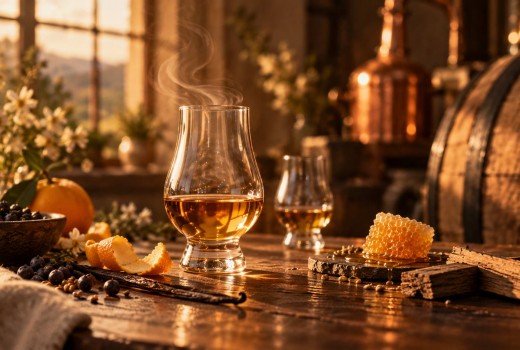
When tasting strong alcohol, people often say things like “vanilla taste,” “citrus taste,” “honey taste” or “juniper taste.”
But technically, a larg..
0
106
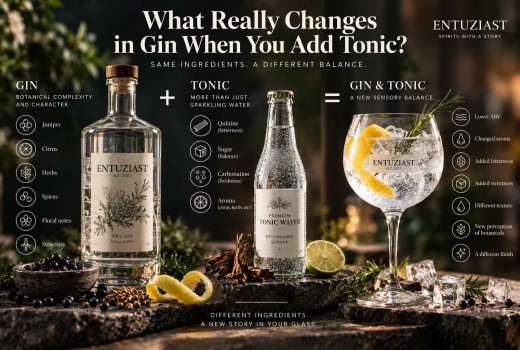
Gin & Tonic seems like a very simple drink.
Gin.
Tonic.
Ice.
Sometimes — a slice of lemon, grapefruit or another garnish.
But in reality, adding..
0
100
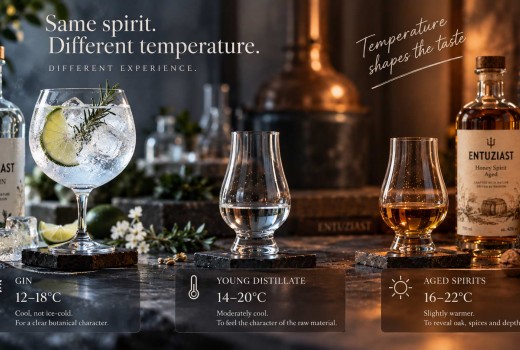
Temperature has a major effect on how we perceive alcohol.
The same drink can feel completely different at 5°C, 15°C and 22°C.
Cold suppresses arom..
0
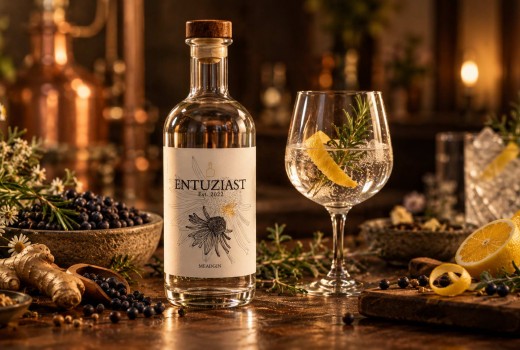
97
On a store shelf, gin may seem like a fairly simple category.
There is a clear bottle, the word Gin on the label, an alcohol strength somewhere arou..
0
87
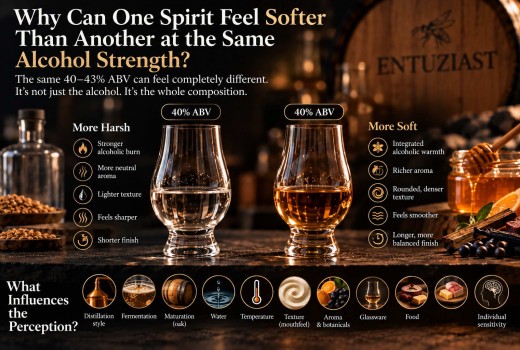
Two bottles show the same number on the label.
For example — 40%.
Or 43%.
You take a sip of the first drink, and it feels sharp, burning and stron..
0
109
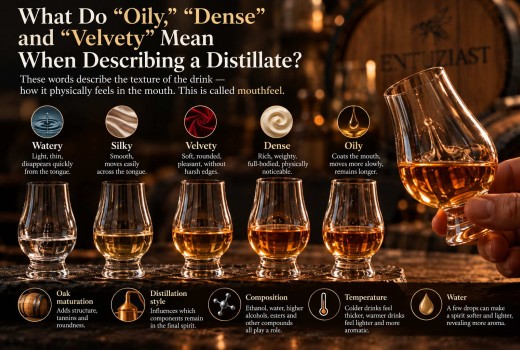
When tasting strong spirits, you may hear some strange-sounding words.
“Oily.”
“Dense.”
“Velvety.”
“Silky.”
“Watery.”
But there is no cooking o..
0
90
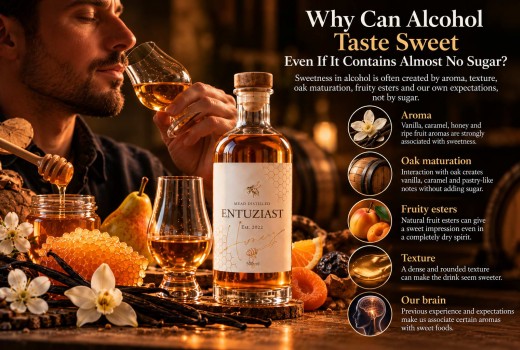
You take a sip of a distillate and think: “It tastes slightly sweet.”
Then you look at the ingredients and see no sugar, no syrup and no honey added..
0
84
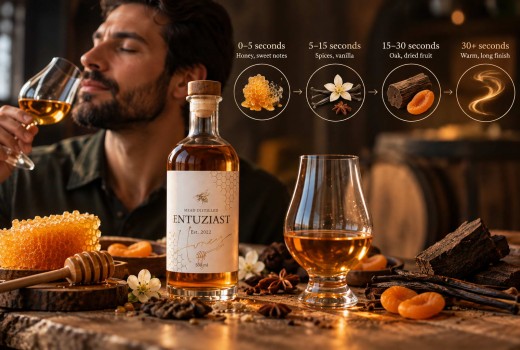
You take a sip, swallow the drink — but the flavour does not disappear.
For a few more seconds, you may still notice fruit.
Then spice appears.
Af..
0
76
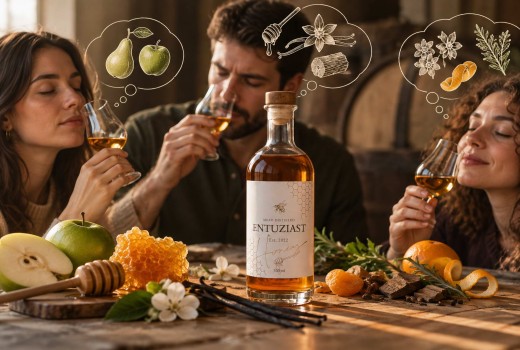
One person smells the glass and says, “Apple.”
Another immediately replies, “No, that’s pear.”
A third person detects flowers, honey or citrus peel..
0
140
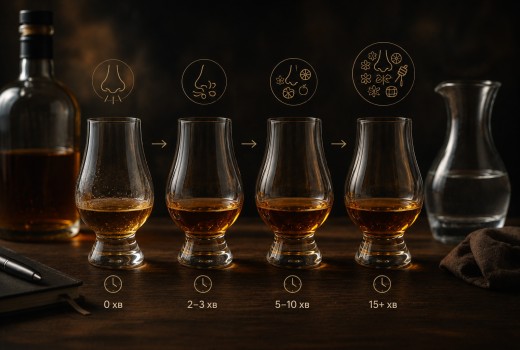
After pouring a strong spirit into a glass, it is tempting to smell and taste it immediately. However, the first impression does not always reveal t..
0
142
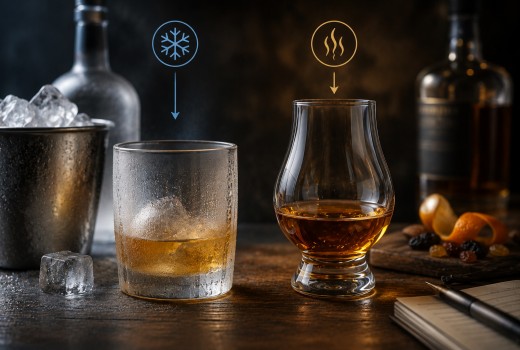
Chilled spirits often seem smoother and easier to drink. Cold temperatures reduce the sensation of alcohol burn, soften harshness, and make the firs..
0
161
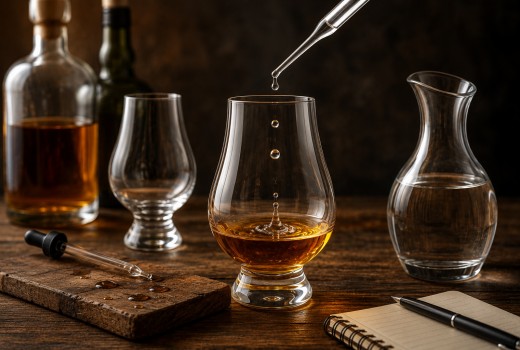
Adding water to strong spirits is sometimes seen as a mistake. Some people believe that good whisky, gin, or distillate should only be enjoyed neat ..
0
133
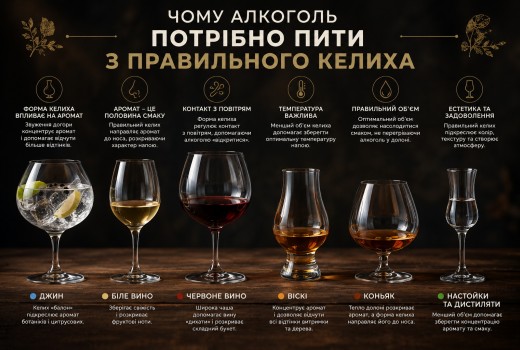
The right glass will not turn an ordinary spirit into an exceptional one, but it can help reveal more of the aroma and flavor already present in the..
0
147
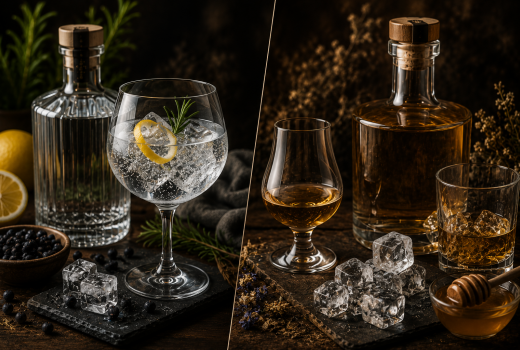
Ice - tradition or necessity?
One of the most common questions among connoisseurs of strong drinks is whether to add ice to gin or honey distillate. ..
0
157
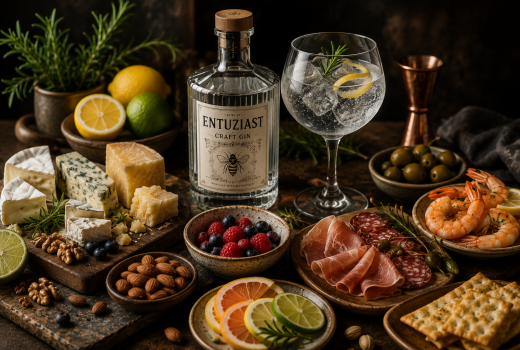
Do you need an appetizer for gin?
Gin has long ceased to be exclusively an ingredient for cocktails. Today, many craft and premium gins are tasted in..
0
155
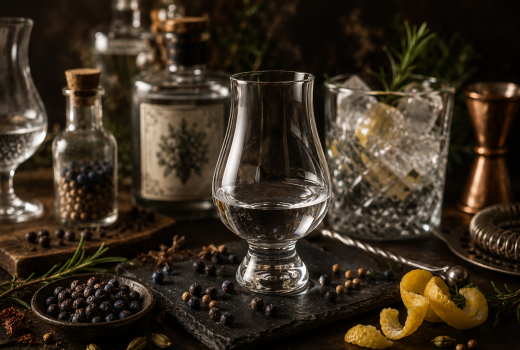
Tasting Gin is More Than Just a Sip
Most people are familiar with gin through the classic Gin & Tonic or a variety of cocktails. However, a quality g..
0
141
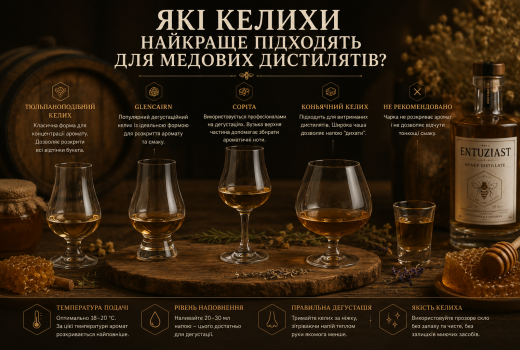
Why does the glass matter?
When tasting a honey distillate, attention is usually paid to the drink itself: its origin, aging, strength, or production..
0
139
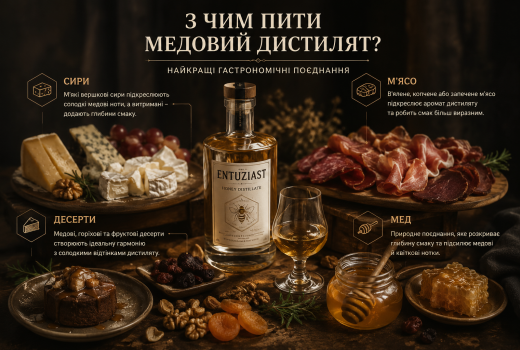
Honey distillate—a beverage that truly comes into its own when paired correctly
Honey distillate is a refined alcoholic beverage with a character all..
0
200
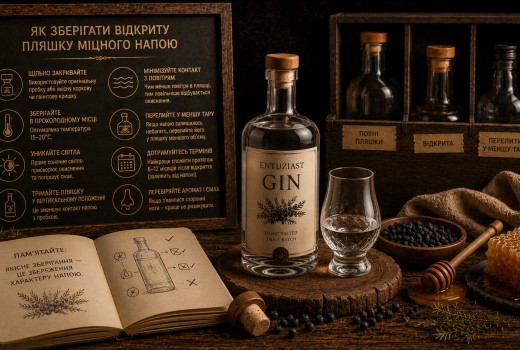
Opening a bottle does not mean that you have to drink the strong beverage within the next few days. Honey distillate, gin, and aged spirits contain en..
0
137
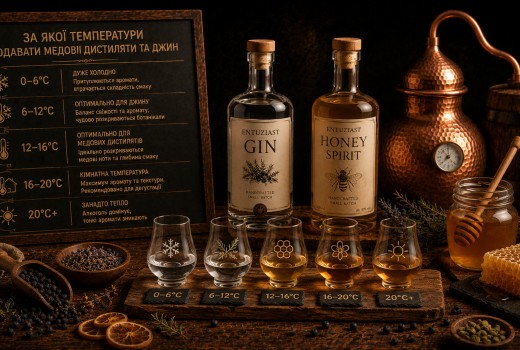
Serving temperature can significantly alter the perception of a spirit. The same distillate may seem fresh and smooth when chilled, but at a higher te..