





How to Store an Open Bottle of Spirits
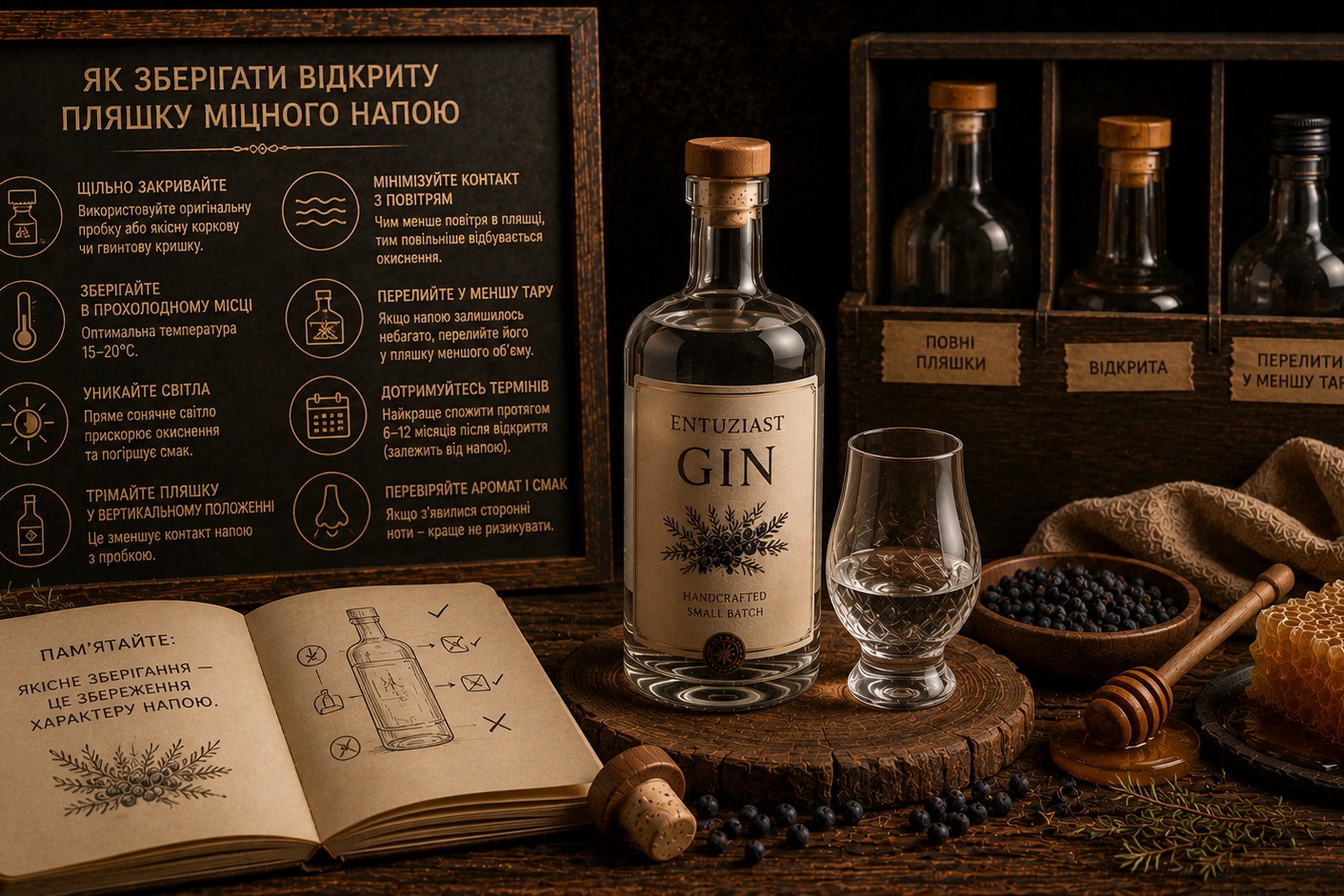
Opening a bottle does not mean that you have to drink the strong beverage within the next few days. Honey distillate, gin, and aged spirits contain enough alcohol to remain stable for much longer than wine, beer, or low-alcohol beverages.
However, stability doesn’t mean complete immutability. Once opened, air enters the bottle, triggering slow processes that can affect the aroma, taste, and finish. These changes become particularly noticeable when there’s only a small amount of the beverage left in the bottle.
Proper storage helps preserve the product’s character for longer: juniper freshness, honey and waxy notes, and aromas of apples, berries, botanicals, oak, and wine barrels. To achieve this, simply follow a few simple rules.
Does Opened High-Proof Alcohol Go Bad?
High-proof spirits generally do not spoil as quickly as products with a lower alcohol content. In a properly sealed bottle, they can be stored for a long time without any harmful changes.
However, once opened, the beverage gradually comes into contact with oxygen. Some of the volatile aromatic compounds evaporate, while others change as a result of oxidation. Over time, the aroma may become less intense, and the flavor may become simpler or flatter.
Therefore, it is more accurate to speak not only of the shelf life but also of the preservation of organoleptic properties. The beverage may remain safe to consume but gradually lose its original character.
What Changes After Opening the Bottle
Before the bottle is opened for the first time, the space above the beverage is virtually isolated from active air exchange. Once the cork or cap is removed, fresh air enters the bottle.
Each time the bottle is opened thereafter, some of the aromatic vapors escape, and fresh air takes their place. This process is gradual, so the beverage won’t change drastically after just one or two openings.
Over time, the following may occur:
- loss of the most volatile aromas;
- a weakening of citrus and floral notes;
- a change in the berry freshness;
- a gradual softening of the alcoholic aroma;
- a decrease in the intensity of juniper and botanical notes;
- intensification or simplification of woody nuances;
- a shift in the balance between aroma, taste, and aftertaste.
The main enemy of an open bottle isn’t time, but improper storage conditions
Time itself affects the drink slowly. Direct sunlight, high temperatures, a loosely sealed cap, and a large amount of air inside the bottle alter its character much more quickly.
A bottle stored in a dark cabinet at a stable temperature will age better than one left on a windowsill or near a heater.
That is why the main goal of storage is to protect the distillate from excessive light, heat, evaporation, and constant temperature fluctuations.
Store the bottle upright
Strong spirits are best stored upright. This distinguishes them from some wines, whose bottles are traditionally laid on their sides to allow the wine to come into contact with the natural cork.
High alcohol concentration can affect the cork, liner, or other sealing material over time. Constant contact with the liquid can alter its structure and sometimes affect the aroma.
Upright position:
- reduces contact between the wine and the cork;
- reduces the risk of leakage;
- helps preserve the label;
- makes it easier to monitor the condition of the bottle;
- is suitable for most gins and spirits.
The bottle should stand upright and not tilt so that the beverage constantly touches the stopper.
Close the bottle tightly
After each tasting, make sure the cork or cap is properly secured. Even a small gap accelerates the evaporation of alcohol and aromatic compounds.
A screw cap should be tightened until it fits securely, but without excessive force, which could damage the threads or the gasket.
Whether natural or synthetic, the cork should be inserted straight. If it has become dry, damaged, or has started to crumble, it’s best to replace it with a clean, suitable cork.
Do not seal the bottle with random materials, paper, or plastic wrap for an extended period. These materials do not provide a reliable seal and may impart an unwanted odor.
Avoid direct sunlight
Sunlight, especially its ultraviolet rays, can affect the beverage’s aromatic and coloring components.
The most sensitive components may include:
- natural berry pigments;
- citrus essential oils;
- delicate floral notes;
- botanicals in gin;
- honey and fruit undertones;
- the color of aged distillates.
A bottle near a window can heat up during the day and cool down at night. This combination of light and temperature fluctuations creates even worse conditions.
The best place is a closed cabinet, a bar, or a shelf that isn’t exposed to direct sunlight.
Why a clear bottle requires special attention
Dark glass partially protects the drink from light, whereas a clear bottle provides almost no such barrier.
Clear glass showcases the product’s color well but requires proper storage. This is especially important for pale pink, pomegranate-colored, and amber beverages.
If the bottle is sold in a box or tube, the packaging can be used for additional protection after opening.
Optimal Storage Temperature
Most high-proof spirits do not require a special refrigerator. A stable, moderate temperature without excessive heat is much more important.
A cool living space without excessive heat or sudden temperature fluctuations is ideal. Do not store the bottle:
- near a radiator;
- above the stove;
- near an oven;
- inside a car;
- on an open balcony;
- in a place that gets very hot in the sun.
A brief cooling before serving won’t cause any harm, but constant shifts between cold and warm temperatures are undesirable.
Should you store an opened bottle in the refrigerator?
Most strong beverages with a sufficient alcohol content do not need to be refrigerated after opening.
Refrigeration may be appropriate if the manufacturer specifically recommends it or if the product has a lower alcohol content, a significant amount of natural ingredients, or other unique characteristics in its recipe.
For classic Honey Spirit and MeadGIN, the refrigerator is not a required place for long-term storage. The bottle can be chilled before serving and then returned to a dark cabinet.
Constant cold storage can dull the aroma during tasting, so the drink sometimes needs to be allowed to warm up slightly in the glass.
Can a bottle be stored in the freezer?
For aromatic craft distillates, the freezer is usually not the best option.
Very low temperatures:
- significantly dampen the aroma;
- alter the texture;
- make the honey and floral notes less noticeable;
- mask part of the berry profile;
- makes it difficult to assess the oak and wine aging.
Technically, a high-alcohol beverage may not freeze completely, but its character will be significantly less pronounced.
For your first tasting of ENTUZIAST products, it’s best to avoid deep chilling.
Why the Amount of Air in the Bottle Matters
When the bottle is nearly full, the volume of air above the wine is small. Each time the bottle is opened, oxygen affects the wine, but the total surface area of contact remains limited.
When a third or less of the bottle remains, air takes up most of the volume. During shaking, handling, and repeated openings, contact becomes more active.
That’s why an almost-empty bottle may change more noticeably than a full one, even if they were both opened on the same day.
Should you decant the remaining liquid into a smaller bottle?
If there is only a small amount of an expensive or particularly aromatic distillate left in a large bottle, you can transfer it to a clean glass container of smaller volume.
This will reduce the amount of air above the liquid and slow the loss of volatile aromas.
The smaller bottle should be:
- made of glass;
- clean and completely dry;
- free of any foreign odors;
- have a secure cap or cork;
- labeled so the product isn’t mixed up with others.
Do not use a container that previously held aromatic foods, oil, spices, or household cleaning products.
Can vacuum systems be used?
Vacuum stoppers are often used for wine, but they aren’t always necessary for high-proof distillates.
Along with the air, the system can remove some of the volatile aromatic compounds. For gin, berry spirit, or honey distillate, this can potentially alter the aroma.
It’s much simpler to seal the bottle tightly and, if necessary, decant the remainder into a smaller glass container.
Should you shake the bottle?
You shouldn’t actively shake an open bottle unless necessary. This increases the liquid’s contact with air and can accelerate the evaporation of volatile components after opening.
Gently swirling the bottle may be appropriate only if the manufacturer indicates the presence of natural sediment or the need to stir.
For most clear and aged spirits, it is sufficient to simply pour the desired amount carefully.
How often can you open a bottle?
There is no specific “safe” number of times to open a bottle. What matters is how long the bottle remains open and how much of the beverage is left inside.
If you replace the cork or cap immediately after pouring, the impact will be minimal. It’s much worse to leave the bottle open on the table for several hours.
A handy rule of thumb: open, pour, and close tightly.
Does the room’s scent affect the drink?
A well-sealed bottle absorbs almost no odors from the room. However, a cork, a damaged seal, or prolonged storage of an open container can create a risk of foreign odors.
Avoid storing beverages near:
- household cleaning products;
- paints and solvents;
- strong spices;
- perfumes;
- fuel;
- strong-smelling foods.
A home bar or a separate, enclosed cabinet is the best solution.
How long can an opened bottle be stored?
The exact duration depends on the strength, composition, amount remaining, frequency of opening, and storage conditions.
A full or nearly full bottle of a strong spirit, tightly sealed and stored in a dark, cool place, can retain its core character for a long time.
When half or less remains, changes may become more noticeable over the following months. This doesn’t mean the drink will necessarily go bad, but its aroma may gradually fade.
Bright citrus, floral, and berry notes are generally more susceptible to losing their intensity than heavy woody or spicy notes.
How to Tell If a Drink Has Changed
The best way is to compare your own impressions with previous tastings.
Possible signs of change:
- the aroma has become significantly weaker;
- the citrus or berry freshness has disappeared;
- the flavor has become flat;
- the finish has shortened;
- a foreign cork-like odor has appeared;
- the drink has acquired an unusual bitterness;
- the color has noticeably changed for no apparent reason;
- unusual cloudiness or sediment has appeared.
A natural, slight cloudiness after cooling may sometimes be due to essential oils, but unusual changes should be evaluated with caution.
Is sediment dangerous?
A small amount of natural sediment does not always indicate spoilage. Natural components of the raw materials may remain in craft beverages, especially after berry maceration or minimal filtration.
However, it’s important to distinguish between expected characteristics and atypical changes. If sediment appears suddenly and is accompanied by an unpleasant odor, gas formation, or significant cloudiness, it’s best not to consume the product without further inspection.
The manufacturer’s information on the label or product page takes precedence, as production methods vary by beverage.
How to Store Honey Spirit Pure
Honey Spirit Pure has a clear color and a clean profile with notes of wheat dust, honey, white bread, and butter.
To preserve the delicate grain and honey notes, the bottle should be:
- keep it upright;
- close tightly after each use;
- protect from sunlight;
- do not leave near heat sources;
- do not store it in the freezer continuously.
When only a small amount remains, you can transfer it to a smaller, clean glass bottle to minimize contact with air.
How to Store Honey Spirit Aged
Honey Spirit Aged has a complex profile of wax, honey, spices, vanilla, oak, and a finish aged in an Oloroso sherry cask.
The matured notes can last a long time, but the most delicate top notes gradually fade after prolonged exposure to air.
The bottle should be kept in a dark cabinet at a stable temperature. It does not need to be refrigerated on a regular basis.
It is especially important to keep the cork tightly sealed to preserve the winey, honeyed, and spicy notes.
How to Store Honey Spirit Apple
Honey Spirit Apple combines honey distillate, apple spirits, French and Ukrainian oak, and a finish in a Sauternes cask.
Apple, floral, and honey notes may be more sensitive to prolonged exposure to air than the dense woody components.
After each tasting, the bottle should be resealed immediately. It should not be stored on a kitchen shelf near the stove or in direct sunlight.
When there is only a small amount of the drink left, decanting it into a smaller glass container will help preserve the baked apple, honey blossom, and wine-like complexity for longer.
How to Store Classic MeadGIN
In classic MeadGIN, juniper, lemon, citron, orange, and a light, creamy, refreshing aftertaste are key.
Citrus essential oils are among the most volatile, so it’s especially important not to leave the bottle open.
Store the gin upright in a dark, cool place. Before serving, you can chill the desired amount or the entire bottle for a short time.
Storing it in the refrigerator at all times is not necessary, and the freezer will mask its delicate honey-citrus character.
How to Store MeadGIN Raspberry
MeadGIN Raspberry has a delicate pink color and combines juniper, spices, honey, and a natural raspberry note.
The berry aroma and natural color require protection from light. It’s best to store a clear or light-colored bottle in a box or a closed cabinet.
Once opened, do not leave it uncorked for long periods. The raspberry and other light aromatic components may gradually lose their intensity.
The drink can be chilled before serving, but constant deep chilling is not necessary.
How to Store MeadGin Sloe Blackthorn
MeadGin Sloe Blackthorn has an alcohol content of 32%, a rich berry color, a tart blackthorn flavor, vanilla, and notes of honeycomb.
Due to its lower alcohol content and distinct berry profile, the drink requires particularly careful storage after opening.
The bottle should be tightly sealed, kept in a dark, cool place, and protected from heat. Do not leave it on a sunny shelf, where its natural color may gradually change.
If the drink is consumed slowly and there is little liquid left in the bottle, a smaller glass container will help limit exposure to air.
How to Set Up a Home Bar
You don’t need a special professional cabinet for proper storage. It’s enough to set aside a dark place with stable conditions.
A convenient home bar should:
- be located away from a window;
- not be heated by household appliances;
- allow bottles to be stored upright;
- be out of reach of children;
- have enough space so that bottles don’t fall over;
- not contain strongly scented items;
- be dry and clean.
Bottles that are opened infrequently can be placed further back, while those used more often should be placed closer to the front.
Should You Record the Opening Date?
For a collection of several bottles, the opening date can be helpful. A small note helps you understand how long the product has been exposed to air.
This is especially relevant for:
- rare craft batches;
- berry distillates;
- bottles that are tasted only occasionally;
- comparing changes in aroma;
- a home collection with a large number of items.
You can write the date on a small sticker without damaging the main label.
Common mistakes during storage
- Leaving an open bottle on the table for several hours.
- Storing a strong beverage horizontally.
- Placing the bottle on a sunny windowsill.
- Keeping it near a radiator or stove.
- Constantly moving it back and forth between the refrigerator and a warm room.
- Leave a damaged or loose cork in place.
- Do not pour the remaining contents into a plastic or scented container.
- Store an almost empty bottle for years with a lot of air inside.
- Freeze the aromatic distillate before each tasting.
- Ignore an unusual odor, cloudiness, or damage to the seal.
Frequently Asked Questions About Storing an Open Bottle
Should you put an opened bottle of gin in the refrigerator?
Usually not. A dark, cool place and a tightly sealed bottle are sufficient. You can chill the gin briefly before serving.
How long does an opened honey distillate last?
Under the right conditions, it can last a long time, but the aroma will gradually change. The less of the drink that remains, the faster its flavor profile may fade.
Can you store the bottle on its side?
It’s best not to. It’s recommended to store strong spirits upright to minimize constant contact with the cork or gasket.
Does gin go bad after opening?
It doesn’t spoil as quickly as wine, but it can gradually lose its juniper, citrus, floral, and berry aromas.
What should you do when there’s only a little left in the bottle?
You can decant the remaining gin into a clean, dry glass bottle of smaller capacity with a secure cap.
Can you store a strong spirit in the freezer?
Technically, yes, but for aromatic honey distillates and gin, this is not recommended: very low temperatures dull the drink’s character.
Does sunlight harm the bottle?
Yes. It can affect the natural color and delicate aromatic components, as well as warm up the drink.
Why does the drink in a nearly empty bottle change more quickly?
There is more air inside relative to the volume of liquid, so contact with oxygen becomes more significant.
Can I use an old cork from another bottle?
Only if it’s clean, odorless, the right size, and provides a tight seal. It’s better to use a new, neutral cork.
Preserve not only the drink but also its character
A robust spirit doesn’t require complex conditions, but it deserves careful attention. Storing it upright, sealing it tightly, keeping it in the dark, and maintaining a stable temperature help preserve its original aroma for longer.
It’s especially important to monitor the bottle when there’s only a small amount of spirit left. In this case, the large amount of air gradually weakens the citrus, berry, floral, and honey notes.
Honey Spirit Pure is worth preserving for its clean grain-and-honey profile; Honey Spirit Aged—for its notes of wax, spices, oak, and Oloroso; Honey Spirit Apple—for its notes of baked apples and Sauternes; and MeadGIN—for its juniper, citrus, raspberry, and blackthorn notes.
Proper storage doesn’t stop time entirely, but it ensures that each subsequent tasting remains as close as possible to the character the master distilled into the ENTUZIAST bottle.