





Should You Add Water to Strong Spirits?
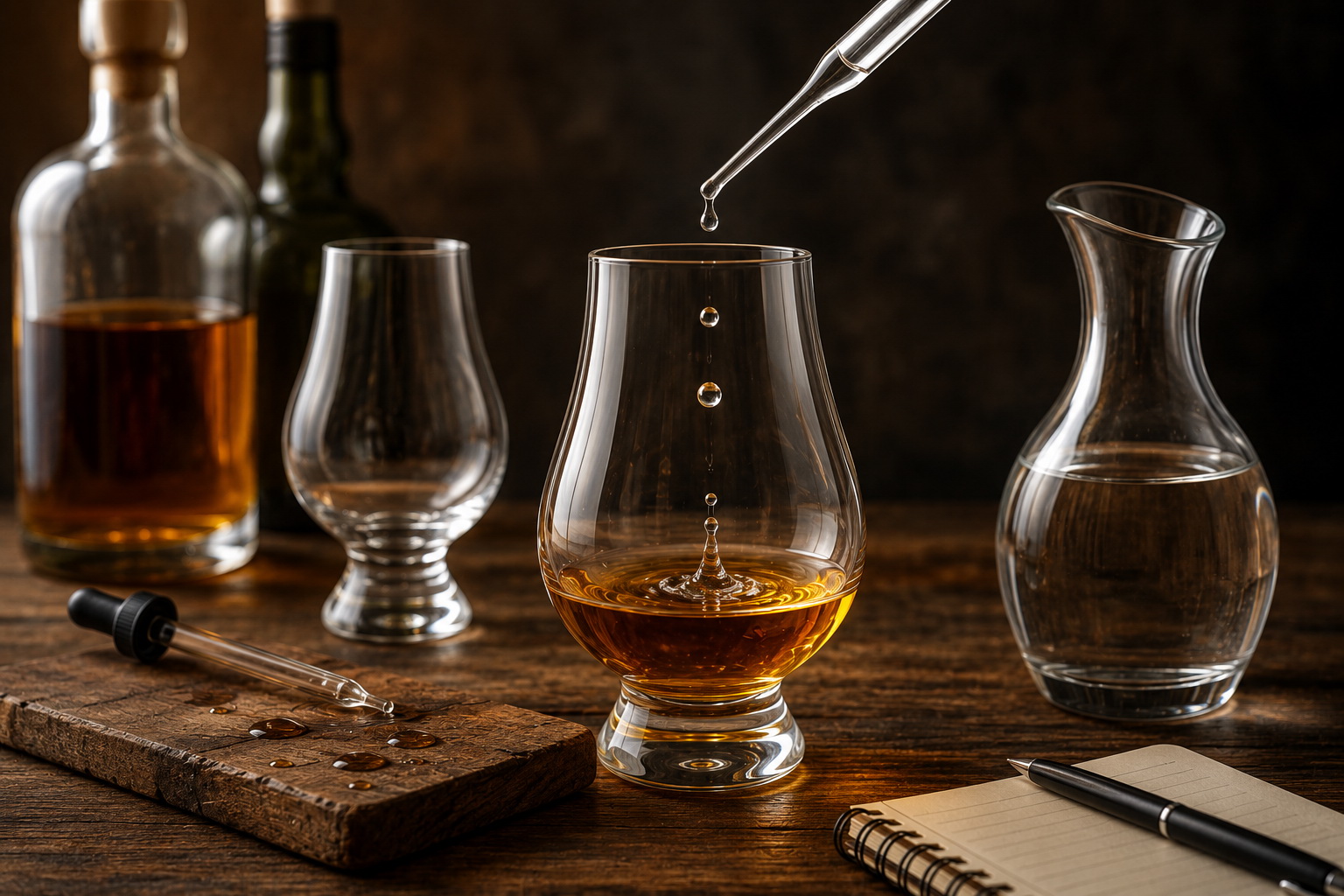
Adding water to strong spirits is sometimes seen as a mistake. Some people believe that good whisky, gin, or distillate should only be enjoyed neat and that any dilution automatically spoils the drink. In reality, a few drops of water can make the aroma and flavor more expressive rather than less intense.
Water lowers the overall alcohol strength, reduces the sensation of alcohol burn, and changes the way aromatic compounds behave in the glass. As a result, previously hidden notes may become easier to detect, including flowers, fruit, honey, citrus peel, herbs, spices, oak, and vanilla.
However, water does not improve every drink. The amount, temperature, and quality of the water all matter. Adding too much can weaken the structure of the spirit and make its aroma less concentrated. The main rule is not that strong alcohol must always be diluted, but that any water should be added gradually and thoughtfully.
Why Do People Add Water to Strong Spirits?
Strong spirits contain a significant concentration of ethanol. During tasting, alcohol vapor may feel sharp in the nose, while the first sip can create a burning sensation in the mouth. This can make it harder for the senses to recognize delicate aromatic and flavor notes.
A small amount of water partly reduces the alcohol concentration. The spirit may begin to feel softer, while its aroma becomes more open and easier to understand.
Water also changes the distribution of aromatic substances within the liquid. Some compounds that remain well dissolved in alcohol may move more readily into the space above the drink after dilution. This is why several new aromas may suddenly appear after only a few drops of water have been added.
Does Water Really “Open Up” a Spirit?
When people say that a spirit has “opened up,” they do not mean that water has created new aromas. Those aromatic compounds were already present in the drink. What changes is the way in which they are released and perceived.
Before water is added, alcohol vapor may dominate the aroma. After slight dilution, that sharpness becomes less intense, allowing floral, fruity, spicy, herbal, or woody notes to become more noticeable.
Sometimes the opposite happens. If a drink already has moderate alcohol strength or a very delicate aromatic profile, water may make it seem thin and less expressive. There is no universal rule that works equally well for every spirit.
Which Spirits Can Be Tasted with Water?
Water is most commonly added when tasting whisky, aged distillates, brandy, rum, gin, and other strong spirits. It can be especially useful with high-proof or cask-strength releases.
Adding Water to Whisky
Whisky is often tasted neat first and then sampled again after a few drops of water have been added. This makes it possible to compare the aroma and flavor before and after dilution.
In aged whisky, water may reveal notes of vanilla, caramel, oak, dried fruit, nuts, spices, smoke, or baked fruit. In high-strength whisky, it can also reduce harsh alcohol burn and make the drink easier to examine.
Adding Water to Gin
Gin can also be tasted with a small amount of water. This is particularly useful when you want to examine the botanicals more closely, including juniper, coriander, citrus peel, roots, herbs, flowers, and spices.
A few drops of water may broaden the aroma and help separate individual botanical components. However, too much dilution can quickly weaken the distinctive character of the gin.
Adding Water to Honey Spirits
Honey spirits may contain delicate floral, waxy, herbal, fruity, and spicy notes. When alcohol intensity makes these aromas difficult to recognize, a few drops of water may soften the spirit and reveal more of its aromatic character.
A honey spirit does not necessarily taste sweet. Adding water does not create sweetness. It only changes the balance between alcohol strength, aroma, flavor, and mouthfeel.
Adding Water to Aged Distillates
Spirits that have spent time in oak often have a layered aromatic profile. After dilution, notes of vanilla, wood, spices, dried fruit, caramel, or nuts may become more noticeable.
However, a spirit that has already been bottled at a moderate strength may not need much water, or any water at all.
How Much Water Should You Add?
Begin with only a few drops. For a standard tasting pour of 20 to 30 milliliters, this is often enough to produce a noticeable change.
A practical tasting sequence is:
- Pour a small amount of the spirit into a suitable glass.
- Assess the aroma and take a small sip while the spirit is neat.
- Add two or three drops of water.
- Gently mix the drink or carefully move the glass.
- Allow it to rest for about one minute.
- Assess the aroma and flavor again.
- Add a few more drops only when necessary.
This gradual approach allows you to stop when the spirit becomes more open but has not yet lost its structure and intensity.
Do You Need to Calculate an Exact Ratio?
Complicated calculations are unnecessary for a casual home tasting. Adding water in very small amounts and comparing the results is usually enough.
When a high-proof spirit needs to be reduced more significantly, water can be measured with a pipette, teaspoon, or small measuring vessel. This also makes it easier to repeat a successful ratio during a future tasting.
There is no single correct proportion for all spirits. One may show its best character after three drops, another after a teaspoon, while a third may be more expressive without water.
What Kind of Water Is Best for Tasting?
Clean, still water with no strong smell or flavor is usually the best choice.
The water should not have:
- a noticeable chlorine smell;
- a strong mineral or salty flavor;
- carbonation;
- added flavorings;
- any obvious foreign taste or odor.
Ordinary good-quality drinking water is often perfectly suitable. When tap water has a noticeable smell or flavor, filtered water or neutral bottled still water is a better option.
Why Is Mineral Water Not Always Suitable?
Mineral water may contain a considerable amount of dissolved salts and can have a distinct flavor of its own. During tasting, these mineral characteristics may interact with the spirit and influence the way it is perceived.
Lightly mineralized neutral water is unlikely to cause a problem. Strongly mineralized or medicinal water, however, may introduce salty, metallic, or alkaline sensations.
Carbonated water is also unsuitable when the aim is to evaluate the original character of a spirit. Carbon dioxide changes the texture, increases tingling, and may make the alcohol feel sharper.
What Temperature Should the Water Be?
Room-temperature water is usually the best option. It does not cool the spirit suddenly and does not significantly suppress its aroma.
Very cold water can lower the temperature of the drink and make aromatic compounds less active. Warm water, on the other hand, may increase alcohol evaporation.
For careful tasting, the water and the spirit should ideally be at a similar, comfortable temperature.
When Is It Better Not to Add Water?
Water is not an essential part of every tasting. It may be better to leave the spirit neat when:
- the drink already has moderate alcohol strength;
- its aroma is clear and expressive without dilution;
- the structure is especially delicate;
- the aroma becomes weaker after the first drops;
- you want to assess the spirit exactly as the producer bottled it.
The first evaluation should generally be made without water. Only after this initial assessment should you begin experimenting with dilution.
How Is Water Different from Ice?
Both water and ice reduce the strength of a spirit, but they do so in different ways.
Room-temperature water acts immediately and changes the temperature very little. Ice first cools the drink significantly and then gradually dilutes it as it melts.
Low temperatures suppress aromatic compounds. A spirit served over ice may therefore seem smoother but less aromatic. A few drops of water are more suitable for analytical tasting, while ice is better suited to cooling and relaxed drinking.
Can You Add a Large Amount of Water at Once?
You can, but once the drink has been over-diluted, its original strength cannot be restored. This is why a gradual approach is safer.
Too much water may cause the spirit to:
- lose body and texture;
- become watery;
- develop a shorter finish;
- lose aromatic intensity;
- feel unbalanced.
Gradual dilution helps you find the point at which alcohol strength no longer interferes with tasting, while the structure and aroma remain expressive.
Why Does a Spirit Sometimes Become Cloudy After Adding Water?
Some spirits may become slightly cloudy after dilution. This is not necessarily a sign of poor quality.
Natural aromatic oils and other compounds can remain dissolved when the alcohol concentration is high. As the strength decreases, some of these substances form tiny droplets, making the liquid appear less transparent.
This effect is especially noticeable in spirits containing a large amount of botanical oils. In gin, slight cloudiness after adding water may indicate a rich concentration of botanical compounds.
How to Conduct a Simple Water Experiment at Home
To understand how water affects a particular spirit, use two identical glasses.
- Pour the same amount of spirit into both glasses.
- Leave the first sample unchanged.
- Add three to five drops of water to the second sample.
- Wait for one or two minutes.
- Compare the aroma of both samples.
- Take a small sip from each and compare the flavor and finish.
In the neat sample, the alcohol may feel stronger and the aroma more concentrated. In the diluted sample, new aromatic notes may appear, the burning sensation may decrease, or the texture may change.
This simple experiment is more useful than relying on general rules because it shows how the exact spirit in your glass responds to water.
Common Mistakes When Adding Water
- Adding water before tasting the spirit neat. First, evaluate the drink in its original form.
- Adding too much water at once. Begin with only a few drops.
- Using strongly flavored water. It may distort the aromatic profile.
- Using very cold water. It can suppress the aroma.
- Believing that adding water is only necessary for poor-quality spirits. Even complex and expensive releases are often tasted after slight dilution.
- Expecting every spirit to react in the same way. Different distillates respond differently to water.
Is It Wrong to Dilute a Good Spirit?
No. Adding water is not a way to hide defects, and it is not a violation of tasting etiquette. It is simply one of the tools used to explore a spirit.
Professional tasters often assess high-strength samples both neat and diluted. This helps them understand how stable the aroma is, which notes are hidden behind the alcohol, and how the balance changes at a lower strength.
At the same time, no one is required to add water. The best way to enjoy a spirit is the way that allows you to appreciate its character and enjoy the experience.
Water as a Tasting Tool
Water should be treated not as a compulsory ingredient, but as a tasting tool. It allows you to compare, analyze, and find the alcohol strength at which a particular spirit expresses itself most clearly.
Sometimes a few drops reveal floral, fruity, or spicy notes. In other cases, the undiluted version remains more expressive. The only way to find the best option is through direct comparison.
Conclusion
Water can be added to strong spirits, and in some cases it can make tasting more informative. Slight dilution reduces alcohol sharpness, changes the behavior of aromatic compounds, and may help reveal subtle characteristics that were previously difficult to detect.
Start with only a few drops of clean, still water at room temperature. After each addition, give the spirit a little time and assess its aroma, flavor, texture, and finish again.
The main goal is not to follow someone else’s rules mechanically, but to compare your own impressions. Water does not automatically make a spirit better or worse. It simply allows you to experience it from a different perspective.