





Is ice added to gin and honey distillates?
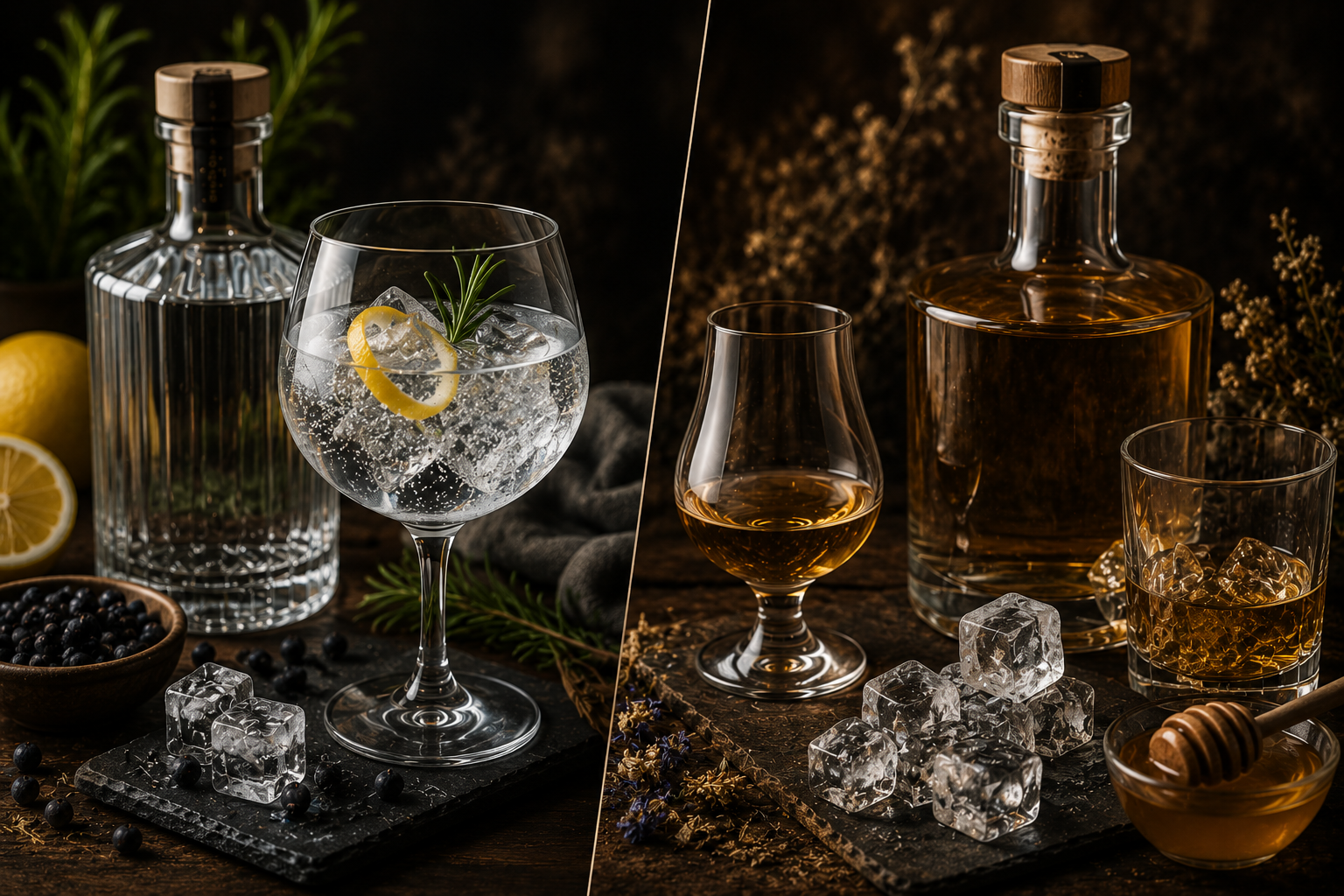
Ice - tradition or necessity?
One of the most common questions among connoisseurs of strong drinks is whether to add ice to gin or honey distillate. There is no definite answer, because it all depends on how you plan to enjoy the drink: tasting it pure or using it as a base for cocktails.
Ice can change the temperature, aroma, texture and even the taste of the drink. That is why it is important to understand when it helps to reveal the character of the distillate, and when, on the contrary, hides its most interesting features.
How does cold affect the taste?
With a decrease in temperature, volatile aromatic compounds evaporate more slowly. This means that the aroma becomes less intense, and individual botanical or honey notes may be felt weaker.
At the same time, cooling makes the alcohol softer on the taste, reducing the feeling of alcohol. That's why many people prefer chilled drinks.
The balance between aroma and smoothness is the main reason why the choice of serving temperature depends on the specific situation.
Do you add ice to gin?
When it comes to cocktails, the answer is obvious - yes. The classic Gin & Tonic, Tom Collins, Gin Fizz and many other drinks are traditionally served with a lot of ice. It maintains a refreshing temperature, slows down the heating of the cocktail and ensures the right balance between the gin, tonic or other ingredients.
Tasting gin in its pure form is a completely different situation. If you want to appreciate the aromatic profile, feel all the botanicals and understand the character of the drink, it is better not to use ice. Over-chilling dulls the aroma and makes the taste less pronounced.
When are a few ice cubes appropriate?
Some gins have a high strength or a very rich taste. In such cases, one or two large ice cubes can make the drink smoother and more accessible to those who are just starting to get acquainted with the world of gin.
It is important to use large ice cubes. They melt more slowly, so they dilute the drink less and maintain a stable temperature for longer.
Is ice added to honey distillates?
Honey distillates have their own character, which is formed due to the natural honey, the characteristics of fermentation, distillation and, in some cases, aging. Their aroma often contains floral, fruity, honey and spicy nuances.
That is why it is recommended to serve honey distillates without ice during a classic tasting. At room temperature, the aroma is revealed much more fully, and the taste remains multifaceted and balanced.
Can honey distillate be chilled?
Yes, but this should be done in moderation. If the drink seems too warm or you are tasting it on a hot day, it is enough to cool the bottle to a temperature of about 16–18 °C.
Such a slight cooling refreshes the drink without hiding its aromatic features.
Ice or a few drops of water?
Professional tasters often use not ice, but a few drops of clean, still water. This allows you to partially reduce the alcohol concentration and helps individual aromatic components to appear brighter.
This technique is especially popular when tasting strong distillates with a high alcohol content.
Typical mistakes
In order not to spoil the impression of the drink, you should avoid several common mistakes:
- adding a lot of small ice that melts quickly;
- using ice with foreign odors;
- serving gin or honey distillate very chilled;
- evaluating the aroma immediately after adding ice;
- using frozen glasses for professional tasting.
All of these factors can change the perception of taste and make the aroma less pronounced.
When Is ice really necessary?
Ice is appropriate in cocktails, summer drinks and informal atmospheres, when the main goal is refreshment. If you want to evaluate the quality of gin or honey distillate, get acquainted with its aroma and aftertaste, it is better to abandon ice or limit yourself to a few drops of water.
This approach allows you to get the most complete idea of the character of the drink.
Conclusion
Ice is not an obligatory element of serving for either gin or honey distillates. In cocktails, it plays an important role, maintaining the temperature and balance of taste. However, during tasting, it should be used very carefully or completely abandoned so as not to hide the aromatic bouquet.
To get acquainted with craft drinks, it is best to choose the right glass, the recommended serving temperature and take your time tasting. This is how you can fully appreciate the character of ENTUZIAST gins and honey distillates, feel the natural botanical and honey notes, and get real pleasure from every sip.