




Why Does the Right Glass Matter When Tasting Spirits?
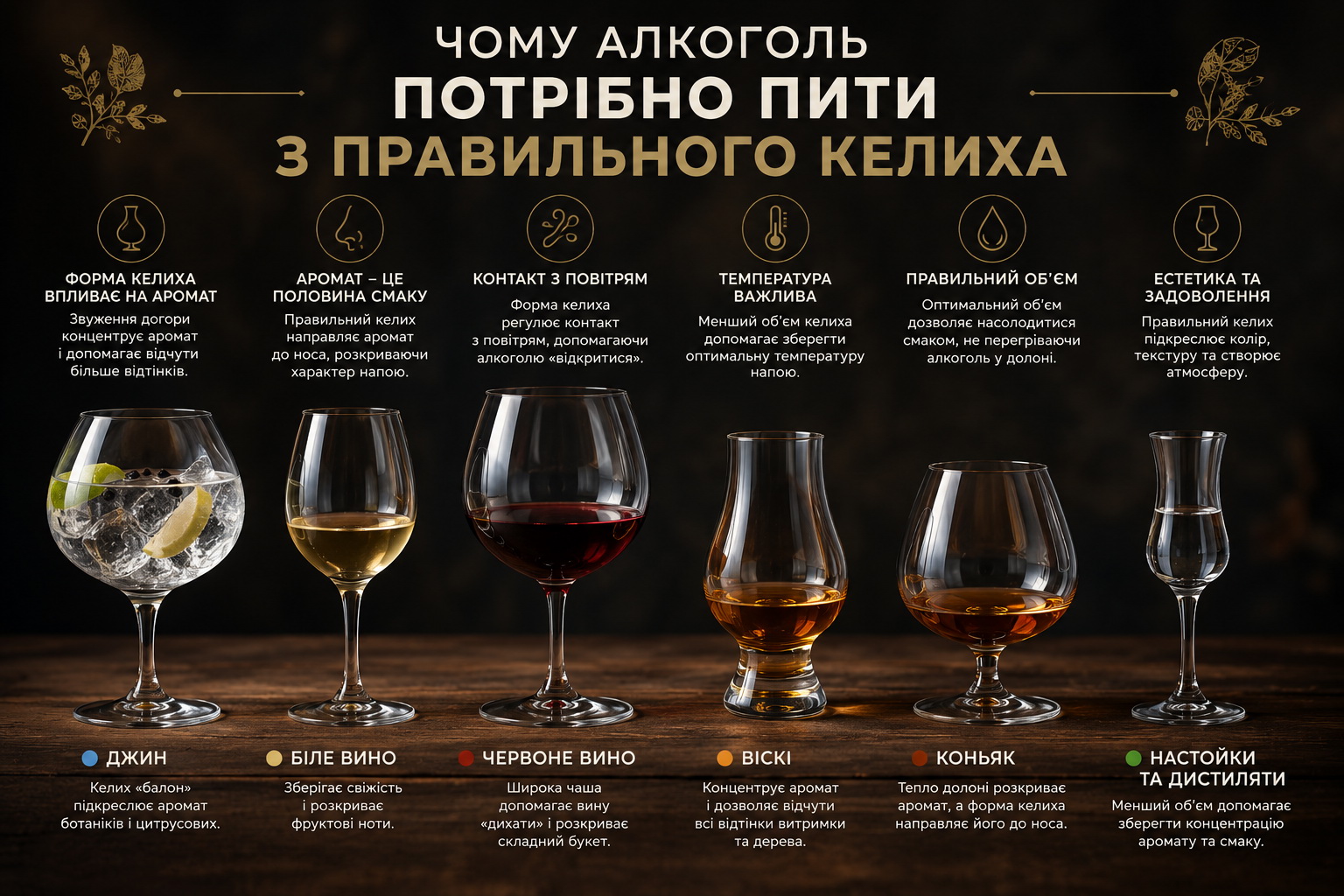
The right glass will not turn an ordinary spirit into an exceptional one, but it can help reveal more of the aroma and flavor already present in the drink. The shape of a glass affects how quickly aromatic compounds evaporate, where they collect, and how they reach the nose during tasting.
That is why the same gin, honey spirit, whisky, or aged distillate may feel noticeably different when served in a narrow tasting glass, a wide tumbler, or a small shot glass. The spirit itself does not change. What changes is the way we experience it.
How Does Glass Shape Affect the Aroma of Spirits?
The aroma of a spirit is created by many volatile compounds. Once the drink is poured, these compounds begin to evaporate and gather in the space above the liquid.
A glass with a wide bowl and a slightly narrower opening helps collect those aromas and guide them toward the nose. This makes it easier to notice individual notes such as juniper, citrus peel, herbs, spices, honey, flowers, fruit, oak, vanilla, or dried fruit.
In a glass with a very wide opening, aromatic compounds disperse more quickly. In a very small straight-sided glass, alcohol vapors may feel too concentrated, making the spirit seem sharper and more aggressive than it actually is.
Why Is a Shot Glass Not Ideal for Tasting?
A traditional shot glass is suitable for serving a small amount of alcohol quickly, but it is not designed for careful aroma evaluation.
Most shot glasses have straight walls and very little space above the liquid. This means there is limited room for aromas to develop, while alcohol vapors reach the nose almost immediately. As a result, delicate aromatic notes may be hidden behind the sensation of strength.
Tasting has a different purpose. The drink is not meant to be swallowed immediately. It is observed, smelled carefully, tasted in small sips, and followed through the finish. A proper tasting glass makes this process easier and more informative.
What Does a Good Spirits Tasting Glass Look Like?
A versatile tasting glass for strong spirits usually has several important features:
- a bowl that is wider at the lower part;
- an opening that gradually narrows toward the top;
- enough empty space above the liquid;
- a short stem or a comfortable base;
- clear glass without colored decoration.
The wider lower section increases the surface area exposed to air. The narrower opening helps retain aroma inside the glass. Clear glass also allows you to assess the color, clarity, texture, and possible sediment or haze.
Glasses such as the tulip glass, copita, and Glencairn follow this general principle. Their shapes may differ slightly, but all are designed to focus aroma.
Do You Need to Buy a Professional Tasting Glass?
A professional tasting set is not essential for enjoying spirits at home. The most important thing is to choose a glass that is not excessively wide and that provides enough space for aromas to collect.
A small wine glass with a slightly tapered bowl can work well. A white wine glass or a modestly sized brandy glass may also be suitable.
A regular straight-sided kitchen tumbler is less effective. It will not ruin the drink, but some aromatic detail may be lost because the aroma escapes more quickly.
What Is the Best Glass for Gin?
The right glass for gin depends on how it is being served.
For Tasting Gin Neat
When tasting gin without tonic, ice, or other ingredients, a small tulip-shaped glass is usually the best choice. It helps concentrate the aroma and makes it easier to identify juniper, citrus, floral, herbal, spicy, and earthy notes.
It is also useful to let the gin rest in the glass for a few minutes before tasting. During this time, the aroma may become softer, more balanced, and more complex.
For Gin and Tonic
Gin and tonic is usually served in a large balloon glass or a tall highball glass. Here, the purpose of the glass is different. It must provide enough room for ice, tonic water, gin, and garnishes.
A larger glass also allows ice to melt more slowly and gives citrus peel, berries, herbs, or spices enough space to release their aroma.
What Glass Is Best for Honey Spirits?
Honey spirits may contain delicate floral, waxy, herbal, fruity, and spicy notes. These can easily disappear if the drink is served in a small shot glass and consumed too quickly.
A glass with a rounded bowl and a narrower opening is a better choice. It gives the spirit room to breathe while still holding the aroma close to the nose.
The glass may be warmed slightly by the hand, but this should be done carefully. Excessive warming increases alcohol evaporation and may overpower more delicate aromatic notes.
Whenever possible, hold the glass by the stem or the lower part of the base, especially if the spirit is already at a comfortable tasting temperature.
What Glass Should Be Used for Aged Spirits?
Aged spirits often have a more complex aromatic profile. They may show notes of vanilla, caramel, oak, spices, dried fruit, nuts, tobacco, chocolate, or baked fruit.
For these drinks, a glass with a wide lower bowl and a narrower upper section is especially useful. The wider base allows contact with air, while the narrower opening helps keep the aroma concentrated.
Large round brandy glasses may also be used, but they should not be filled with too much spirit. For tasting, approximately 20 to 30 milliliters is usually enough. Pouring too much reduces the amount of empty space available for aromas.
How Much Spirit Should You Pour for a Tasting?
A tasting glass should never be filled to the top. A small pour is enough to cover the bottom while leaving plenty of space above the liquid.
For most strong spirits, 20 to 30 milliliters is usually sufficient. This amount allows you to evaluate the aroma, take several small sips, and observe how the drink changes as it remains in contact with air.
A larger pour does not improve the tasting experience. In fact, it may create a stronger concentration of alcohol vapors and make subtle aromas more difficult to detect.
Should You Swirl Spirits in the Glass?
Wine is often swirled quite actively to increase contact with air. Strong spirits should be handled more carefully.
If gin, whisky, or distillate is swirled too aggressively, alcohol evaporation increases rapidly. The first thing reaching the nose may be a sharp ethanol sensation, which can mask the more delicate aromas underneath.
A slight tilt or one slow circular movement is usually enough. After that, allow the glass to rest for a few seconds before smelling again.
How Should You Smell a Spirit Properly?
Do not immediately place your nose deep inside the glass and inhale strongly. Because spirits have a high alcohol content, this can create an unpleasant burning sensation and temporarily reduce your sensitivity to aroma.
Begin from a short distance. Bring the glass closer to your face and take a light, brief sniff. Then adjust the angle slightly and repeat.
Different aromatic notes may appear in different parts of the glass. Lighter floral and citrus notes may be easier to detect near the upper edge, while heavier spicy, woody, or sweet aromas may appear closer to the liquid.
Does the Glass Really Change the Taste?
The chemical composition of the spirit does not change because of the glass shape. However, our perception of flavor is closely connected to our sense of smell.
Much of what people describe as taste is actually a combination of basic taste sensations and aromas that reach the receptors before, during, and after each sip.
It is therefore more accurate to say that the glass does not change the drink itself, but it changes the way the drink is perceived. When the aroma is presented more effectively, the spirit may seem richer, smoother, more complex, and more expressive.
Does Glass Thickness Matter?
Glasses with relatively thin walls are often more comfortable for tasting. They interfere less with the drinking experience and make it easier to take small, controlled sips.
Thick glass does not spoil the spirit, but a heavy rim may affect the way the liquid reaches the mouth. Decorative or heavily cut glass can also make it more difficult to evaluate color and clarity.
A tasting glass does not have to be expensive. A simple, well-shaped glass is often more useful than an expensive crystal glass with an unsuitable design.
Why Must the Glass Be Clean?
Even the best glass shape is useless if the glass contains the smell of detergent, a kitchen cabinet, food, perfume, or a previous drink.
Before tasting, rinse the glass thoroughly and allow it to dry naturally. When drying it with a cloth, make sure the fabric does not carry a strong odor.
A simple test is to smell the empty glass before pouring the spirit. If any foreign scent is noticeable, rinse it again. This is especially important when tasting delicate gin or honey spirits.
Common Mistakes When Choosing a Glass
- Using a very wide tumbler. The aroma disperses quickly, making the spirit seem less expressive.
- Using a very small shot glass. Alcohol vapors become too concentrated and may overpower delicate notes.
- Pouring too much. Too little empty space remains for aromas to develop.
- Using colored or opaque glass. It becomes harder to evaluate the color and clarity of the spirit.
- Ignoring foreign odors. Detergent or other smells can distort the tasting experience.
- Overheating the glass with your hand. This may increase alcohol sharpness and hide more subtle aromas.
Should You Compare the Same Spirit in Different Glasses?
This is one of the easiest and most useful experiments to try at home. Pour the same amount of spirit into three different vessels:
- a small straight-sided shot glass;
- a wide tumbler;
- a tulip-shaped glass that narrows toward the top.
Let the spirit rest for a few minutes, then smell each glass in turn. In most cases, the differences will be noticeable even to someone with no professional tasting experience.
In one glass, the alcohol may seem much sharper. In another, the aroma may disappear quickly. In the tulip-shaped glass, individual notes are often easier to identify.
The Right Glass Is a Tool, Not a Strict Rule
Choosing glassware should not become an overly complicated ritual. A spirit can still be enjoyed from the glass available, especially during a relaxed evening, a cocktail, or a friendly gathering.
However, when you want to understand a drink more deeply, explore its aroma, and recognize more details, the right glass becomes a useful tasting tool.
It helps you observe the color, follow the development of the aroma, notice the texture, and experience the finish more clearly.
Conclusion
The shape of a glass affects how aromatic compounds evaporate, collect, and reach the nose. This is why the same spirit may seem sharper, softer, simpler, or more complex depending on the glass in which it is served.
For tasting gin, honey spirits, whisky, or aged distillates, a clear glass with a wider lower bowl and a narrower opening is usually the best choice. It does not alter the drink, but it helps reveal more of the ingredients, production methods, and craftsmanship behind it.
Using the right glass is not about snobbery, expensive crystal, or strict etiquette. It is simply one of the easiest ways to make tasting more attentive, enjoyable, and meaningful.