





How to properly taste gin: a step-by-step guide
Tasting Gin is More Than Just a Sip
Most people are familiar with gin through the classic Gin & Tonic or a variety of cocktails. However, a quality gin deserves a separate tasting. This is how you can appreciate its complex aromatic bouquet, feel the balance of botanicals and understand what makes one gin different from another.
Modern craft gins can contain dozens of natural botanicals: juniper berries, citrus peel, coriander, cardamom, angelica root, lavender, pepper, rosemary, flowers and many other ingredients. The task of tasting is to let each of them express themselves.
Prepare the right glass
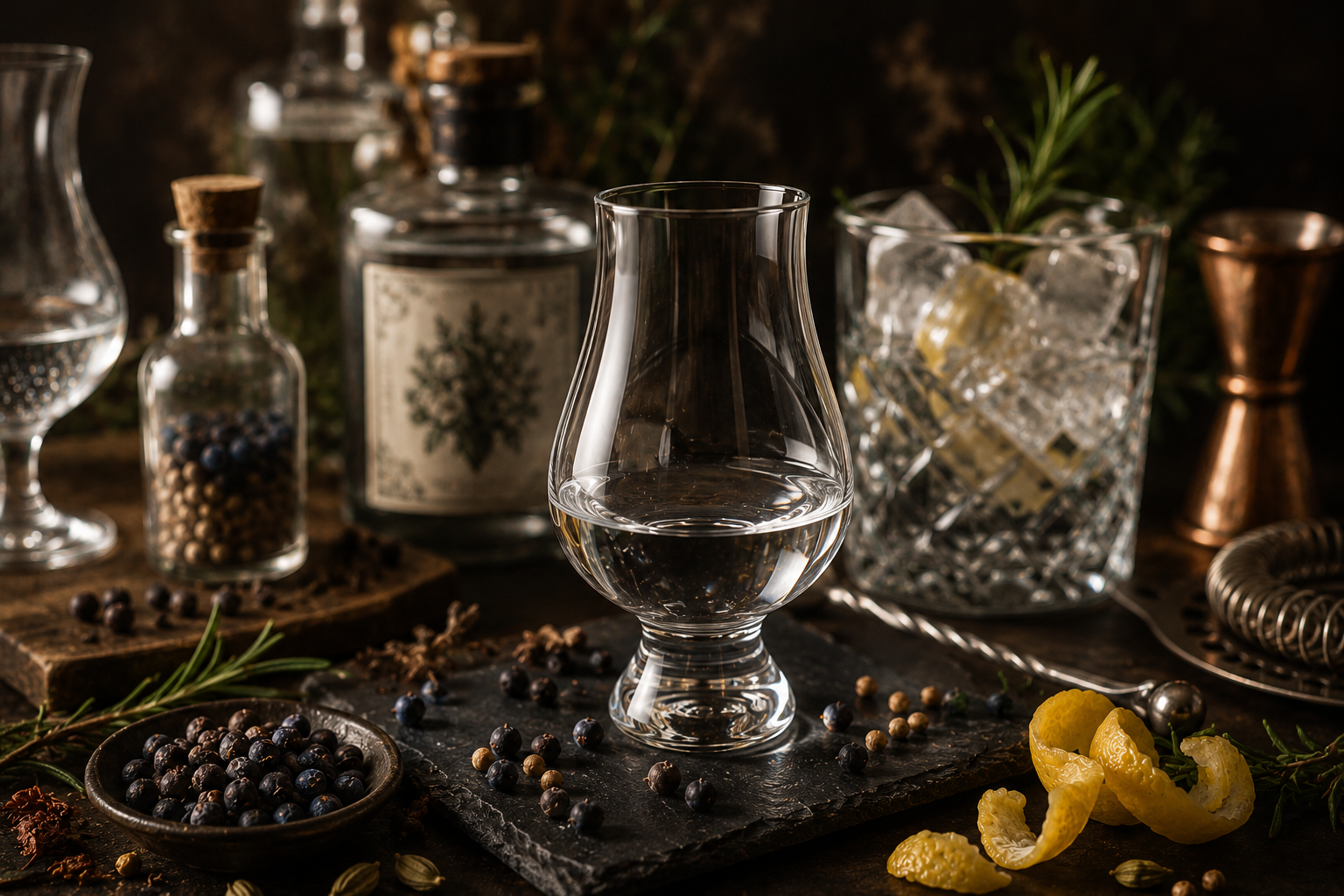
The first step is choosing the right glass. Tulip-shaped glasses, Glencairn or Copita are best suited for tasting. Their shape concentrates the aroma and allows you to better experience all the nuances of the drink.
If you don’t have a special glass, you can use a small white wine glass. However, a regular glass will not allow you to fully appreciate the aromatic profile of gin.
Optimal serving temperature
For a pure tasting, gin should not be overly chilled. It is best to open at a temperature of about 16–20 °C. It is in this range that the aromatic components become most pronounced, and the alcohol notes do not dominate.
If the bottle was stored in the refrigerator, let it stand at room temperature for a few minutes.
Start with a visual assessment
Pour about 20–30 ml of gin and pay attention to its transparency. High-quality gin should be absolutely clean, without sediment and foreign impurities. If the drink has been aged in oak barrels, it may have a light golden or amber hue.
Appreciate the aroma
Take your first sip slowly. First, just hold the glass in your hands for a few seconds and swirl it gently.
Raise the glass to your nose, but don't inhale too sharply. It is better to take a few short breaths, gradually getting to know the aroma.
In a quality gin you can feel:
- juniper berries;
- citrus notes;
- flowers;
- herbs;
- spices;
- fruity shades;
- light woody nuances (for aged gins).
Don't try to find all the aromas at once. Often the bouquet opens gradually.
First sip
The first sip should be very small. Don't rush to swallow the drink right away. Let it sit in your mouth for a few seconds to allow it to contact all your taste buds.
Pay attention to:
- smoothness;
- balance of alcohol;
- sweet, sour and spicy notes;
- fullness of flavour;
- structure of the drink.
The aftertaste matters
After a sip, don't rush to take another one. It's the aftertaste that lets you understand the quality of the gin.
A good gin has a long, clean and gradual aftertaste. At first, juniper or citrus may dominate, then herbal, floral or spicy nuances appear.
Add a few drops of water
Professional tasters sometimes add a few drops of pure still water to gin. This helps to partially "open" the aromatic components and make individual notes more noticeable.
It is important not to overdo it - literally a few drops are enough.
Compare several gins
It is best to get acquainted with the world of gin not with one, but with several different samples. For example, you can compare a classic London Dry, a modern craft gin with pronounced citrus notes, and a gin aged in oak barrels.
This approach allows you to better understand the characteristics of each style and learn to recognize individual aromatic accents.
Typical mistakes during tasting
To get the most out of your experience, you should avoid several common mistakes:
- chilling the gin too much;
- using a glass instead of a tasting glass;
- taking large sips;
- adding tonic or ice immediately;
- tasting after spicy or very aromatic food;
- using a glass that smells of detergent.
Tasting is an experience, not a rush
A quality gin is created so that its taste is revealed gradually. You should not rush or try to instantly find all the aromatic nuances. Each tasting reveals new nuances, especially when comparing different styles and producers.
If you choose a craft gin, take a few minutes to properly taste it. This is how you can fully appreciate the work of the distiller, the quality of the botanicals and the harmony of taste. ENTUZIAST gins, created on the basis of natural ingredients, are especially interesting to reveal during a leisurely tasting, allowing you to feel the richness of the aroma and a long aftertaste.