





Why Shouldn’t You Drink Strong Spirits Too Cold?
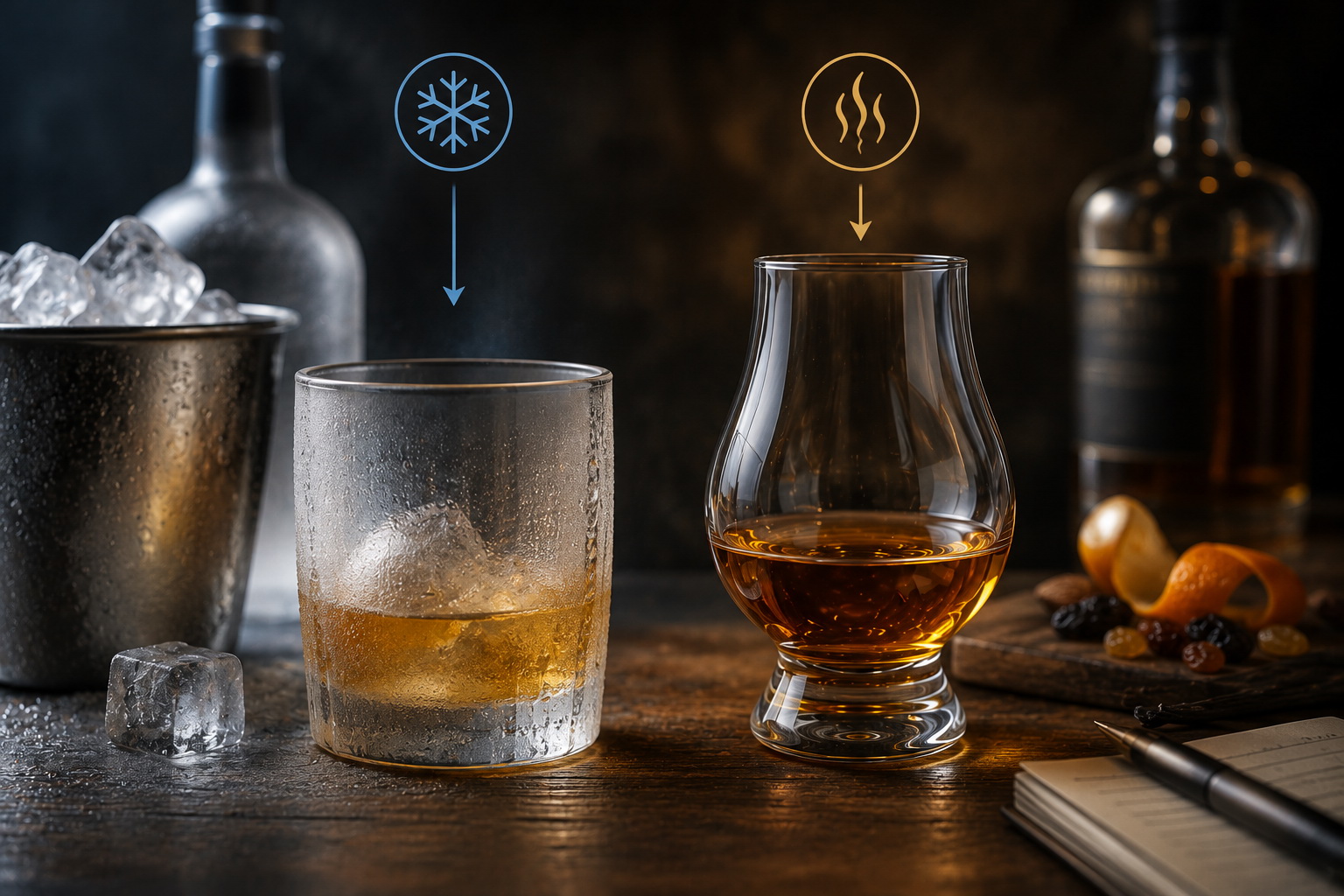
Chilled spirits often seem smoother and easier to drink. Cold temperatures reduce the sensation of alcohol burn, soften harshness, and make the first sip feel more comfortable. This is why bottles of strong alcohol are often placed in the refrigerator or even the freezer.
However, very low temperatures have another effect: they suppress aroma and partially hide the flavor characteristics of the drink. Gin, honey spirits, whisky, and aged distillates may seem much simpler than they really are.
Temperature plays an important role during a careful tasting. A spirit should be cool enough to prevent the alcohol from feeling excessively sharp, but warm enough for its aromatic compounds to evaporate and reach the nose.
How Does Temperature Affect the Aroma of Spirits?
The aroma of a strong spirit is created by volatile compounds. These substances gradually evaporate from the surface of the liquid, collect inside the glass, and are detected by the sense of smell.
The lower the temperature of the drink, the more slowly its aromatic compounds evaporate. In very cold spirits, the aroma becomes weaker and individual notes are more difficult to recognize.
As the drink gradually warms in the glass, its aroma becomes more expressive. Citrus, floral, herbal, spicy, honeyed, fruity, or woody notes may begin to appear, even though they were almost impossible to detect immediately after the bottle was taken from the refrigerator.
Why Do Cold Spirits Seem Smoother?
Low temperatures reduce the sensitivity of the receptors in the mouth. As a result, alcohol burn, bitterness, and some other sharp sensations become less noticeable.
Very cold liquid may also create a sense of greater thickness and smoothness. The spirit feels softer, even though its actual alcohol strength has not changed.
This is why chilling is often used for drinks that are consumed quickly or are not intended to be analyzed in detail. Cold makes alcohol easier to drink, but it can hide both its flaws and its strengths.
Does Chilling Change the Flavor?
The chemical composition of a drink does not change simply because it has been chilled. However, the way the taste receptors work and the rate at which aromatic compounds evaporate both change.
Since a significant part of our perception of flavor comes from aroma, suppressing the aroma also makes the flavor seem less expressive. The drink may appear simpler, more neutral, or less layered.
The following characteristics are usually less noticeable at low temperatures:
- floral aromas;
- fruity notes;
- citrus peel;
- herbs and spices;
- vanilla and caramel;
- woody notes;
- honeyed and waxy nuances;
- a long, complex finish.
Why Is the Freezer Not Always a Good Idea?
Strong spirits usually do not freeze in an ordinary household freezer, but they can become extremely cold and noticeably more viscous.
In this state, the drink may feel exceptionally smooth and produce almost no alcohol burn. At the same time, however, its aroma becomes much weaker.
Strong chilling may be suitable for neutral spirits whose main qualities are purity and smoothness. For aromatic gin, honey spirits, brandy, whisky, and aged distillates, however, the freezer often hides a large part of their character.
When a producer has invested time in selecting botanicals and raw ingredients, controlling fermentation and distillation, or aging a spirit in oak, excessive cold can make much of that work almost impossible to appreciate.
What Is the Ideal Serving Temperature for Strong Spirits?
There is no single temperature that is perfect for every spirit. The ideal range depends on the type of drink, its alcohol strength, aromatic intensity, and the way it is being served.
For analytical tasting, most aromatic spirits are better served slightly cool or at a moderate room temperature rather than ice-cold.
The following approximate serving ranges may be used as a starting point:
- gin served neat: approximately 14–18°C;
- honey and fruit distillates: approximately 16–20°C;
- whisky and aged distillates: approximately 18–22°C;
- gin and tonic and other cocktails: considerably colder, usually served with ice;
- neutral spirits: may be served well chilled, depending on the drinking style.
These temperatures should not be treated as strict rules. They are simply useful reference points for finding a balance where the spirit is not excessively sharp but remains aromatically expressive.
What Is the Best Temperature for Gin?
Gin contains aromatic substances derived from juniper, citrus peel, coriander, roots, herbs, flowers, and spices. Many of these components become difficult to recognize at very low temperatures.
When the goal is to taste gin neat, it should not be served directly from the freezer. It is better to chill it slightly or pour it into a glass and allow it to rest for a few minutes.
Gin may change as it gradually warms. Juniper and citrus may be more noticeable at first, while herbal, floral, earthy, or spicy notes can appear later.
Should Gin Be Chilled for Cocktails?
Different rules apply to cocktails. Gin and tonic, martinis, and many other mixed drinks are normally served cold.
In this case, chilling is part of the recipe. It affects not only the aroma but also the balance, texture, dilution, and overall impression of the cocktail.
In a gin and tonic, a generous amount of ice helps maintain a low temperature and slows further melting. In a properly prepared martini, chilling and controlled dilution with water create the desired texture and balance.
A cold cocktail and ice-cold neat gin are therefore not the same thing. In a cocktail, low temperature is part of the intended experience. During a neat gin tasting, however, it may prevent the botanicals from being fully appreciated.
What Is the Best Temperature for Honey Spirits?
Honey spirits may contain delicate floral, herbal, waxy, fruity, and spicy characteristics. These notes become less noticeable when the drink is heavily chilled.
It is usually best to begin with a slightly cool spirit and then observe how it changes as it rests in the glass.
As the temperature gradually rises, new aromatic details may emerge. These can include gentle floral notes, fresh herbs, ripe fruit, beeswax, or characteristics inherited from the original honey.
The glass should not be deliberately overheated in the hands. Excessive warming increases alcohol evaporation and may once again hide the more delicate aromas.
What Temperature Is Best for Aged Spirits?
Aged distillates often have a complex profile that includes oak, vanilla, caramel, spices, nuts, dried fruit, tobacco, or chocolate.
Excessive chilling is particularly undesirable for these drinks. Cold suppresses their complexity and can shorten the perceived finish.
Whisky, brandy, and other aged spirits generally reveal themselves more fully at a moderate temperature. The drink can be poured into a glass and left to rest for several minutes.
Gradual aromatic development is often an important part of the tasting experience. After five or ten minutes, the same drink may seem noticeably different from the way it tasted immediately after pouring.
Can Spirits Be Chilled with Ice?
Ice both cools and dilutes a drink. Its effect is therefore different from simply chilling the bottle.
At first, the spirit becomes colder, smoother, and less aromatic. As the ice melts, the alcohol strength decreases, and some aromatic notes may begin to reappear.
This creates a gradual evolution of the drink inside the glass. Such a serving style can be enjoyable for relaxed, slow drinking. It is less suitable for precise tasting because both the temperature and alcohol strength are constantly changing.
Are Large or Small Ice Cubes Better?
Large ice cubes or spheres have a smaller surface area relative to their volume, so they melt more slowly. They cool the drink for longer while diluting it more gradually.
Crushed ice or small cubes melt much faster, causing the spirit to become cold and diluted more quickly.
For a strong aged spirit, one large ice cube is usually a better choice when the goal is slow cooling. In cocktails, the type of ice should be selected according to the recipe and the desired level of dilution.
Can Whisky Stones Replace Ice?
Whisky stones and metal cooling cubes chill the drink without diluting it. They may be useful when someone wants to lower the temperature while preserving the original alcohol strength.
However, they have limited cooling capacity and usually do not chill a drink as effectively as real ice. Hard objects can also damage a delicate glass or become inconvenient while drinking.
For a careful tasting, it is usually better to serve the spirit at an appropriate temperature from the beginning. Cooling stones are more suitable for casual drinking.
Can an Over-Chilled Spirit Be Warmed Quickly?
When a spirit has been served too cold, the best solution is simply to leave it in the glass for a few minutes.
There is no need to place the glass near a heater, immerse it in warm water, or warm it aggressively with the hands. Rapid heating may increase alcohol evaporation and make the aroma feel unbalanced.
Gradual, natural warming allows you to observe the development of the drink. It is also a useful way to discover the temperature at which you personally enjoy it most.
What Happens to the Finish?
Very cold spirits often produce a shorter and less expressive finish. The receptors are less active, and aromatic compounds travel more slowly to the nose after swallowing.
As the drink warms slightly, the finish may become longer and more detailed. Notes of spices, oak, citrus bitterness, dried fruit, honey, or herbs may begin to appear.
The finish is an important part of the overall experience with aged and complex distillates. This is one of the reasons why such spirits are rarely recommended for tasting at an ice-cold temperature.
Does Cold Hide Flaws in a Spirit?
Yes. Low temperature can partially hide harshness, undesirable odors, excessive bitterness, and imbalance.
This does not mean that every chilled drink is of poor quality. Many styles are traditionally served cold. However, when assessing quality, it is useful to allow the spirit to warm slightly.
When the aroma remains clean, balanced, and complex as the temperature rises, this is a positive sign. If harsh or unpleasant notes appear, heavy chilling may simply have been hiding them.
A Simple Temperature Experiment at Home
To see how temperature affects a spirit, compare the same drink in two identical glasses.
- Pour the first sample directly from the refrigerator.
- Leave the second sample at room temperature for 15–20 minutes.
- Pour equal amounts into two identical glasses.
- Compare the aromas without inhaling too deeply.
- Take a small sip from each glass.
- Compare the sharpness, texture, flavor, and finish.
The colder sample will probably seem smoother and more restrained. The warmer sample may be more aromatic and complex, although it may also feel slightly sharper.
This experiment can help you find the temperature that best suits the particular spirit and your personal preferences.
Common Mistakes
- Keeping every strong spirit in the freezer. Different styles require different serving temperatures.
- Believing that colder always means better. Cold changes perception but does not improve the composition or quality of the drink.
- Tasting aromatic gin ice-cold. This makes it much harder to recognize the botanicals.
- Warming a cold glass too aggressively with the hands. Rapid warming may increase alcohol sharpness.
- Adding a large amount of small ice cubes to an aged spirit. They cool and dilute the drink very quickly.
- Ignoring the way the drink changes in the glass. A spirit may continue to open up for several minutes.
Is There One Correct Serving Temperature?
No. Even two spirits from the same category may reveal themselves best at different temperatures.
The perception of a drink is influenced by:
- alcohol strength;
- the concentration of aromatic oils;
- whether the spirit has been aged;
- the composition of its botanicals;
- its level of sweetness;
- the shape of the glass;
- the temperature of the room;
- personal preferences.
Recommended temperatures should therefore be treated as useful starting points rather than unchangeable rules.
Temperature as a Tasting Tool
Temperature can be used as a tasting tool in the same way as the right glass or a few drops of water.
The same drink can be sampled while slightly cool and then allowed to warm gradually. This makes it possible to observe how the aroma changes, which notes appear first, and which characteristics remain in the finish.
This type of tasting does not require any special equipment. All that is needed is time, a clean glass, and attention to your own impressions.
Conclusion
Very cold spirits often seem smoother, but they also lose much of their aromatic expressiveness. Low temperature slows the evaporation of volatile compounds, reduces receptor sensitivity, and may shorten the finish.
Strong chilling is appropriate for cocktails and certain neutral spirits. Aromatic gin, honey spirits, whisky, and aged distillates, however, generally reveal more of their character at moderate temperatures.
There is no need to use a thermometer or follow exact numbers strictly. It is usually enough to avoid serving a complex spirit ice-cold and to give it several minutes to rest in the glass.
The right temperature does not change the spirit itself. It simply helps reveal more of its character, aromatic structure, raw ingredients, and craftsmanship.