





Why Should You Let Strong Spirits Rest in the Glass?
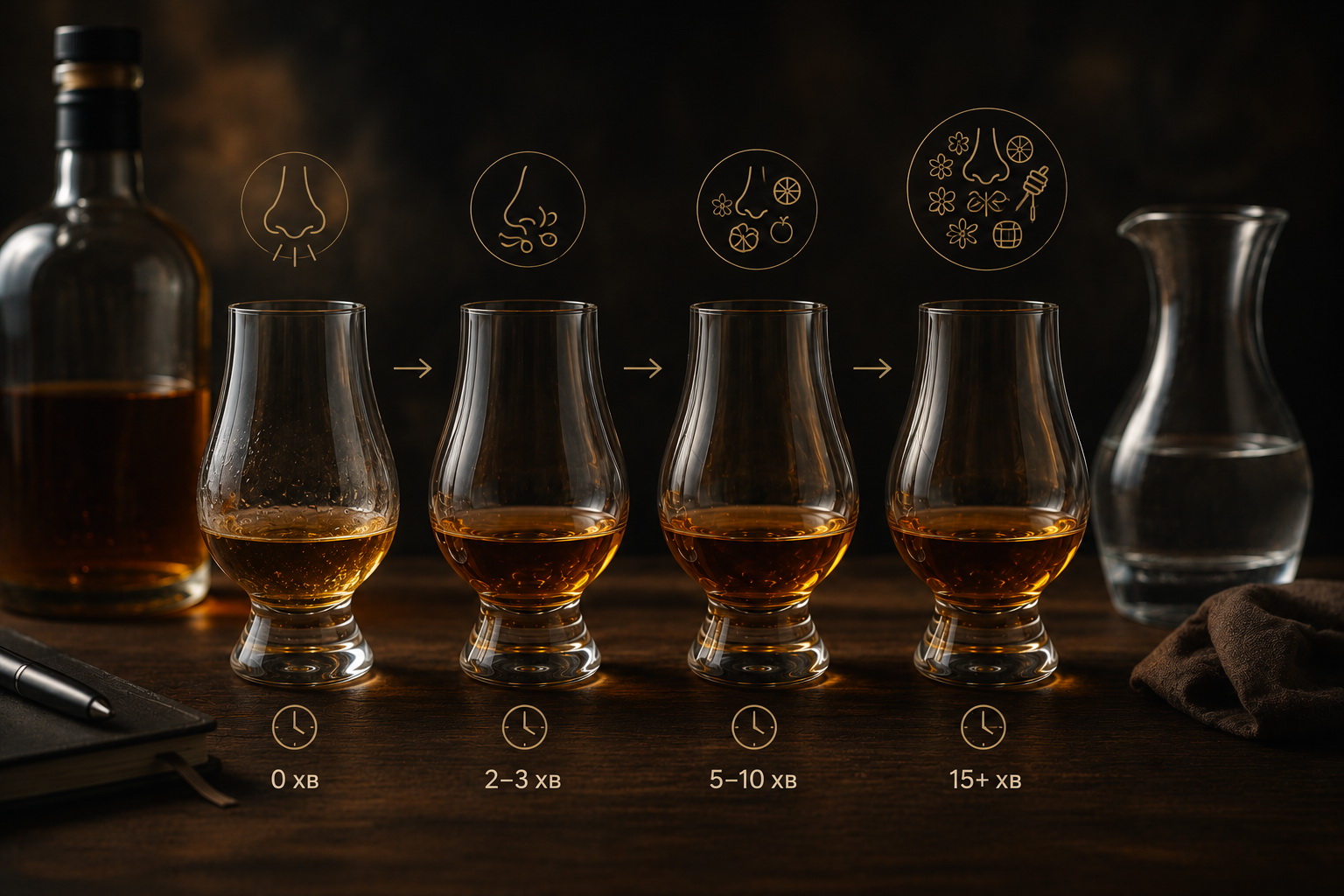
After pouring a strong spirit into a glass, it is tempting to smell and taste it immediately. However, the first impression does not always reveal the drink’s full character. Gin, honey spirits, whisky, and other aged distillates often benefit from being left undisturbed for a few minutes.
During this time, the temperature of the drink begins to stabilize, some of the sharp alcohol vapor disperses, and aromatic compounds gradually accumulate in the upper part of the glass. As a result, the aroma may become softer, more complex, and easier to understand.
Resting in the glass does not change the composition of the spirit or create new aromas. It simply helps reveal the characteristics that have already been formed by the raw materials, fermentation, distillation, botanicals, or oak aging.
What Does It Mean to Let a Spirit Rest?
Letting a spirit rest means pouring a small serving into a glass and not rushing to take the first sip. In most cases, leaving the drink undisturbed for several minutes is enough.
During this time, several simple physical processes take place:
- the temperature of the drink moves closer to the temperature of the glass and the room;
- volatile aromatic compounds begin to evaporate;
- some of the alcohol vapor disperses;
- aromas accumulate in the space above the liquid;
- the drink gradually interacts with the air.
As a result, the aroma may seem less aggressive and more layered.
Why Can the Aroma Be Sharp Immediately After Pouring?
When a spirit has just been poured, the movement of the liquid and its sudden contact with air increase evaporation. Alcohol vapor may reach the nose first, creating a sharp sensation and making delicate aromas harder to recognize.
This is especially noticeable in high-strength spirits. Taking a deep breath immediately after pouring may reveal mostly alcohol rather than botanical, fruity, honeyed, spicy, or woody notes.
After a short rest, some of the most intense vapor disperses, allowing the sense of smell to detect the other components more clearly.
Do Spirits Really “Breathe”?
The phrase “let the drink breathe” is often used when discussing wine and strong spirits. It does not mean that the drink literally breathes. It refers to its contact with air.
Once the spirit is poured, a larger surface area of liquid is exposed to oxygen. At the same time, aromatic compounds move into the space above the drink, where they become easier to detect.
In strong spirits, this process is generally slower and more subtle than it is in wine. A few minutes are often enough to notice a difference, but leaving the drink exposed for a long time does not necessarily make it better.
How Does the Aroma Change While the Spirit Rests?
The aroma immediately after pouring may seem simple and sharp. After several minutes, it often becomes calmer and begins to unfold in layers.
Depending on the type of spirit, the following notes may gradually emerge:
- juniper and citrus peel;
- flowers, herbs, and roots;
- ripe or dried fruit;
- honeyed, waxy, and spicy nuances;
- vanilla, caramel, and oak;
- nuts, chocolate, or tobacco;
- smoky, earthy, or balsamic notes.
Sometimes the aroma becomes more intense. In other cases, it simply becomes cleaner and easier to understand.
How Long Should You Wait?
There is no single resting time suitable for every spirit. The rate at which a drink opens up depends on its alcohol strength, temperature, glass shape, aromatic intensity, and whether it has been aged.
For most home tastings, the following times can be used as general guidelines:
- light, aromatic gin: approximately 2–5 minutes;
- intense or high-proof gin: approximately 5–10 minutes;
- honey and fruit distillates: approximately 3–10 minutes;
- whisky and aged distillates: approximately 5–15 minutes;
- very high-strength spirits: sometimes 10–20 minutes.
These times are only reference points. It is better to observe the aroma and taste the drink at different stages.
Is There a “One Minute for Every Year of Aging” Rule?
Some people recommend leaving whisky in the glass for as many minutes as the number of years shown on the label. According to this idea, a twelve-year-old whisky should rest for twelve minutes.
This can be an enjoyable ritual, but it is not a scientific rule. The age of a spirit does not by itself determine the ideal resting time.
A young high-proof distillate may require more time than a soft, well-aged spirit. At the same time, some complex older spirits reveal themselves almost immediately.
It is therefore better to rely on your senses rather than the number printed on the label.
Should You Cover the Glass?
During professional tastings, glasses are sometimes covered with small glass lids. This helps keep volatile aromatic compounds inside the glass.
At home, covering the glass is usually unnecessary. A properly shaped glass with a narrower opening already helps concentrate the aroma.
When a spirit will be left for a longer period, the glass may be covered briefly with a clean glass or neutral-smelling lid. Materials with a noticeable odor should be avoided because they can affect the aroma of the drink.
Should You Swirl the Glass?
Strong spirits should not be swirled aggressively. Vigorous movement greatly increases alcohol evaporation and may make the aroma more intense and harsh.
One slow movement or a gentle tilt of the glass is enough. The spirit should then be allowed to settle again for a few seconds.
For the first assessment, you can avoid swirling altogether. Smell the drink while it is still, then gently increase its contact with air and compare the result.
How Should You Evaluate the Aroma After Resting?
Do not immediately place your nose deep inside the glass. Start from a small distance and use short, gentle breaths.
A practical sequence is:
- pour 20–30 ml of the spirit into the glass;
- leave it to rest for several minutes;
- bring the glass towards your nose without touching the rim;
- take a short, gentle breath;
- slightly change the angle of the glass;
- assess the aroma again;
- only then take a small sip.
This approach helps prevent alcohol vapor from overwhelming the olfactory receptors.
Does the Flavor Change While the Spirit Is Resting?
The chemical composition of the drink changes very little over a few minutes, but the way it is perceived can change considerably. Temperature, aroma, and the concentration of alcohol vapor all influence the experience of flavor.
After resting, a spirit may seem:
- smoother;
- less sharp;
- sweeter or fruitier;
- more spicy;
- fuller-bodied;
- more harmonious;
- longer in the finish.
Less pleasant characteristics may also become more noticeable. This is also a useful part of tasting because resting can help provide a more objective assessment of the spirit’s quality.
What Happens to Gin in the Glass?
Gin contains essential oils and aromatic compounds from juniper, citrus peel, coriander, roots, herbs, flowers, and spices.
Immediately after pouring, alcohol, juniper, and citrus may be the most obvious characteristics. After a few minutes, additional botanicals may appear, including floral, herbal, earthy, spicy, or balsamic notes.
It can be especially interesting to observe a complex craft gin made with many botanical ingredients. Its aroma may continue to change throughout the tasting.
How Long Should Gin Rest?
Three to five minutes is enough for most gins. A gin with a high alcohol strength or an especially rich botanical profile may benefit from resting a little longer.
A very small serving should not be left in a wide, open glass for too long. The aromatic compounds may gradually disperse, making the gin less expressive.
A useful approach is to assess the gin several times: immediately after pouring, after three minutes, and again after ten minutes.
How Does Resting Affect Honey Spirits?
Honey spirits may contain delicate floral, herbal, fruity, waxy, and spicy notes. These characteristics are not always immediately noticeable, particularly when the drink has a high alcohol strength.
Several minutes in the glass can soften the first alcoholic impression. The aroma may then become warmer, smoother, and more expansive.
This does not necessarily mean that the honey spirit becomes sweeter. What often changes is the perception of its fruity, floral, and honey-related aromas rather than its actual level of sweetness.
What Happens to Aged Spirits?
Aged distillates often have complex aromatic profiles. In addition to the character of the original raw material, they may contain notes derived from oak, such as vanilla, caramel, spices, nuts, dried fruit, tobacco, and chocolate.
These spirits may benefit from a little more time. After five to ten minutes, the sharpness of the oak may soften and the aroma may become more harmonious.
Some aged spirits continue to change for twenty or thirty minutes. This does not mean you must wait that long before taking the first sip. The spirit can be tasted gradually while you observe its development.
Should Young Spirits Be Allowed to Rest?
Young spirits can also change in the glass. Alcohol sharpness, fresh fruit notes, and the character of the raw material may be more prominent in an unaged distillate.
A short rest helps separate the aroma from the alcohol vapor and makes it easier to assess the cleanliness of the distillation.
However, a few minutes of exposure to air cannot replace years of maturation. A young spirit will not become older or more complex simply because it has been left in a glass.
Can a Spirit Rest for Too Long?
Yes. Over time, volatile aromatic compounds do not only accumulate in the glass; they also gradually escape from it.
If a small serving is left in a wide, open glass for several hours, its aroma may become weaker and less balanced.
The drink will also warm to the temperature of the room. In a warm environment, this may increase the perception of alcohol sharpness.
For most tastings, observing the spirit over a period of 10–30 minutes is sufficient.
Should Strong Spirits Be Decanted?
Wine is often decanted to separate sediment or increase contact with air. For most strong spirits, this procedure is unnecessary.
Pouring a spirit into a wide decanter may cause its aromatic compounds to evaporate more quickly. Decorative decanters also do not always provide an airtight seal.
For tasting, it is better to pour a small serving directly from the bottle into a suitable glass and allow it to rest there.
A decanter may be used for presentation, but valuable aromatic spirits should not be stored in one for an extended period.
Does the Shape of the Glass Affect Resting Time?
Yes. In a glass with a wide bowl and a narrower opening, aromatic compounds evaporate from the surface while remaining concentrated near the rim.
In a wide, low glass, aromas disperse into the room more quickly. In a very narrow shot glass, there is not enough space for the aroma to develop.
A tulip-shaped tasting glass allows a spirit to rest without losing its aromatic compounds too quickly.
Should Water Be Added Before or After Resting?
It is best to assess the spirit neat first. Pour it into the glass, let it rest for several minutes, smell it, and take a small sip.
After that, you may add two or three drops of water. Water changes the alcohol concentration and the behavior of aromatic compounds, so the drink should be left for another one or two minutes.
This allows you to compare three stages:
- immediately after pouring;
- after resting while neat;
- after adding water.
It is a simple way to observe how the spirit changes under the influence of time and dilution.
Should You Let a Spirit with Ice Rest?
When ice is added to a spirit, the processes are different. The drink cools rapidly and is then gradually diluted with water.
In this case, resting involves not only contact with air but also continuous changes in temperature and alcohol strength.
The first sip will be the coldest and strongest. After several minutes, the drink will be more diluted, and its aroma may change.
For precise tasting, it is better to assess a spirit without ice. For relaxed drinking, however, the gradual development of a spirit over ice can be part of the enjoyment.
A Simple Resting-Time Experiment at Home
To understand how resting affects a particular spirit, you can conduct a simple experiment.
- Pour equal amounts of the spirit into three identical glasses.
- Assess the first sample immediately.
- Leave the second sample for five minutes.
- Leave the third sample for fifteen minutes.
- Compare the aroma of each sample.
- Take a small sip from each and assess the flavor and finish.
The first sample may seem sharper. The second may be more balanced and aromatic. The third may reveal additional notes, although in some spirits the aroma may already have begun to weaken.
This experiment helps determine the ideal resting time for the particular drink.
Common Mistakes
- Smelling the spirit immediately after pouring it vigorously. Alcohol vapor may be especially intense at this moment.
- Taking a deep breath from inside the glass. This can overwhelm the sense of smell.
- Swirling strong spirits aggressively. Excessive evaporation increases alcohol sharpness.
- Leaving a small serving exposed for several hours. The aroma may disperse, and the drink may become too warm.
- Expecting every spirit to improve with time. Some spirits are at their most expressive immediately after pouring.
- Treating resting as a substitute for aging. A few minutes in the glass cannot change the age or structure of a spirit.
Does Resting Always Improve a Spirit?
No. Resting does not automatically improve the quality of a drink.
In a well-balanced spirit, it may reveal complexity and soften alcohol sharpness. In a simple or unstable spirit, exposure to air may instead make undesirable notes more noticeable.
Some delicate distillates quickly lose their fresh aroma. It is therefore better to observe how the drink develops rather than wait for a predetermined amount of time.
Resting as Part of Mindful Tasting
Leaving a spirit in the glass for a few minutes is not a complicated ritual or a mandatory formality. It is simply a way to slow down and give yourself more time to become familiar with the drink.
While the spirit is resting, you can examine its color, clarity, and texture. You can then explore its aroma gradually, take a small sip, and observe the finish.
This approach makes it possible to experience more than alcohol strength alone. It helps reveal the influence of the raw materials, botanicals, distillation, and aging.
Conclusion
Strong spirits often benefit from resting in the glass for several minutes. During this time, the initial alcohol sharpness decreases, the temperature stabilizes, and subtle aromatic characteristics become easier to recognize.
Three to five minutes is usually enough for gin. Honey and fruit distillates may need up to ten minutes, while complex aged spirits may benefit from slightly longer.
There is no universal resting time suitable for every bottle. The best approach is to assess the spirit immediately after pouring and then return to it several minutes later to compare your impressions.
Resting does not transform the spirit, but it gives the drink an opportunity to reveal more of itself—and gives the taster a chance to notice what can easily be missed when drinking too quickly.