





London Dry, Distilled Gin and Gin: What’s the Difference?
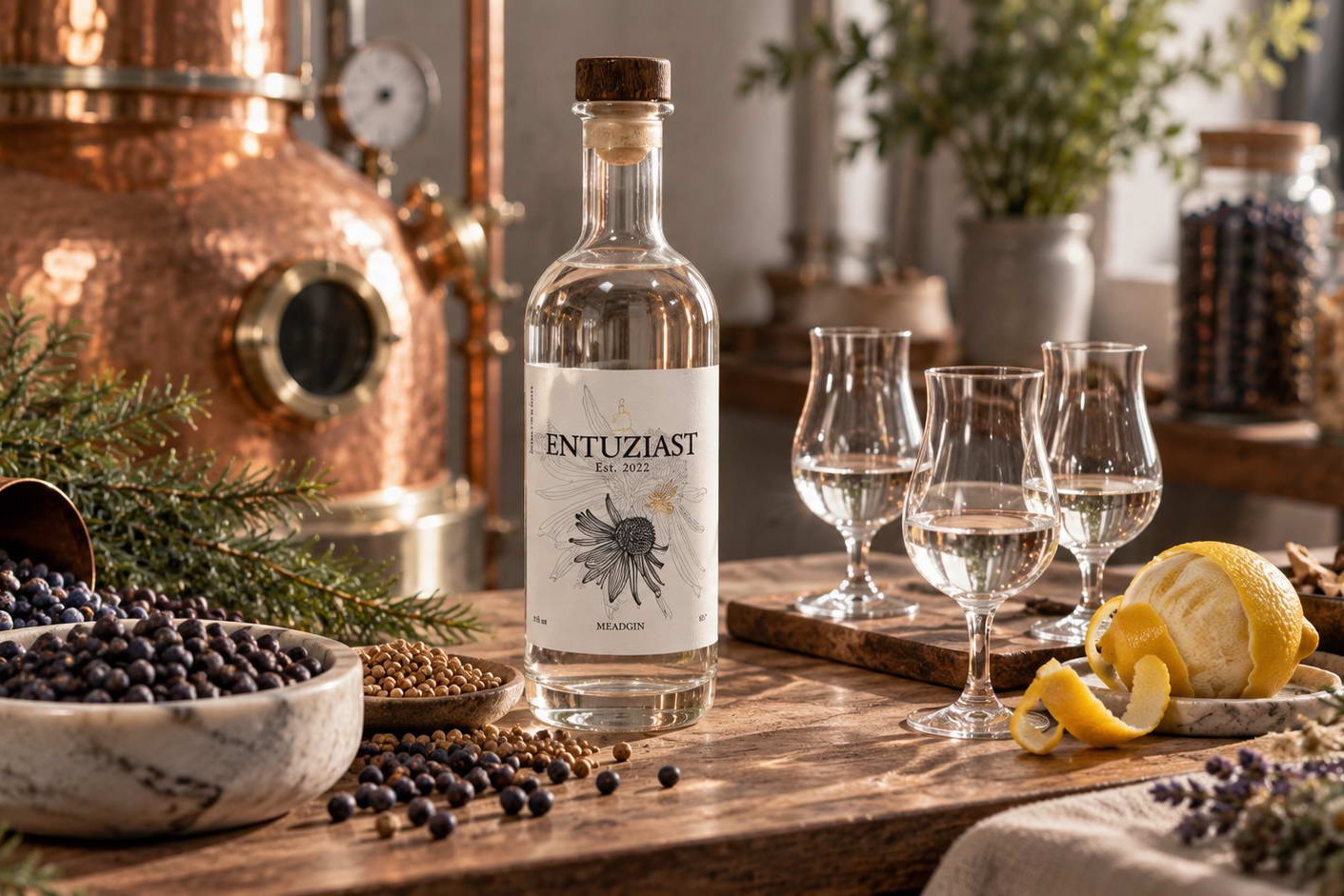
On gin labels, you may see different terms:
- Gin;
- Distilled Gin;
- London Dry Gin;
- Dry Gin;
- Craft Gin;
- Contemporary Gin.
It is easy to assume these are simply different marketing names for the same type of drink.
But some of these terms reflect real differences in production.
It is especially useful to distinguish between three concepts:
Gin, Distilled Gin and London Dry Gin.
And importantly, London Dry does not necessarily mean a gin made in London, while the word Dry does not always mean exactly what people assume.
Let’s break it down without the myths.
Let’s Start with the Basics: What Makes Gin Gin?
The defining aromatic feature of gin is juniper.
Juniper berries create the character that distinguishes gin from simply flavoured neutral spirit.
Alongside juniper, producers may use dozens of other botanicals:
- coriander;
- lemon peel;
- orange;
- cardamom;
- angelica root;
- orris root;
- pepper;
- herbs;
- flowers;
- berries;
- spices.
But the way these aromas enter the drink can differ considerably.
What Is Regular Gin?
Gin is the broadest category.
In simple terms, it is an alcoholic base flavoured with juniper and other botanicals in such a way that juniper remains recognisable.
Within this broader category, the producer may have more technological freedom.
For example, aromatic components may be introduced not only through redistillation with botanicals, but also through other permitted methods.
So the word Gin by itself does not necessarily tell you exactly how the aroma was created.
Does That Mean Regular Gin Is Worse?
No.
A category describes production rules, not quality.
A regular Gin can still be:
- well balanced;
- aromatic;
- interesting;
- well made.
Likewise, the words London Dry do not guarantee that you personally will enjoy the drink.
What Is Distilled Gin?
Distilled Gin is a gin in which the aromatic profile is created through distillation of an alcoholic base with juniper and other botanicals, or through the distillation of aromatic ingredients in an alcoholic medium.
Redistillation is an important part of the production method.
When heated, volatile aromatic compounds from the botanicals rise with the alcohol vapour and are later condensed.
This creates an aromatic gin distillate.
How Do Botanicals Get into Distilled Gin?
There are several common methods.
For example, botanicals may:
- macerate in the alcohol base before distillation;
- be distilled directly with the spirit;
- be placed in a botanical basket in the vapour path;
- be used through a combination of methods.
Each approach can create a somewhat different aromatic character.
What Is Maceration?
Maceration means soaking botanicals in the alcohol base before distillation.
During this time, the alcohol extracts:
- essential oils;
- aromatic compounds;
- some flavour components.
The mixture is then distilled.
Some of these compounds pass into the finished aromatic distillate.
What Is Vapor Infusion?
With this method, botanicals do not necessarily sit directly in the liquid.
They can be placed higher in the still.
Alcohol vapour passes through the plant material and carries volatile aromatic compounds with it.
This approach can often create a lighter and more delicate aromatic profile.
Can Distilled Gin Be Flavoured After Distillation?
Depending on the specific category and local regulations, additional flavouring after distillation may be permitted.
This is one of the important distinctions between Distilled Gin and the more strictly defined London Dry Gin style.
What Is London Dry Gin?
London Dry Gin is a more strictly defined production style.
The central idea is simple:
the character of the gin should be created during distillation rather than by flavouring the finished spirit afterwards.
Juniper, citrus, coriander and other botanicals should therefore form the main profile during the distillation process itself.
Does London Dry Mean “Made in London”?
No.
This is one of the most common myths about gin.
London Dry is a style and production category, not a geographical origin.
London Dry Gin can be produced in many different countries.
It does not need to be made in London or even in the United Kingdom.
Why Is It Called London Dry Then?
The name comes from the historical development of gin styles and production methods.
Over time, London Dry became associated with a particular method and character.
Today, the word London in this context does not function as a geographic address.
What Does “Dry” Mean?
In everyday language, Dry is associated with the absence of sweetness.
And that is partly correct.
London Dry is not intended to be a sweet, liqueur-like gin style.
But the word Dry is also historically connected to the production method and the overall style.
The classic sensory image is a dry, clean, juniper-led botanical profile.
Can Sugar Be Added to London Dry?
Only a very small amount of sweetening is permitted within the rules of the category.
So London Dry is fundamentally not a sweet gin style.
If a gin tastes clearly sweet, it is already far from the classic sensory image of London Dry.
Can Lemon Flavour Be Added After Distillation?
For classic London Dry, the main aromatic character should be created during distillation itself.
That means the producer should not make a neutral gin first and then simply “paint on” the aroma with lemon essence afterwards.
This production discipline is one of the defining features of the style.
So Where Does the Citrus Come From?
For example, from lemon, orange, grapefruit, citron or other citrus peel used as botanicals during production.
Aromatic oils from the peel pass into the distillate.
There are no pieces of lemon left in the finished bottle.
But the citrus aroma remains.
We will explore this in a separate article in this series.
Is London Dry Always Very Juniper-Forward?
Juniper is usually quite expressive in this style.
But the balance can still vary significantly.
One London Dry may be:
- piney;
- dry;
- peppery.
Another may show more:
- citrus;
- coriander;
- floral nuances;
- herbs.
The category does not force every gin to smell the same.
Can Distilled Gin Be More Interesting Than London Dry?
Absolutely.
These are different production frameworks, not a ranking system.
The greater freedom of Distilled Gin can allow producers to create unusual styles.
For example:
- more fruity;
- berry-driven;
- floral;
- modern;
- experimental.
Why Is London Dry So Highly Regarded?
Because of its production discipline and classic style.
The producer has to build the aromatic profile without being able to easily correct it afterwards with additional flavouring.
This requires careful selection of:
- botanicals;
- proportions;
- maceration time;
- distillation regime;
- cut selection.
Is London Dry Automatically Higher Quality?
No.
This is very important.
London Dry describes production method.
Quality still depends on:
- raw materials;
- the spirit base;
- botanicals;
- the distiller’s work;
- balance;
- final ABV.
A poorly made London Dry does not become good simply because those words appear on the label.
Does Regular Gin Have to Be Cheap?
No.
Production category should not be confused with price segment.
A gin made within broader technological rules can still be complex, expensive and very high quality.
Likewise, London Dry can range from accessible mass-market gin to premium craft products.
What Is Contemporary Gin?
This is more of a stylistic term than one universal legal category.
It is often used for modern gins where juniper remains important but is not always the most dominant note.
More emphasis may be placed on:
- citrus;
- flowers;
- herbs;
- berries;
- local botanicals.
What About New Western Gin?
This term is also often used for modern gins where juniper is less dominant.
Again, it is primarily a description of style rather than one universally defined official category.
Can London Dry Be Made with an Unusual Spirit Base?
Rules vary between legal systems, but in classic London Dry the base must meet the requirements of the category and the main aromatic profile must be formed during distillation.
If the base spirit has a very distinct character of its own, the producer has to balance it particularly carefully with the botanicals.
Why Does the Spirit Base Matter?
Many classic gins use a highly neutral spirit.
This allows the botanicals to take centre stage.
But signature gins can be built on a more characterful distillate base.
In that case, two aromatic layers interact:
- the spirit base itself;
- juniper and other botanicals.
Example: MeadGIN ENTUZIAST
MeadGIN ENTUZIAST is interesting because it is created on a honey distillate base.
So the base itself has its own origin and character.
On top of that comes the juniper-driven botanical profile of gin.
This approach clearly shows how strongly the base spirit can influence the individuality of the final drink.
Does a Honey Base Mean the Gin Is Sweet?
No.
Honey is used as a raw material for fermentation and distillation.
Sugars do not pass through distillation in the same way volatile aromatic compounds do.
So a honey base does not automatically mean a sweet gin.
We explained this in more detail in the article “Why Aren’t Honey Distillates Sweet?”.
Can You Identify the Gin Category by Taste?
Not always.
An experienced taster may be able to guess the style.
But the production category is more reliably identified from the label and the producer’s description.
Two gins can taste very similar while technically belonging to different categories.
Why Is the Label Important Here?
Because terms such as Gin, Distilled Gin and London Dry Gin can provide real information about the production method.
That is why it is useful to read not only the brand name and marketing description, but also the actual product category.
We discussed this in the article “How to Read the Label on a Strong Alcoholic Drink”.
Does “Dry” Mean Absolutely Zero Sugar?
Not necessarily literally zero.
Some categories permit a very small amount of sweetening.
But the sensory result should remain dry.
This is why London Dry is fundamentally different from sweet gin liqueurs.
Can a Pink Gin Be London Dry?
Colour alone does not provide the answer.
You need to know how the colour was created and what, if anything, was added after distillation.
If post-distillation additions do not meet London Dry requirements, the product cannot use the category simply because its flavour resembles a London Dry.
Are All Clear Gins London Dry?
No.
Clarity tells you nothing about the production category.
Gin, Distilled Gin and London Dry Gin can all be completely clear.
Is London Dry Always Drier in Taste Than Distilled Gin?
It often has a classic dry profile.
But sensory perception still depends on the recipe.
For example, intense citrus or floral aromas can create an impression of sweetness even in a practically dry gin.
Why Can an Aroma Seem Sweet Without Sugar?
Because the brain associates certain aromas with sweet foods.
For example:
- vanilla;
- ripe fruit;
- flowers;
- honey;
- candied citrus.
These notes can create an illusion of sweetness even when the actual sugar content is very low.
Do You Have to Drink London Dry Only with Tonic?
No.
It can be:
- tasted neat;
- served with a little ice;
- mixed with tonic;
- used in cocktails.
Its classic dry profile simply works very well in mixed drinks.
Which Style Is Better for Gin & Tonic?
There is no universal answer.
A classic London Dry works well when you want a clear juniper-driven profile.
A modern Distilled Gin may provide:
- more citrus;
- more floral character;
- berry notes;
- unusual botanicals.
The choice depends on the tonic and the profile you want.
Should You Judge Gin Only by Its Category?
No.
The category helps you understand the production method.
But when choosing gin, you should also consider:
- juniper character;
- botanicals;
- spirit base;
- ABV;
- texture;
- balance;
- finish.
We discussed this in detail in the article “How to Choose a Good Gin and What to Look For”.
How Can You Understand the Difference Quickly?
You can use a very simplified framework.
Gin — the broadest category with a clearly recognisable juniper character.
Distilled Gin — the aromatic profile is created with botanical distillation as an important part of production.
London Dry Gin — a stricter form of distilled gin where the main aroma must be formed during distillation and later flavour adjustment is heavily restricted.
What Matters More — the Label or the Taste?
For the buyer — both.
The label helps explain the technology.
The taste shows how successfully the producer used it.
A London Dry can be technically flawless but not suit your preferences.
An unusual Distilled Gin may become your favourite.
In Short: London Dry, Distilled Gin and Gin
- Gin is a broad category of juniper-led spirits.
- Distilled Gin uses botanical distillation as an important part of creating its aromatic profile.
- London Dry Gin follows stricter production rules.
- London Dry does not mean the gin was made in London.
- Dry does not necessarily mean absolute zero sugar, but the style should remain dry.
- London Dry is not automatically higher quality than other styles.
- The clarity of the bottle or spirit does not define the category.
- The number of botanicals does not define the category either.
- The method of flavouring matters more than the number of plant ingredients.
- The best gin is not the one with the most prestigious wording, but the one where technology and aromatic balance work together.
Conclusion
Gin, Distilled Gin and London Dry Gin are not simply three marketing names for the same thing.
They describe different production frameworks.
Gin gives the producer the greatest freedom.
Distilled Gin makes botanical distillation an important part of aroma creation.
London Dry imposes even stricter rules and requires the main aromatic character to be formed during distillation itself.
But no category is a guarantee of quality on its own.
London Dry is a production method, not a gold medal.
The quality of gin depends on how well the producer combines juniper, other botanicals, the spirit base, distillation, ABV and overall balance.
And in the next article in this series, we will look at one of gin’s most important but often underestimated botanicals — coriander.