





Should You Choose Alcohol by Its Age?
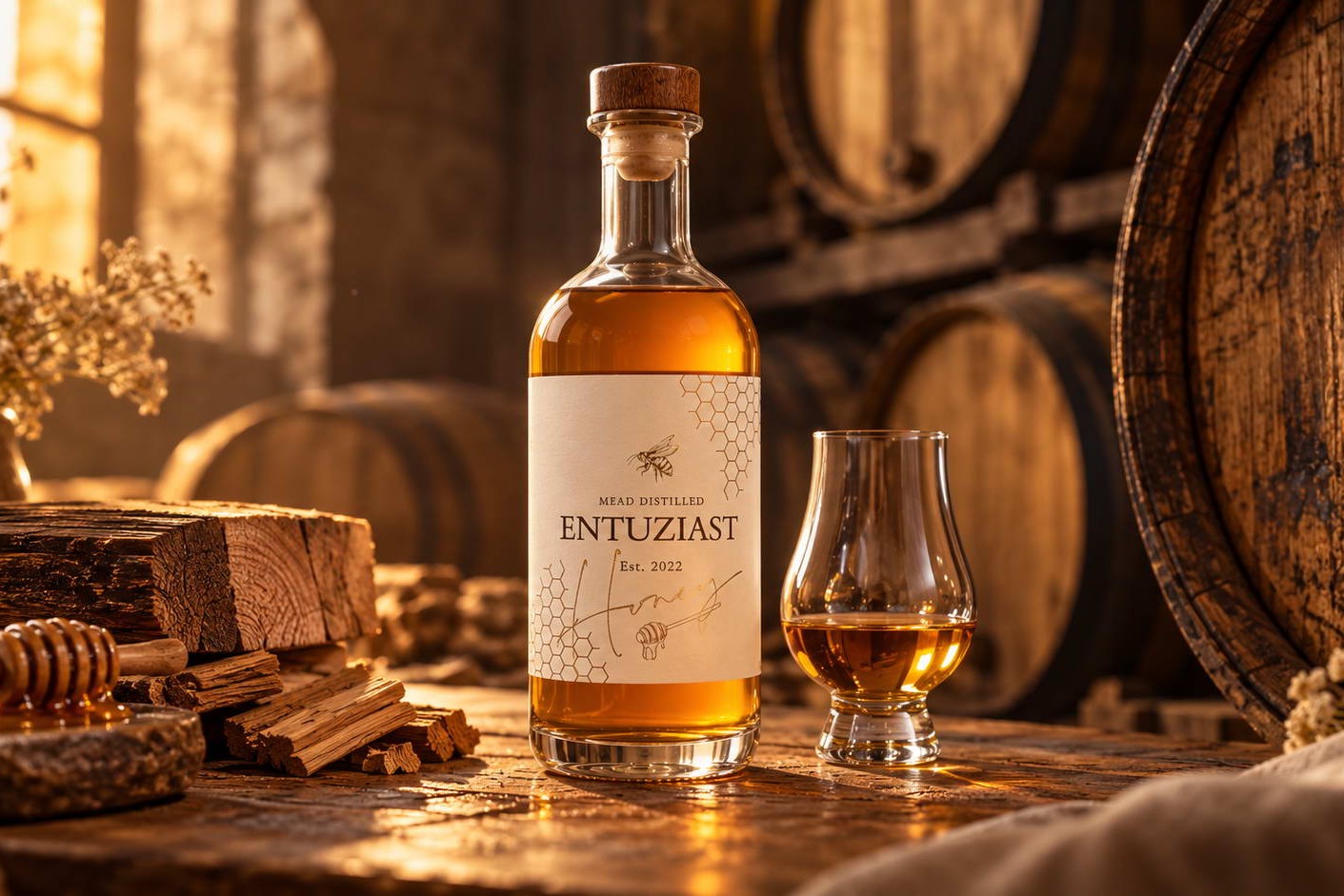
On a bottle of aged spirits, the age statement can look very convincing.
3 years.
8 years.
12 years.
18 years.
And it is easy to come to a simple conclusion:
the older the drink, the better it must be.
But in the world of strong spirits, that logic does not always work.
Age can tell you a lot about the history of a drink.
However, it does not automatically tell you:
- the quality of the distillate;
- the quality of the barrel;
- the balance;
- the aroma;
- the texture;
- whether the producer stopped maturation at the right moment.
So age is best treated as one characteristic among many, not as a score for the bottle.
What Does an Age Statement Actually Mean?
In the simplest sense, it indicates the amount of time a distillate spent in an ageing environment — most commonly an oak barrel.
During that period, active interaction takes place between:
- the distillate;
- the wood;
- oxygen;
- temperature;
- time.
The drink gradually changes.
New aromas appear, while colour, texture, dryness, structure and finish also evolve.
What Happens Inside a Barrel?
A barrel is not simply a wooden storage container.
During maturation, a complex series of processes takes place.
The distillate extracts various compounds from the wood.
This can create associations with:
- vanilla;
- caramel;
- spices;
- nuts;
- wood;
- dried fruit;
- coconut;
- toasted notes.
At the same time, slow oxidative and other chemical changes take place.
That is why ageing is much more than simply “adding oak flavour.”
Why Is Oak the Main Wood Used for Ageing Spirits?
Oak combines several useful properties.
It is strong enough for barrel making, has a suitable wood structure, and contains compounds capable of significantly changing the aroma and texture of a distillate.
We discussed this separately in the article “Why Have Spirits Been Aged in Oak Barrels for Centuries?”.
Does Alcohol Get Better with Every Year?
No.
This is probably the biggest myth surrounding age.
Maturation is not an endless process of improvement.
At a certain stage, the barrel can make the spirit more interesting, complex and harmonious.
But if the influence of the wood becomes excessive, the profile can begin to deteriorate.
The spirit may become:
- too dry;
- too woody;
- bitter;
- rough;
- overloaded with tannins.
So the most important question is not “how many years?” but whether maturation was stopped at the right time.
What Does “Over-Oaked” Mean?
This describes a situation where the oak begins to dominate the spirit itself.
Instead of balance, you may get:
- strong woodiness;
- dry tannic structure;
- bitterness;
- excessive spice;
- loss of the original raw-material character.
Technically, such a drink may be older.
But sensorially, it is not necessarily better.
Why Can a 5-Year-Old Spirit Feel “Older” Than a 10-Year-Old One?
Because the number of years is only one variable.
The speed and character of ageing are influenced by:
- barrel size;
- type of oak;
- condition of the wood;
- toast or char level;
- previous barrel use;
- temperature;
- humidity;
- initial alcohol strength;
- the barrel’s position in the warehouse.
So the same number of years can produce completely different results.
Why Does Barrel Size Matter?
In a smaller barrel, there is more wood surface area relative to the volume of liquid.
That means the spirit interacts with oak more intensively.
Colour, oak aroma and tannic structure can develop faster.
This is why small barrels can often produce a very noticeable effect in a shorter period of time.
But faster extraction is not the same as a complete copy of long traditional maturation.
More detail is available in the article “Why Do Small Barrels Mature Spirits Faster?”.
Can You Simply Compare Age Statements Across Different Spirits?
Not very accurately.
For example, five years for one type of distillate and five years for another can mean completely different things.
The reason is different raw materials, barrels and ageing conditions.
So age works best as a comparison within a specific category or style.
Comparing years alone across completely different spirits is too simplistic.
Does the Type of Oak Matter?
Yes.
Different oak species have different compositions.
They can vary in:
- tannin levels;
- lactones;
- aromatic precursors;
- wood structure;
- extraction rate.
So the same maturation time in different types of oak can create very different results.
What Does Toasting or Charring Change?
Before use, the inside of a barrel is normally heated.
This thermal treatment changes the chemistry of the wood.
Depending on the level of toasting, it can increase associations with:
- vanilla;
- caramel;
- toast;
- coffee;
- spices;
- smoke.
So even two barrels of the same age can behave very differently.
New or Used Barrel — Which Is Better?
It depends on the goal.
A new barrel generally has a larger reserve of active compounds.
It can contribute more quickly:
- colour;
- vanilla;
- tannins;
- wood;
- spices.
A used barrel often works more gently.
That is why a younger spirit from a new active barrel can sometimes show stronger oak influence than an older spirit from a repeatedly used barrel.
Why Are Ex-Wine Barrels So Interesting?
They have already given up part of their most active oak components.
At the same time, the wood retains an aromatic history from the wine previously stored inside.
This can add notes of:
- berries;
- dried fruit;
- nuts;
- spices;
- wine-like nuances.
That is why information about previous barrel use is often more useful than the age number by itself.
What Is Finishing?
Finishing is a final period of maturation in a different barrel.
For example, a distillate may spend most of its ageing period in one barrel and then several additional months in another.
The goal is to add new aromatic layers without completely changing the core character.
Should Finishing Be Added to the Total Age?
It is part of the overall maturation history.
But for the buyer, it is more useful to understand what happened at each stage than simply to add up months and years.
Sometimes six months in a very active finishing cask can change a spirit dramatically.
How Does Climate Affect Ageing?
Very significantly.
Temperature affects how the liquid interacts with the wood.
As the barrel warms and cools, the distillate moves into and out of the oak structure.
In warmer climates, some processes can move faster.
In cooler climates, they may proceed more slowly and gently.
So the same age statement in different climates does not necessarily mean the same level of maturity.
What Is the “Angel’s Share”?
During ageing, some of the liquid gradually evaporates through the wood.
This loss is traditionally known as the “angel’s share.”
The rate of evaporation depends on:
- temperature;
- humidity;
- warehouse type;
- barrel size;
- length of maturation.
So long ageing means not only time, but also a gradual loss of part of the product.
Why Are Older Spirits Often More Expensive?
There are several reasons.
The producer stores the product for years without selling it.
This requires:
- barrels;
- warehouse space;
- monitoring;
- time;
- capital;
- compensation for evaporation losses.
So older alcohol is often genuinely more expensive to produce.
But higher production cost and better taste are not always the same thing.
Does a Higher Price for an Older Bottle Mean Better Taste?
No.
The price may include:
- scarcity;
- age;
- collectability;
- brand value;
- packaging;
- marketing;
- limited release.
So an old and expensive spirit can be fascinating, but that does not mean you will enjoy it more than a younger one.
Does Alcohol Become Smoother with Age?
Often, it can feel more integrated and rounded.
But this is not a universal rule.
Oak adds new structure and can also add dryness and astringency.
So an older spirit may not be “smoother” — it may simply be more complex, drier or spicier.
Can a Young Spirit Be Smooth?
Yes.
Smoothness does not depend only on ageing.
It is influenced by:
- fermentation;
- distillation quality;
- cut selection;
- water;
- texture;
- ABV;
- aroma.
So a well-made young distillate can be very clean and comfortable to drink.
Do All Spirits Need to Be Aged?
No.
Some styles are specifically designed to show the clean character of the raw material or botanicals.
An unaged distillate may reveal more clearly:
- fruit;
- grain;
- honey;
- botanicals;
- fermentation character.
Oak is not always an advantage.
Why Doesn’t “Unaged” Mean “Unfinished”?
Because it can be an intentional style.
Sometimes the producer’s goal is specifically to avoid covering the original distillate with wood.
For example, Honey Spirit Pure ENTUZIAST focuses on the character of the honey distillate itself rather than oak maturation.
In this style, the absence of an age statement is not a disadvantage.
Example: Honey Spirit Aged ENTUZIAST
Honey Spirit Aged ENTUZIAST is matured for more than two years.
But the phrase “more than two years” does not describe the whole character of the drink.
What matters is that different barrels are involved in the process: French oak previously used for Tempranillo/Garnacha, Ukrainian oak, and a finishing stage involving an Oloroso cask.
So information about how the maturation took place is more useful here than the simple number of years.
Can You Say That 10 Years Is Always Better Than 2?
No.
It depends entirely on the specific distillate and the producer’s goal.
For one spirit, two years may create exactly the right balance.
Another may need much longer.
A third may be better without oak at all.
What Is an Age Statement?
An age statement is the declared age shown on the label.
But the rules governing age statements depend on the category of spirit and local regulations.
So the number should always be read in the context of the specific product in front of you.
Why Do Some Good Spirits Have No Age Statement?
The absence of a number does not mean low quality.
A producer may create a blend from different components or focus on a specific flavour profile rather than displaying the largest possible age figure.
Sometimes the goal is consistency of taste, not the age number itself.
What Does NAS Mean?
In some categories, you may see the abbreviation NAS — No Age Statement.
This means that no specific age is shown on the label.
But it is not a quality rating.
An NAS product can be a simple mass-market drink or a very complex premium blend.
Should You Choose Alcohol Based Only on Age?
That is not the best strategy.
Age is more useful when considered together with:
- type of distillate;
- raw material;
- type of oak;
- previous barrel use;
- finishing;
- ABV;
- overall style.
What Matters More: Years or the Barrel?
It is not really correct to put them in opposition.
Maturation is the result of time interacting with the barrel.
But if you compare:
“aged for 8 years”
with
“aged for 5 years in a specific type of oak followed by finishing in an ex-wine cask,”
the second description often gives you much more information about the likely style of the drink.
Does Colour Show Age?
Not reliably.
A darker spirit is not necessarily older.
Colour is influenced by:
- barrel type;
- toast or char level;
- what was previously stored in the cask;
- time;
- ageing conditions;
- production choices.
We discussed this in more detail in the article “Why Does the Colour of a Distillate Change?”.
Does Stronger Oak Aroma Mean Greater Age?
No.
Strong oak character can appear quite quickly, especially:
- in a small barrel;
- with new oak;
- with active toasting;
- in warmer conditions.
So “very oaky” and “very old” are not synonyms.
Does Astringency Show Age?
Not directly.
Astringency is often linked to oak tannins.
But its intensity depends not only on time, but also on the barrel itself.
We discussed this separately in the article “Where Does Astringency in Aged Spirits Come From?”.
How Should You Compare Two Aged Spirits?
Instead of asking only “how many years?”, ask several questions.
- What is the raw material?
- What type of distillate is it?
- What kind of oak was used?
- Was the barrel new or used?
- What was previously stored in it?
- Was there a finishing stage?
- What is the ABV?
- What style was the producer trying to create?
Then the age statement becomes much more meaningful.
How Should You Read Age on the Label?
In the same way as ABV: not as a score, but as technical information.
For a broader explanation of how to read information on a bottle, see “How to Read the Label on a Strong Alcoholic Drink”.
A large number may be interesting.
But without context, it tells you much less than it seems.
How Should You Choose Aged Spirits in a Store?
If you can read the product description, look beyond the number of years.
Check for:
- barrel type;
- oak species;
- previous barrel use;
- finishing;
- origin of the distillate;
- ABV;
- style description.
The more specific information you have, the better you can understand what you are buying.
When Is a High Age Statement Really Interesting?
When you want to explore how long maturation has changed a particular style.
Older spirits can show:
- deep oak integration;
- complex oxidative notes;
- dried fruit;
- nutty tones;
- developed texture;
- a long finish.
But that does not mean this style will be the best choice for everyone.
When Can a Younger Spirit Be More Interesting?
When you want to experience more of the original raw material.
A younger distillate can often be:
- fresher;
- fruitier;
- brighter;
- less woody;
- more direct.
Sometimes that is exactly what a particular style needs.
Does Long Ageing Automatically Mean Complexity?
No.
Complexity does not appear simply because of the number of years.
It is created through the interaction of:
- raw materials;
- fermentation;
- distillation;
- wood;
- time;
- blending;
- finishing.
A poor distillate does not automatically become excellent just because it spends a long time in a barrel.
Does a Bottle Continue to Age After Bottling?
Not in the same way it does in a barrel.
After bottling, active interaction with wood stops.
If a distillate spent three years in a barrel, it does not become 13 years old after ten more years in a sealed bottle.
That is why it is important to distinguish between:
the age of the spirit in the barrel
and
the age of the bottle itself.
Is It Worth Paying More for a Higher Age Statement?
Sometimes — if you actually enjoy the style created by longer maturation.
But paying more only for the number does not always make sense.
It is better to ask:
- What did the additional ageing actually contribute?
- Do I enjoy stronger oak influence?
- Do I want more dried-fruit and spice notes?
- Could a younger version be brighter and fresher?
In Short: Should You Choose Alcohol by Age?
- Age is an important characteristic, but not a quality score.
- An older spirit is not automatically better.
- Ageing can improve balance, but excessive oak can destroy it.
- Barrel size and type strongly affect maturation speed.
- New and used barrels behave differently.
- Climate changes the pace of maturation.
- Colour is not a reliable indicator of age.
- A young distillate can be an excellent and complete product.
- The absence of an age statement does not mean low quality.
- Age is best evaluated together with the distillate, barrel, ABV and overall style.
Conclusion
Age is useful information, but one number cannot describe an entire spirit.
Ten years in an inactive used barrel and two years in a small new oak barrel can produce completely different results.
Time alone is not the whole story.
What matters is where, how and why that time was used.
Good maturation is not a race toward the biggest possible number.
It is the search for balance between the character of the distillate itself and what the barrel contributes.
Sometimes that balance appears after two years.
Sometimes after ten.
And sometimes oak is not needed at all.
So spirits should not be chosen according to the rule “older is better,” but according to how well the maturation suits the style and character of the specific drink.