





MeadGIN: When Honey Distillate Meets Gin
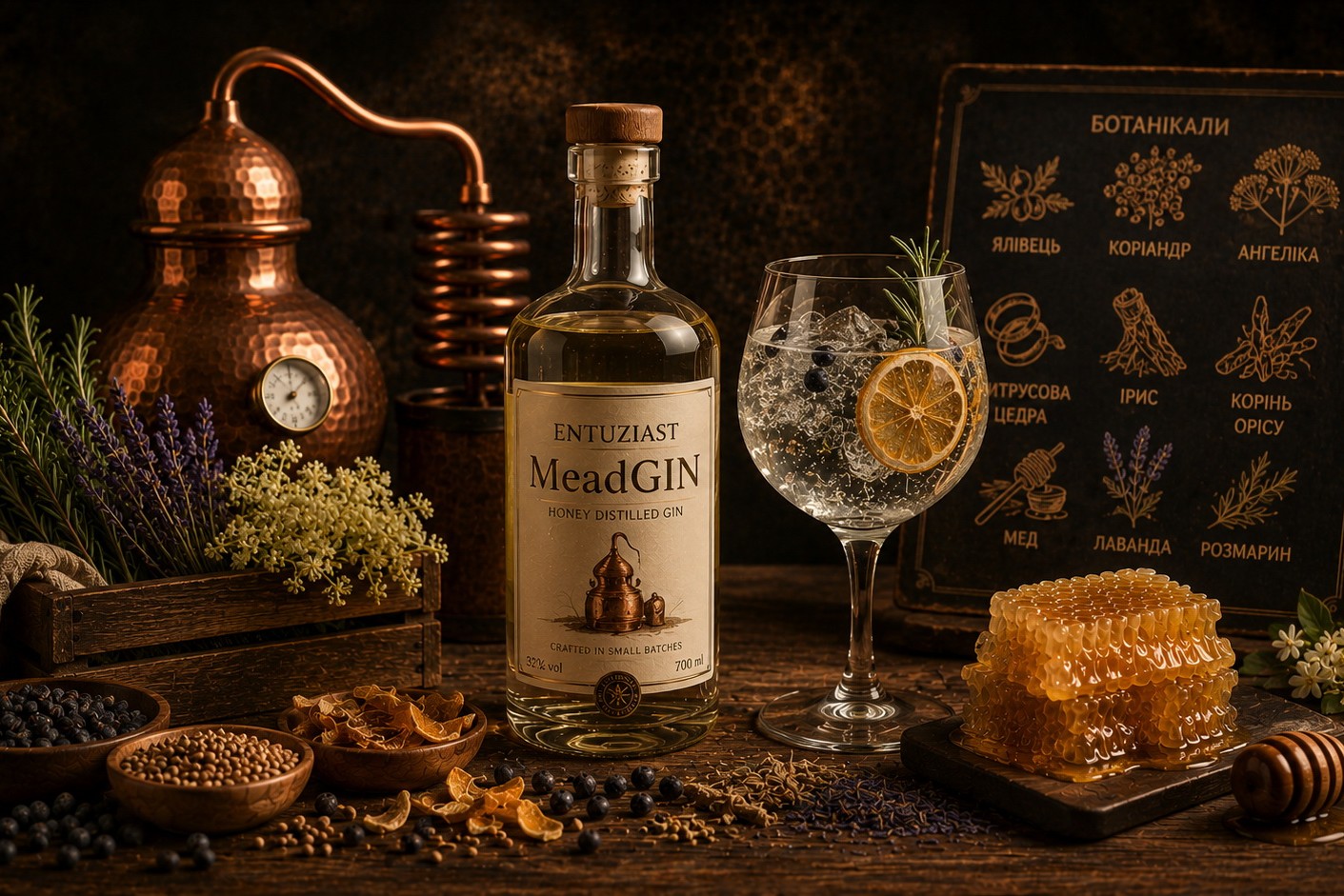
Gin is easily recognizable by its characteristic juniper aroma, dry taste, and complex blend of botanical ingredients. Honey distillate is of a completely different nature: it is made from fermented honey wort and can reveal floral, waxy, grainy, creamy, and spicy notes.
At first glance, these are two different worlds. Yet it is precisely their combination that forms the basis of ENTUZIAST’s signature MeadGIN line.
MeadGIN is neither a sweet honey liqueur with a juniper aroma nor a classic neutral gin to which honey has simply been added. It is based on a honey distillate, which is combined with juniper, citrus, berries, and other botanicals during maceration and distillation in a copper still.
The result is a spirit that retains the recognizable dry character of gin, but with a rounder flavor, a softer texture, and a delicate honey undertone.
What is MeadGIN
MeadGIN is a signature craft gin created using honey distillate. Its production combines the classic principles of gin distillation with ENTUZIAST’s own honey distillery recipe.
Juniper remains the key note. It is juniper that forms the primary aromatic profile, thanks to which the drink is perceived as gin. Depending on the specific version, citrus, berries, spices, or other natural ingredients are added to the juniper profile.
At the same time, honey distillate is used instead of the usual neutral alcohol. It doesn’t necessarily make the drink sweet, but it can add smoothness, roundness, and a more complex aftertaste.
Why Juniper Remains the Key Ingredient
Without a distinct juniper character, the drink loses the essential trait of gin. It is the juniper berries that create the coniferous, resinous, spicy, and cool aromatic notes.
In MeadGIN, the honey base should not overshadow the juniper. Its role is to support the composition, make it more rounded, and create its own distinct style.
Juniper can manifest in various ways:
- dry, piney freshness;
- resinous notes;
- a light spiciness;
- associations with the forest and grasses;
- a cool aftertaste;
- a slightly bitter structure that balances the berries and citrus notes.
The intensity depends on the amount of raw materials, the method of preparation, the duration of maceration, and the distillation process.
How a honey base differs from neutral alcohol
In many gins, botanicals are infused into an alcohol base that is as neutral as possible. This approach allows juniper, citrus, and spices to come through very clearly, since the base itself has almost no aroma of its own.
A honey distillate works differently. It can retain subtle notes of wax, flowers, honeycomb, white bread, or a creamy roundness. These nuances do not necessarily come to the forefront, but they influence the overall perception of the drink.
As a result, the aromatic composition becomes multi-layered. At first, one detects juniper, citrus, or berries, while the honey character emerges in the middle of the palate and in the finish.
That is precisely why MeadGIN should be evaluated not only by the intensity of its aroma, but also by its texture, transitions, and the length of its finish.
Is MeadGIN sweet?
The name might lead one to expect a distinct honey sweetness. However, a honey distillate differs from a beverage to which honey is added after production.
During fermentation, the natural sugars in honey are converted into alcohol. During distillation, non-volatile sugars do not pass into the distillate in their original form.
Therefore, classic MeadGIN can remain dry, spicy, and juniper-forward. The honey is primarily evident through its smoothness, roundness, and aromatic notes.
In berry-infused versions, there may be a sensation of greater sweetness due to raspberries, blackthorn, vanilla, or the aroma of ripe fruit. However, this does not necessarily mean a high sugar content—the taste and aroma are perceived as a complex whole.
How the Base for MeadGIN Is Created
Production begins not with juniper, but with honey. A wort is prepared from the honey, which then undergoes controlled fermentation.
During fermentation, yeast converts sugars into alcohol and creates aromatic compounds. Once the process is complete, the resulting base is distilled.
The master distiller’s task is to obtain a pure honey distillate that has sufficient character of its own but contains no harsh or undesirable notes.
This base is then used in combination with juniper, citrus fruits, berries, and other botanicals.
Maceration of Botanicals
One way to extract the aroma from plant-based raw materials is through maceration. Juniper, berries, zest, or spices are steeped in an alcohol base for a specified period of time.
During this process, the distillate extracts essential oils, aromatic compounds, and flavor components. The result depends on:
- the strength of the alcohol base;
- the amount of botanicals;
- the degree to which they are ground;
- temperature;
- the duration of maceration;
- further distillation.
Too short a contact time can result in a weak aroma, while too long a contact time can lead to excessive bitterness and astringency. Therefore, each component requires a separate approach.
Botanical Basket
Some of the natural raw materials do not need to be immersed directly in the distillate; instead, they can be placed in a special basket inside the distillation system.
During distillation, hot alcohol vapors pass through the botanicals, capturing the volatile essential oils and carrying them to the condenser.
This method often yields a lighter, fresher, and more delicate aroma. It is particularly useful for citrus zest, delicate berries, and ingredients that can become overly bitter during prolonged maceration.
Combining maceration and steam extraction allows for the creation of a complex flavor profile: deep notes develop during maceration, while fresh and volatile notes emerge in the botanical basket.
Why Use a Copper Alembic?
After maceration, the aromatic base is distilled in a copper still. Copper helps create a cleaner profile by interacting with some of the undesirable volatile compounds.
The shape of the still and the distillation method determine which aromatic components will be transferred to the final product. A slower distillation allows for greater control over the fractions and helps maintain a delicate balance.
After redistillation, the beverage usually remains clear, since the pigments from berries and plants do not vaporize as readily as the volatile aromatic compounds.
However, in some recipes, further processing of the berries or aging can alter the color again.
Citrus in MeadGIN
Citrus fruits help make the juniper profile lighter and fresher. Classic MeadGIN uses notes of lemon, citron, and orange.
Each component plays its own role:
- lemon adds a fresh, tart note;
- citron highlights the dry aroma of the zest;
- orange creates a rounder and warmer citrus note.
The citrus notes should not turn the gin into a fruity drink. Their purpose is to support the juniper and make the aromatic profile more complex.
MeadGIN Classic
Classic MeadGIN is crafted using traditional gin distillation methods in a copper still with a juniper basket and a subtle citrus accent.
The drink is clear in color. The aroma reveals notes of juniper, lemon, citron, and orange.
The taste is dry, spicy, and medium-bodied. Juniper remains the dominant note, while the finish takes on a light, creamy, and refreshing smoothness.
The alcohol content is 40%. This allows the distinct aroma of the botanicals to shine through without excessive alcohol sharpness.
MeadGIN Raspberry
MeadGIN Raspberry combines classic gin-making techniques with natural raspberries and honey distillate.
The raspberries are macerated in a honey base, after which the spirit is distilled in a copper still with a basket of botanicals. Juniper and fresh raspberries form the foundation of the blend.
The drink has a delicate pink color without any added artificial colors or flavors.
The aroma combines spices, honey, juniper, and a pleasant raspberry note. The taste is dry, medium-bodied, and spicy, with fresh berries and a raspberry-honey finish.
MeadGIN Raspberry has an alcohol content of 43%.
MeadGin Sloe Blackthorn
MeadGin Sloe Blackthorn takes a different approach to berry gin. It is based on the maceration of blackthorn berries in honey distillate.
The spirit is then distilled in a copper still and aged in new barrels.
The color can range from ripe pomegranate to dark black currants. The aroma features berry jam, white pepper, and a delicate honey profile.
The taste is sweet with a pleasant berry tartness, hints of vanilla, and honeycomb notes. The alcohol content is 32%.
Unlike the classic version, this drink has a richer, more berry-forward and aged character.
How the three versions of MeadGIN differ from one another
All drinks share a honey distillate, juniper, and craft production methods. However, each product has its own central flavor profile.
Classic MeadGIN
The driest and most traditional in style. Juniper is combined with lemon, citron, and orange.
MeadGIN Raspberry
Retains the dry juniper character but adds a fresh raspberry aroma and a soft berry-honey aftertaste.
MeadGin Sloe Blackthorn
More full-bodied, berry-forward, and sweet. Sloe, new oak, vanilla, and honeycomb create a deeper profile.
Thus, the lineup allows you to explore different ways of combining a honey base, juniper, and natural berries.
How MeadGIN Differs from Liqueur
Liqueurs typically have a distinct sweetness and can be created by infusing, flavoring, and sweetening an alcohol base.
MeadGIN focuses primarily on the character of gin: juniper, dryness, spice, and botanicals.
Even the berry-flavored Raspberry version remains dry in profile. Sloe Blackthorn has a sweeter taste, but its character is shaped not only by sweetness but also by the maceration of blackthorn, distillation, and aging.
Therefore, MeadGIN should be viewed as a signature gin line made with honey distillate, rather than as a typical flavored spirit.
How MeadGIN Differs from Medovukha
Medovukha is a fermented beverage made from honey wort. After fermentation, it is usually not distilled.
The base of MeadGIN is distilled and then blended with juniper, citrus fruits, berries, and botanicals.
Consequently, they differ in alcohol content, structure, aroma, and tasting profile. MeadGIN is closer to the world of high-proof craft spirits, while medovukha retains the character of a fermented beverage.
Why Craft Gin Can Vary from Batch to Batch
Natural ingredients are not exactly the same every year. Raspberries, blackthorn, citrus zest, and juniper can vary in ripeness, essential oil content, and aromatic intensity.
Honey also varies depending on the season, region, and plant sources.
The producer’s task is to maintain a recognizable style while adjusting the process for each specific batch. To do this, they control the proportions, maceration, distillation rate, and selection of fractions.
Minor natural variations are not necessarily a flaw. They can highlight the artisanal character of the beverage.
How to Taste MeadGIN
For your first taste, it’s best to evaluate the drink neat. Pour a small amount into a clean glass and let it sit for a moment.
Don’t bring the glass too close immediately after pouring. First, inhale the aroma from a short distance, gradually bringing it closer.
In the classic MeadGIN, look for juniper, dryness, and citrus notes. In Raspberry, look for fresh raspberries against a juniper-spiced backdrop. In Sloe Blackthorn, look for dark berries, tartness, vanilla, and honeycomb.
After taking a small sip, pay attention to the texture and finish. That’s where the honey base often comes through most distinctly.
MeadGIN in Cocktails
This artisanal gin can be used in cocktails, but the recipe should take its unique character into account.
The Classic version pairs well with neutral ingredients that don’t overpower the juniper and citrus notes. Raspberry already has a distinct berry note, so an excess of sweet syrups can make the cocktail feel heavy.
Sloe Blackthorn has a lower alcohol content and a sweeter berry profile, so it requires a different balance than classic dry gin.
The main rule is not to try to completely change the drink. A good cocktail should highlight the character of MeadGIN, not mask it.
Who Is the MeadGIN Line Designed For?
MeadGIN may appeal to classic gin enthusiasts who want to explore a new base spirit without losing the juniper character.
The berry-flavored versions are ideal for those seeking more aromatic and complex drinks but don’t want to limit themselves to sweet liqueurs.
The line also offers a more accessible way to experience honey distillate. Juniper, citrus, and berries provide familiar notes, while the honey base unfolds gradually.
Frequently Asked Questions About MeadGIN
What is MeadGIN?
It’s a signature craft gin made with a honey distillate infused with juniper, citrus, berries, and other botanicals.
Is MeadGIN sweet?
The Classic and Raspberry versions have a dry profile. Sloe Blackthorn is sweeter, with berry tartness, vanilla, and honeycomb notes.
Is regular honey added to MeadGIN?
The drink is based on a honey distillate obtained after fermenting and distilling honey wort. This is different from simply sweetening the finished spirit.
What is the main flavor note of MeadGIN?
In the gin versions, juniper remains the dominant note. The honey base, citrus, and berries complement it.
How does MeadGIN Raspberry differ from the classic version?
It has a natural raspberry note, a delicate pink color, and a raspberry-honey aftertaste, while retaining its dry juniper character.
What makes Sloe Blackthorn special?
It is made by macerating blackthorn berries, distilling in a copper still, and aging in new barrels.
Can MeadGIN be drunk neat?
Yes. Tasting it neat is the best way to appreciate the juniper, berries, honey base, and finish.
A gin with its own honey base
MeadGIN combines two traditions: the production of honey distillates and the culture of juniper gin. In this blend, the honey does not attempt to replace the botanicals, and the juniper does not mask the origin of the base.
The Classic version showcases a dry juniper-citrus style. Raspberry adds fresh raspberries and a soft berry aftertaste. Sloe Blackthorn combines sloe, honey distillate, and oak aging.
Thus, the ENTUZIAST MeadGIN line demonstrates that gin can have a familiar character while still remaining distinctive. At its core lies not neutrality, but honey, fermentation, a copper still, and meticulous work with natural ingredients.