





How an oak barrel changes the taste of a distillate
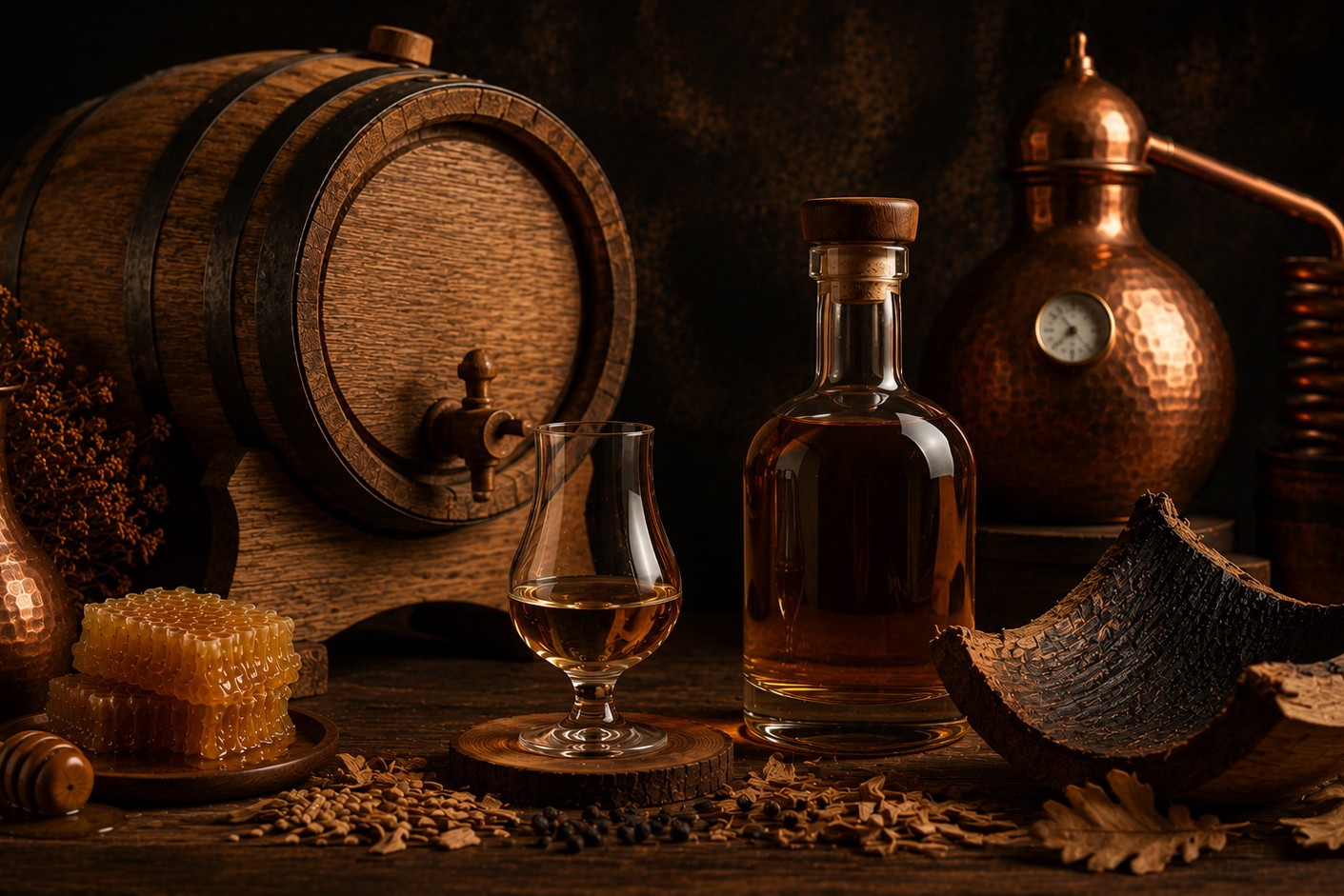
After distillation, the spirit already has its own aroma, strength, and character. However, for some craft spirits, this is just the beginning. Next comes slow aging in oak barrels—a process during which a clear spirit can transform into a deep, rounded, and multi-layered beverage.
The oak barrel does more than just give the distillate its color. It influences the aroma, taste, texture, finish, and overall perception of strength. During aging, the spirit interacts with the wood, oxygen, and the residual character of the product that was previously stored in the barrel.
That is why two identical batches of distillate, aged in different barrels, can yield completely different results. One will be more vanilla- and spice-forward, while the other will be fruity, wine-like, nutty, or drier.
Why Oak Is Used for Aging
Oak combines several properties that are important for the maturation of spirits. It is dense enough to retain liquid, yet it has a microporous structure that allows for very slow gas exchange.
The wood also contains natural aromatic compounds that can be transferred to the distillate. Among them are components that evoke associations with vanilla, spices, coconut, caramel, nuts, smoke, and toasted wood.
During barrel preparation, the inner surface is typically heat-treated. The degree of heating affects which specific compounds will interact more actively with the beverage.
What Happens Inside the Barrel
Aging is not passive storage. Several processes occur simultaneously inside the barrel: the extraction of substances from the wood, slow oxidation, evaporation, and interactions among the components of the distillate itself.
At first, the spirit actively absorbs color and aromatic compounds from the oak. Later, individual components begin to blend together, sharp notes are softened, and the overall composition becomes more harmonious.
Temperature changes cause the liquid to penetrate deeper into the wood’s structure and then flow back out. In warm conditions, the beverage expands more actively and comes into contact with the oak; in cool conditions, it contracts.
Where Does the Amber Color Come From?
Fresh distillate is usually clear immediately after distillation. Straw, golden, and amber hues develop upon contact with the wood.
The color depends on the type of oak, the degree of toasting, the age of the barrel, the length of aging, and whether it has been used before. A new barrel usually imparts color more quickly and intensely than one that has been used multiple times.
However, a darker color does not always mean longer aging or higher quality. A small new barrel can quickly impart a rich hue, but the beverage still needs time for its aroma and flavor to become harmonious.
How Oak Affects the Aroma
During aging, the aroma of the distillate gradually becomes more complex. The initial honey, fruit, grain, or berry notes may be joined by vanilla, spices, wood, dried fruit, nuts, caramel, and toasted notes.
It’s important that the oak doesn’t overpower the character of the raw materials. In a well-balanced drink, the wood complements the honey or fruit base rather than masking it.
If the barrel is too active or the distillate remains in it for too long, the aroma can become excessively woody, dry, and astringent.
How the Taste Changes
Oak aging often adds roundness to the spirit. The sharpness of fresh alcohol gradually diminishes, and the flavor becomes more cohesive and multi-layered.
The distillate may develop notes of vanilla, spicy pepper, honey, dried fruit, baked goods, wood, or wine. Some of these notes come directly from the oak, while others arise from the slow interaction of the distillate’s existing components.
The texture also changes. The drink may become denser, smoother, and have a longer finish.
Why the finish becomes longer
A fresh distillate often unfolds quickly: first, the alcohol strength is noticeable, then the main raw ingredients come through, after which the flavor fades rather quickly.
After aging, the flavor profile can develop gradually. First, a honeyed or fruity base emerges, followed by spices, vanilla, wood, and winey or nutty notes.
It is this sequence that creates the sensation of a long finish. A high-quality aged distillate doesn’t just linger in the mouth for a long time—it evolves after each sip.
New and Used Barrels
New barrels
A new oak barrel has high aromatic activity. It quickly imparts color, as well as vanilla, spice, wood, and toasted notes to the distillate.
Working with new barrels requires special care, as excessive contact can make the flavor astringent and overly oaky.
Used Barrel
After previous use, some of the active compounds have already been extracted, so the wood’s influence becomes milder. However, the barrel can retain the aroma of the product that was previously stored in it.
It is precisely these used wine barrels that allow distillates to acquire new fruity, wine-like, nutty, or dried-fruit notes.
What Wine Barrels Contribute
A barrel that once held red, white, or fortified wine already has its own history. Some of the wine’s components remain in the wood and gradually transfer to the distillate.
Barrels that previously held red wine can impart dark fruit, berry, spice, and tannic notes. Barrels that previously held sweet white wine impart honey, fruit, floral, and dessert notes. Barrels that previously held sherry impart nutty, dried fruit, winey, and spicy notes.
The result depends not only on the wine’s name but also on the condition of the barrel, the duration of its previous use, the type of oak, and the length of the finishing period.
What Is Final Aging?
Finishing refers to the additional aging of an already matured distillate in a different barrel. The primary aging can take place in French or Ukrainian oak, while the final stage occurs in a barrel previously used for Oloroso, Sauternes, or another wine.
The purpose of finishing is not to completely transform the spirit, but to add a new layer of aroma and flavor. This stage is usually shorter than the primary aging and requires regular monitoring.
An overly long finishing period can upset the balance, so the master distiller determines the moment when the new nuances have emerged but have not yet overpowered the character of the base spirit.
French and Ukrainian Oak
Different types of oak have distinct wood structures and aromatic potential. French oak is often associated with more delicate spicy, vanilla, and structural notes.
Ukrainian oak can also impart distinct spiciness, woody warmth, and body to the spirit. Its influence depends on the wood’s origin, the preparation of the staves, the toasting process, and the barrel’s prior use.
Combining different types of oak allows for the creation of a more complex blend, in which one barrel contributes softness, while another contributes structure, spice, or regional character.
Why Barrel Size Matters
In a small barrel, there is a greater surface area of contact with the wood per unit volume of the spirit. Therefore, the extraction of color and aromatic compounds occurs more quickly.
In a large barrel, the process is slower and often more delicate. The distillate has more time for gradual maturation and integration of its components.
Rapid extraction does not equate to full maturation. The spirit may quickly become dark and woody, yet still remain harsh and unbalanced.
The Angels’ Share: Where Does the Spirit Go?
During aging, some of the liquid gradually evaporates through the pores of the wood. This natural loss is traditionally called the angels’ share.
The rate of evaporation depends on temperature, humidity, barrel size, and room conditions. As the volume decreases, the concentration of individual components also changes.
Therefore, after several years in the barrel, the producer ends up with less liquor than was originally poured in. This is one of the reasons why aged craft spirits require significantly more time and resources.
Is an Older Spirit Always Better?
Age alone does not guarantee quality. A distillate may reach its optimal balance sooner than the producer expected, or remain under-matured even after prolonged aging.
If the spirit remains in an active barrel for too long, the wood can begin to dominate. This results in excessive dryness, astringency, and heavy oak notes.
Therefore, the master’s main task is not to age the spirit for as long as possible, but to determine the moment when the distillate has reached its best balance.
Why a Barrel Can’t Fix a Poor Distillate
There is a common misconception that prolonged aging can mask the flaws of young spirits. In reality, oak merely alters and complements the base spirit.
If the distillate has sharp, harsh, or undesirable notes due to errors in fermentation and distillation, the barrel may make them more complex, but it won’t necessarily eliminate them.
That is why it is important to have a clean, balanced base before aging. An oak barrel should work with a high-quality distillate, not replace proper production techniques.
Aging Honey Distillate
Honey distillate has its own aromatic potential. Notes of wax, flowers, honeycombs, white bread, fruit, and spices may be detected in it.
During aging, these notes interact with the oak. The honey’s mellowness can be complemented by vanilla, wood, pepper, dried fruit, and wine-like nuances.
It is important to preserve the recognizable character of the honey base. If the oak completely overpowers it, the drink loses its individuality.
How ENTUZIAST Beverages Are Aged
In the ENTUZIAST collection, oak aging is used to create different profiles.
Honey Spirit Aged is aged for over two years in French oak barrels previously used for Tempranillo and Garnacha red wines. Some of the spirits are aged in Ukrainian oak that previously held blackthorn, after which the blend receives a six-month finish in an Oloroso cask.
This aging process complements the honey distillate with notes of wax, spices, vanilla, and wood, while preserving its mineral and warming character.
Honey Spirit Apple combines honey distillate with classic apple spirits. The primary aging takes place in French oak barrels previously used for Tempranillo and Garnacha, with a portion aged in Ukrainian oak barrels previously used for blackthorn, and the final maturation occurs in a barrel previously used for Sauternes.
The result is a blend of baked apples, honey blossom, and waxy notes combined with wood, spices, and a pleasant apple tartness.
MeadGin Sloe Blackthorn is aged in new barrels after maceration of blackthorn berries and distillation in a copper still. The wood complements the berry character with hints of vanilla and honeycomb.
How to Taste an Aged Distillate
Give this aged spirit a little time to breathe in your glass. After pouring, some of the harsh alcohol fumes dissipate, and the more complex aromatic notes become more noticeable.
First, assess the overall profile: honeyed, fruity, spicy, wine-like, or woody. Then pay attention to the transitions—what emerges after the first sip and what nuances linger in the finish.
Avoid over-chilling the aged distillate, as low temperatures can dull the aroma. At the same time, the specific serving method depends on the style of the product and personal preferences.
Frequently Asked Questions About Oak Barrel Aging
Why is the distillate aged in a barrel?
To give it color, new aromatic notes, roundness, a more complex texture, and a longer finish.
Why is oak used specifically?
Oak has the appropriate strength, a microporous structure, and contains aromatic compounds that interact well with spirits.
Where does the amber color come from?
It develops when the clear distillate comes into contact with the wood. The intensity depends on the type of oak, the toasting level, the age, and the condition of the barrel.
How does a new barrel differ from a used one?
A new barrel imparts oak, vanilla, and spicy notes more intensely. A used barrel has a milder effect and can impart the character of the wine or other beverage that was previously stored in it.
What is finishing?
It is an additional, shorter maturation period for an already aged distillate in a different barrel to add new aromatic and flavor nuances.
Is longer aging always better?
No. Excessively long contact with an active barrel can make the beverage overly woody, dry, and astringent.
Oak takes its time
Distillation forms the foundation of the spirit, but the barrel gives it time to evolve. Inside the oak, the clear spirit gradually takes on color, aroma, texture, and a new finish.
There is no universal formula for this process. The result depends on the type of oak, the barrel’s origin, its size, previous use, storage conditions, and the master’s decisions.
At ENTUZIAST, aging is a continuation of our work with honey distillate, apple spirits, and berries. French and Ukrainian oak, wine barrels, and final aging help create beverages in which the character of the raw ingredients blends with the wood, wine, and time.