





What is maceration and how does it change the character of the drink?
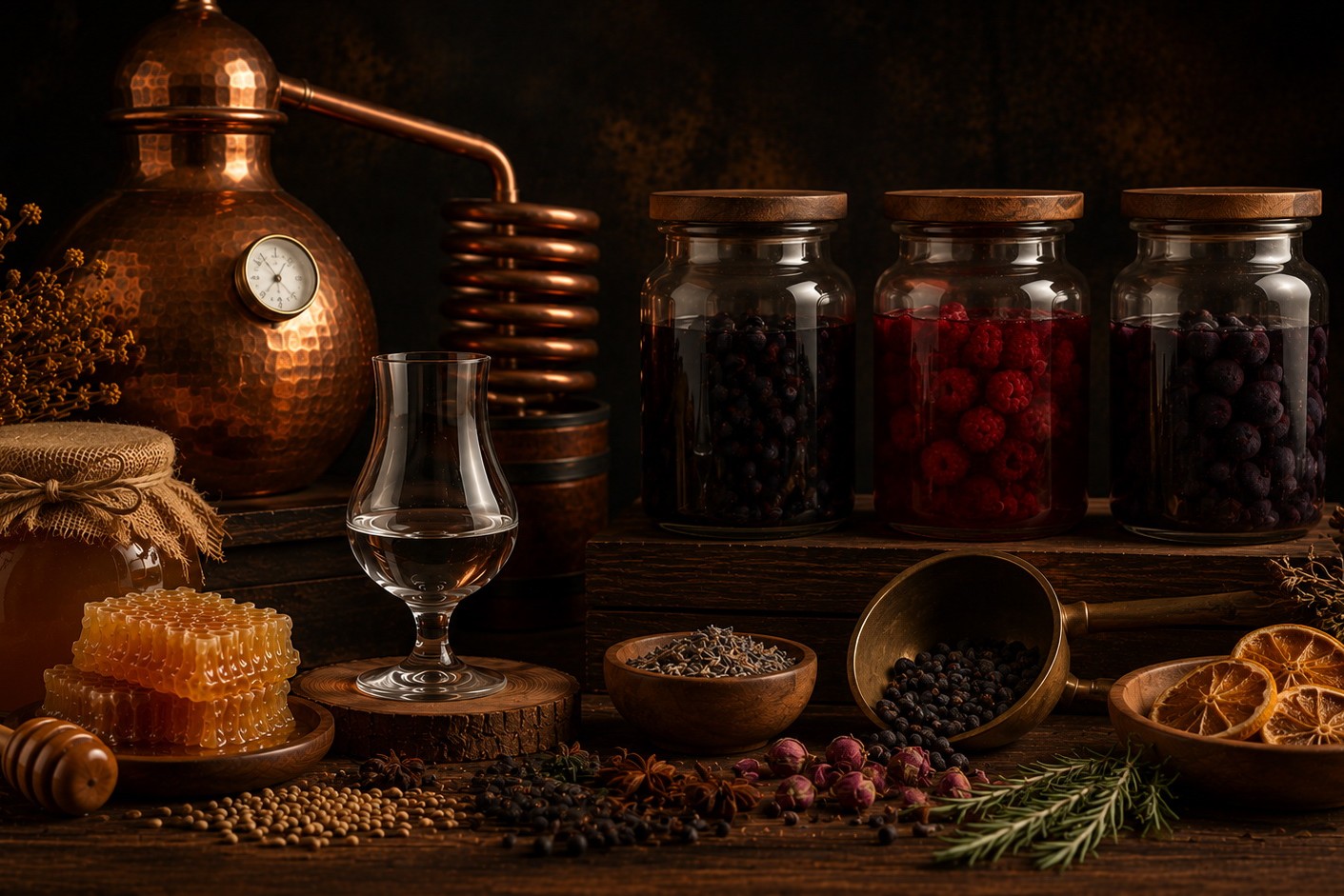
When a craft beverage has notes of fresh raspberries, tart blackthorn, citrus zest, juniper, or spices, it doesn’t necessarily mean that a flavoring was simply added to the finished product. One of the oldest and, at the same time, most precise ways to capture the character of natural ingredients is maceration.
Maceration refers to the process of steeping berries, fruits, herbs, spices, roots, or other plant components in a liquid. In the production of spirits, this liquid is most often an alcohol base or a finished distillate.
During this process, the natural ingredients gradually release their aromatic, flavor, and coloring components into the beverage. However, the result depends not only on the selected berries or herbs. The strength of the base, temperature, steeping time, particle size, and subsequent processing are all important factors.
That is why maceration is not simply a matter of “pouring alcohol over berries and waiting.” It is a controlled technological process that requires precision, experience, and an understanding of the properties of each ingredient.
How Maceration Works
Plant-based raw materials contain a large number of different compounds. Some of these compounds dissolve better in water, while others dissolve better in alcohol. An alcohol base allows for the simultaneous extraction of essential oils, pigments, organic acids, phenolic compounds, and other components that contribute to aroma and flavor.
When berries, fruits, or botanicals are immersed in the distillate, a gradual exchange begins between the raw materials and the liquid. Aromatic substances transfer from the plant cells into the alcohol base, and the beverage’s composition becomes more complex with each passing day.
At the beginning of the process, the most vivid volatile components are usually released first. Later, heavier substances may be transferred, adding astringency, bitterness, color, or body. That is why maceration that is too short can be superficial, while maceration that is too long can overwhelm the drink.
Why Maceration Is Used
The main purpose of maceration is to transfer the natural character of the raw materials into the final beverage. It allows you to work with aroma and flavor without using artificial flavorings.
Through maceration, you can:
- add a berry or fruit aroma;
- give the beverage a natural color;
- create a spicy or herbal profile;
- emphasize the juniper character of the gin;
- add tartness, freshness, or a slight bitterness;
- combine honey distillate with natural botanicals;
- prepare a fragrant base for redistillation.
The macerated product can remain as a tincture or undergo a subsequent distillation stage. In the latter case, the aroma becomes purer, more refined, and integrates better into the overall composition.
Are maceration and infusion the same thing?
In everyday speech, these terms are often used interchangeably. Both processes involve prolonged contact between the raw materials and a liquid. However, the term “maceration” more accurately describes the technological extraction of components from plant material.
Infusion can be done arbitrarily and does not always involve precise control of parameters. In professional production, maceration follows a specific recipe: the weight of the raw materials, the strength of the distillate, the temperature, the duration, and the method of further processing are all determined.
Thus, every maceration is a form of infusion, but not every home infusion can be called a controlled maceration.
What Raw Materials Can Be Macerated
The possibilities for maceration are nearly limitless, but different ingredients behave differently. What works well for juniper berries won’t necessarily work for raspberries or citrus zest.
Berries
Raspberries, blackthorn, currants, and other berries impart a fruity aroma, color, and natural tartness to the drink. Some berries contain many delicate aromatic compounds, so they require a particularly gentle process.
Fruits
Apples, pears, plums, and citrus fruits can impart fresh, sweet, tart, or spicy notes. Often, not only the flesh but also the zest is used, as it contains a significant amount of essential oils.
Herbs and Flowers
They impart fresh, green, floral, and sometimes bitter notes. Due to their high aromatic intensity, their quantities must be precisely calibrated.
Spices
Pepper, coriander, cardamom, and other spices can significantly alter the character of a drink even in small proportions. They are used to create warmth, heat, and a multi-layered aroma.
Juniper
Juniper berries are the foundation of gin’s aromatic profile. They impart piney, resinous, spicy, and fresh notes. The result depends on the quantity of berries, the degree of crushing, and the subsequent distillation method.
Why the Alcohol Content of the Base Is Important
Water and alcohol dissolve different groups of substances. If the base has a low alcohol content, water-soluble components are extracted more effectively. A higher alcohol concentration interacts more effectively with essential oils and other alcohol-soluble compounds.
Therefore, the same raw material can yield completely different results in distillates of varying alcohol content. For example, an overly strong base can extract a lot of essential oils but not enough fresh berry tartness. An overly weak base can result in more watery and astringent notes.
The distiller selects the strength based on the desired flavor profile. In complex recipes, individual ingredients may be macerated separately and then blended or distilled together.
How Temperature Affects the Process
At higher temperatures, the extraction of aromatic compounds occurs more quickly. However, along with the desired components, bitterness, astringency, and heavy herbal notes may be extracted more readily.
Lower temperatures slow down the process but provide greater control and help preserve the fresh aroma of delicate raw materials. This is why maceration is usually carried out under stable conditions without sudden fluctuations.
Direct sunlight can also negatively affect pigments and aromatic compounds. Containers are often stored in a darkened room with a controlled temperature.
How long does maceration take?
There is no universal timeframe. For some ingredients, a few hours or days are sufficient, while others require significantly more time.
Delicate berries can quickly release their aroma and color. Hard fruits, roots, or dense spices take longer. Grinding accelerates extraction by increasing the contact surface area, but at the same time increases the risk of excessive bitterness being transferred.
The duration isn’t determined solely by the calendar. The beverage is regularly evaluated for aroma, color, and taste. Maceration is completed when the ingredients have imparted the desired character but have not yet begun to dominate the base.
Should Berries and Botanicals Be Crushed?
Crushed raw materials release their components more quickly, but intensity isn’t always an advantage. Damaged seeds can add unwanted bitterness, and particles that are too fine make filtration more difficult.
Juniper berries are often lightly crushed to open their shells and facilitate the release of essential oils. Soft berries can be used whole or partially crushed. The zest is removed carefully to avoid including too much of the white pith, which imparts bitterness.
The method of preparing the raw materials is part of the recipe and directly affects the final result.
Maceration Before Distillation
After maceration, the aromatic alcohol base can be distilled in a copper still. During heating, the volatile aromatic components turn into vapor along with the alcohol and then condense.
This method produces a clear distillate with a pure aroma of berries, herbs, or spices. The color and most of the non-volatile components remain in the still.
Redistillation helps make the flavor more delicate. The raw material is no longer perceived as a separate infusion but becomes part of the drink’s overall profile.
Maceration without redistillation
In some recipes, the beverage is filtered after maceration and left undistilled. In this case, it retains its natural color, a greater number of flavor components, and a more pronounced texture.
Such a product may be richer, sweeter, more tart, or denser. At the same time, it requires careful filtration and stabilization, as fine particles and natural components can affect clarity.
The choice between redistillation and retaining the macerate depends on the style of beverage the producer aims to create.
What Is Steam Extraction Using a Botanical Basket
Not all botanical components are necessarily immersed directly in the alcohol base. In gin production, a special basket is often used through which hot alcohol vapors pass.
The steam captures the volatile essential oils and carries them to the condenser. This method typically yields a lighter, fresher, and more delicate aroma compared to prolonged maceration.
Maceration and steam extraction can be used together. Some of the botanicals are steeped in the distillate, while the more delicate ones are placed in the basket. This allows for the creation of a multi-layered profile in which deep and fresh notes complement each other.
How Natural Maceration Differs from Flavorings
Artificial or ready-made food flavorings provide quick and predictable results. However, they often reproduce only a single recognizable note.
Natural raw materials contain dozens or even hundreds of components. As a result, the aroma is more complex: raspberries can simultaneously offer freshness, tartness, floral notes, and a light green note, while blackthorn can offer dark berries, astringency, and a spicy character.
Along with this complexity comes greater responsibility. Natural raw materials vary from season to season, so the perfumer must take into account their ripeness, aromatic intensity, and moisture content.
Raspberry Maceration
Raspberries have a bright yet quite delicate aroma. It’s easy to overpower them with excessive extraction or lose the aroma during aggressive distillation.
During maceration, it’s important to preserve the sensation of fresh berries rather than turning the profile into something that tastes like jam or compote. To achieve this, the temperature, contact time, and subsequent distillation are carefully controlled.
When combined with juniper, raspberries should complement the gin, not completely overshadow its classic coniferous and spicy base.
Blackthorn Maceration
Blackthorn has a denser and more astringent character. It combines dark berry notes, tartness, and natural tannins.
During maceration, blackthorn berries impart a rich color and a deep berry profile to the distillate. Excessively long contact can intensify the astringency, so the process is monitored regularly.
Further distillation helps refine the aroma, while aging in a barrel rounds out the berry acidity and enriches the composition with vanilla and woody notes.
Maceration in ENTUZIAST Products
At the ENTUZIAST honey distillery, maceration is used as a way to combine the character of honey distillate with natural berries, grains, and botanicals.
To create MeadGIN Raspberry, raspberries are macerated in honey distillate. The base is then distilled in a copper still with a basket of botanicals, where juniper and fresh raspberries play a key role. The finished drink combines the dry, spicy character of gin with berry freshness and a smooth honey aftertaste.
In MeadGin Sloe Blackthorn, blackthorn berries are macerated in honey distillate, after which the spirit is distilled in a copper still and aged in new barrels. The blackthorn berries create a rich berry profile, while aging adds notes of vanilla and honeyed wood.
The Honey Spirit Pure process involves maceration with sprouted wheat in steel vats at a controlled temperature. This stage imparts notes of white wheat bread and a smooth creaminess to the honey distillate.
What mistakes can occur during maceration
The most common mistake is the desire to achieve the strongest possible aroma. Using too much raw material or allowing it to macerate for too long can make the drink bitter, astringent, and unbalanced.
Other possible problems:
- incorrect alcohol strength of the base;
- too high a temperature;
- using unstable or damaged ingredients;
- over-grinding of pits and seeds;
- insufficient filtration;
- lack of regular taste testing;
- attempting to macerate all components for the same amount of time.
In professional production, the process is designed so that the aroma of the raw materials is distinct but remains part of the overall balance.
How to Evaluate a Macerated Beverage
During tasting, pay attention not only to the intensity of the aroma but also to its naturalness. Berry, fruit, or herbal notes should not seem flat or monotonous.
A well-executed maceration creates transitions. For example, in raspberry gin, you might first detect juniper, followed by fresh berries, spices, and a honey-like aftertaste. In a blackthorn-flavored drink, the rich, dark berry flavor can transition into tartness, vanilla, and hints of honeycomb.
The best result is when no single component feels out of place, and the alcohol base and natural ingredients form a unified composition.
Frequently Asked Questions About Maceration
What is maceration in simple terms?
It is the process of steeping berries, fruits, herbs, or spices in an alcohol base to extract their natural aroma, flavor, and color.
How does maceration differ from distillation?
During maceration, the ingredients are steeped in a liquid. During distillation, the aromatic components are converted into vapor and then condensed into a new distillate.
Can the beverage be distilled after maceration?
Yes. Redistillation produces a clear beverage with a purer and more integrated aroma of the natural raw materials.
How long does maceration take?
From a few hours or days to a much longer period. The duration depends on the raw materials, the strength of the base, the temperature, and the desired result.
Does maceration impart a natural color?
Yes, if the spirit is not distilled again afterward. During redistillation, most of the pigments remain in the still, so the distillate is usually clear.
Why are different ingredients macerated separately?
Each plant releases its aroma at a different rate. Separate maceration allows for more precise control over the intensity and, subsequently, the creation of a balanced blend.
When natural ingredients become part of the beverage
Maceration allows us to transfer into the distillate not just a single aroma, but the complex natural character of a berry, fruit, herb, or spice. In this process, time, temperature, the strength of the base, and the distiller’s precision are all crucial.
Properly conducted maceration should not mask the distillate itself. Its purpose is to complement it, create new flavor transitions, and enrich the aromatic composition.
In ENTUZIAST beverages, natural raspberries, blackthorn, juniper, botanicals, and sprouted wheat work in harmony with a honey base. Thus, maceration becomes not merely a supporting process, but a full-fledged tool for creating a signature craft flavor.