





What are botanicals in gin?
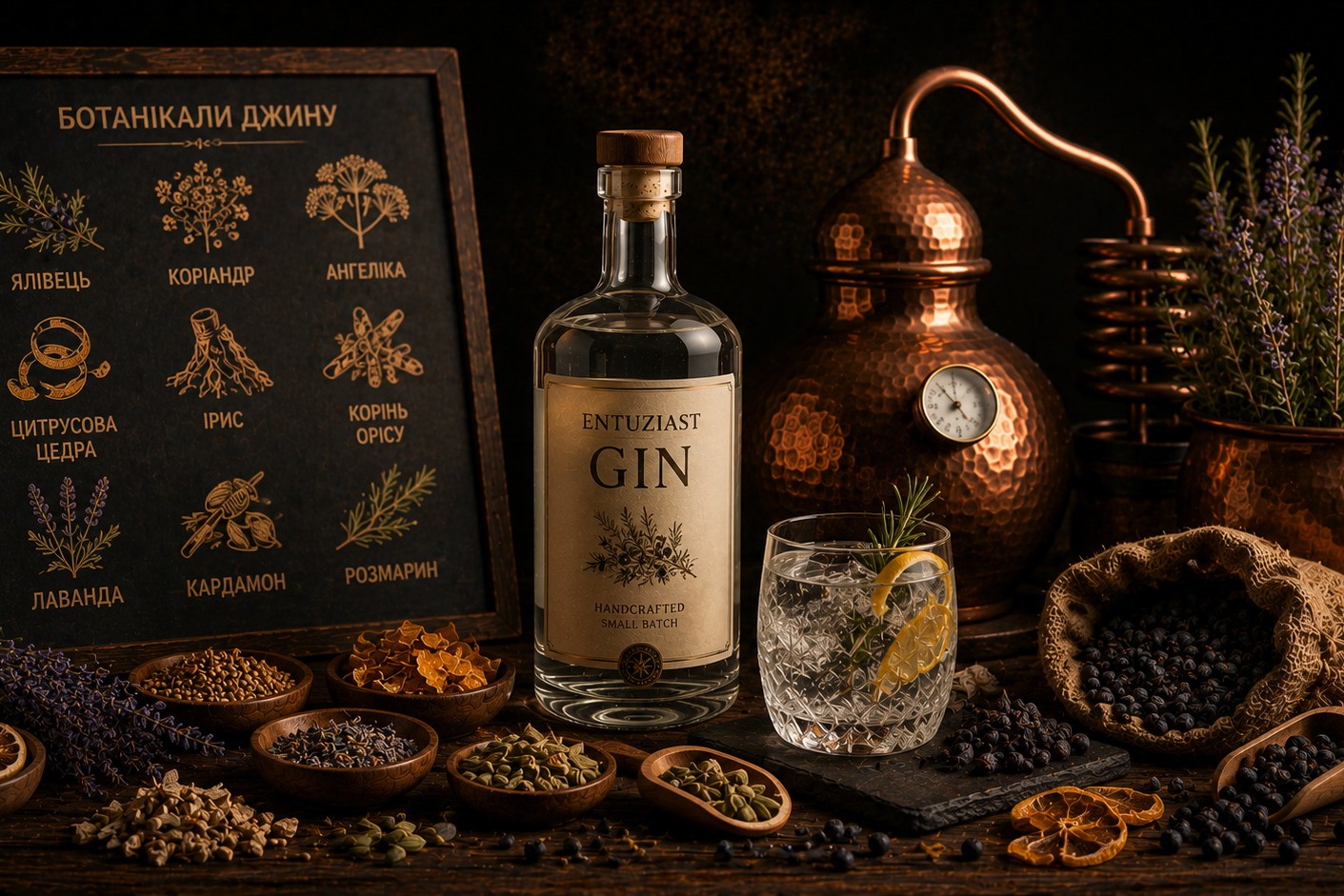
It’s impossible to imagine gin without juniper, but its character is rarely defined by just one ingredient. Beneath the piney freshness, notes of citrus zest, herbs, berries, flowers, roots, seeds, and spices can emerge. All of these natural components are called botanicals.
It is the botanicals that shape the aromatic profile of gin. One drink may be dry, piney, and spicy, while another may be citrusy, floral, or berry-like. At the same time, juniper remains the foundation of the style, while the other ingredients complement it, creating depth, balance, and a recognizable finish.
In craft production, botanicals aren’t just a decorative list on the label. What matters is their quality, quantity, preparation method, maceration duration, and behavior during distillation.
What Does the Word “Botanicals” Mean?
Botanicals are plant-based ingredients used to create the aroma and flavor of gin and other craft spirits. They can include berries, seeds, bark, roots, herbs, flowers, fruit peel, and spices.
In gin production, botanicals interact with the alcohol base during maceration, steam extraction, or redistillation. As a result, their volatile aromatic compounds are transferred to the finished beverage.
Each botanical has its own distinct character. Some create the primary aroma, while others add freshness, dryness, spiciness, floral notes, or a bitter undertone.
Why juniper is the primary botanical
Juniper berries form the base profile of gin. They give the drink coniferous, resinous, spicy, and refreshing notes.
It is juniper that distinguishes gin from other flavored spirits. Citrus, raspberry, blackthorn, or spices can be very pronounced, but they should not completely mask the juniper base.
Depending on the raw materials and production methods, juniper can resemble:
- fresh pine needles;
- a dry forest;
- resin;
- spicy berries;
- herbs;
- a light citrus freshness;
- a cool bitterness in the aftertaste.
The result depends on the origin of the berries, their ripeness, the degree of crushing, the steeping time, and the distillation method.
Are all juniper berries the same?
Natural plant materials are never completely uniform. Juniper from different regions may vary in essential oil content, aroma intensity, dryness, and the balance of coniferous and spicy notes.
The harvest season also matters. Berries that are not quite ripe may have a greener and sharper character, while ripe ones have a deeper, resinous, and rounded character.
Therefore, the producer doesn’t simply measure out the same amount of juniper for each batch. The raw material must be evaluated based on its aroma, and the recipe adjusted as needed while maintaining the drink’s recognizable style.
Citrus Botanicals
Citrus peel is one of the most common ingredients in gin. It adds freshness and lightness and helps make the juniper aroma more complex.
Lemon, orange, citron, grapefruit, and other citrus fruits can be used. It’s important to work primarily with the aromatic outer part of the peel, as the white pith can impart excessive bitterness.
Lemon
Creates a clean, fresh, and dry citrus note. It complements juniper well and adds a sense of coolness.
Citron
May have a more pronounced zest aroma and a dry, tart profile that adds structure to the composition.
Orange
It is generally perceived as warmer and rounder. It can soften the sharpness of lemon and add fruity depth.
In the classic MeadGIN, citrus notes do not replace juniper but form a light aromatic backdrop of lemon, citron, and orange.
Berries as Botanicals
Berries can serve as either a light aromatic accent or the defining character of a signature gin. They are used fresh, frozen, dried, or macerated, depending on the recipe.
They can add:
- fresh fruitiness;
- natural tartness;
- dark, jam-like notes;
- tannins;
- color;
- a longer berry-like finish.
Delicate berries require particularly careful handling. Excessively long maceration can transform the fresh aroma into a heavy, cooked scent or add unnecessary astringency.
Raspberries in Gin
Raspberries have a recognizable aroma, but it is quite delicate and easily lost against the backdrop of a strong alcoholic base and intense juniper.
In the right blend, raspberries don’t turn the gin into a sweet syrup. They add a fresh berry note, a light tartness, and aromatic smoothness.
In MeadGIN Raspberry, the raspberries are macerated in honey distillate, after which the spirit is distilled in a copper still with a basket of botanicals.
The finished profile retains dryness, spiciness, and juniper, while the raspberries come through in fresh berry notes and a pleasant honey-raspberry finish.
Blackthorn in Gin
Blackthorn has a completely different character. It is darker, more tart, and more structured than raspberry. The flavor combines berry richness, natural acidity, and tannins.
During maceration, blackthorn can impart a deep pomegranate or dark berry color, a jam-like aroma, and a hint of spice to the drink.
In MeadGin Sloe Blackthorn, blackthorn berries are macerated in honey distillate, after which the spirit is distilled in a copper still and aged in new barrels.
The berry profile blends with white pepper, vanilla, honey, and hints of honeycomb.
Spices in Gin
Spices help impart warmth, dryness, sharpness, and a more complex finish to the drink. Even a small amount of an active ingredient can significantly alter the composition.
Potential botanical spices include:
- coriander;
- cardamom;
- various types of pepper;
- cinnamon;
- cloves;
- anise;
- other aromatic seeds and spices.
Not all of these are necessarily used in every gin. A recipe may contain just a few ingredients or a much broader blend.
The key is to ensure that the spices do not create a chaotic aroma. Each note should complement the juniper, citrus, or berry base.
Roots and Seeds
Roots and seeds often play a structural role. They may be less obvious in the initial aroma but influence dryness, bitterness, texture, and the length of the finish.
Some roots help to “tie together” the aromatic composition, making the transitions between citrus, floral, and spicy notes smoother.
Seeds can add spicy, nutty, citrusy, or earthy notes. However, too much can make the drink heavy and dry.
Flowers and Herbs
Floral and herbal components help create a light, fresh, and delicate profile. They can evoke wildflowers, dried grasses, fresh herbs, or a spring garden.
Such botanicals are usually very sensitive to temperature and time. Prolonged maceration can result in herbal bitterness, while aggressive distillation can destroy delicate aromas.
Therefore, they are often used in a botanical basket, where hot alcohol vapors gently extract the volatile components.
What Is a Botanical Basket?
A botanical basket is a special component of a distillation system in which plant material is placed. Alcohol vapors pass through it during distillation.
The vapor heats the botanicals, captures the volatile essential oils, and carries them to the condenser, where the aromatic vapors condense along with the alcohol.
This method produces lighter and fresher notes compared to prolonged maceration of the raw materials in alcohol.
The basket can be used for juniper, citrus zest, berries, flowers, and other delicate ingredients.
Maceration or Steam Extraction
Both methods allow the aroma of botanical ingredients to be transferred to the gin, but the results differ.
Maceration
Botanicals are steeped directly in an alcohol base. This process can yield deeper, richer, and more intense notes.
Steam extraction
The botanical components come into contact not with the liquid, but with alcohol vapor. The aroma often turns out lighter, cleaner, and more delicate.
These methods can be combined. Some of the botanicals undergo maceration, while others are placed in a basket. This allows the producer to create multiple layers of aroma.
Why botanical ingredients can’t simply be mixed
Each ingredient has a different intensity. A small amount of one spice can be stronger than a significant amount of another plant.
In addition, the components are extracted at different rates. Juniper, citrus zest, raspberries, and hard roots do not necessarily need to be macerated for the same amount of time.
If all botanicals are processed using the same method, some will remain too weak, while others may become too bitter or harsh.
That is why the recipe specifies not only the list of ingredients but also the order in which they are processed.
Why the Alcohol Strength Matters
Alcohol and water dissolve aromatic substances differently. A higher alcohol content more effectively extracts some essential oils, while a lower one may work better with certain water-soluble components.
The same plant in an alcohol base of different strengths can yield a different aroma.
A base that is too strong can extract an excess of heavy essential components. One that is too weak can make the aroma profile watery or accentuate excessive astringency.
Therefore, alcohol strength during maceration is part of the formulation, not a random parameter.
How Grinding Affects the Result
Grinding increases the surface area of contact between the botanicals and the alcohol base. The aroma transfers more quickly and intensely.
However, excessive grinding can cause problems:
- excessive bitterness;
- leaching of heavy plant components;
- more difficult filtration;
- an overly aggressive aroma;
- unwanted effects from pits and seeds.
Juniper berries are often only lightly crushed. Citrus zest is prepared without excess of the white pith, and delicate berries can be used whole or partially crushed.
What Happens to Color During Distillation
Most natural pigments are not volatile enough to be carried off as vapor along with the alcohol. Therefore, even a brightly colored macerate often becomes clear after distillation.
The aromatic components are transferred to the distillate, while the color remains in the still.
If the finished gin has a pink, red, or other hue, this may be the result of additional contact with the berries after distillation, further maceration, or another processing step.
The specific method depends on the manufacturer’s recipe.
How botanicals interact with the honey distillate
In traditional gin, the neutral base has almost no character of its own. In MeadGIN, the spirit is made from fermented honey wort.
The honey base can impart notes of wax, flowers, bread, or cream. Therefore, the botanicals interact not with a blank canvas, but with an already established aromatic profile.
Juniper adds dryness and piney freshness. Citrus notes bring lightness. Berries add fruitiness and tartness. Spices provide warmth and structure. The honey distillate blends these components and can round out the finish.
Botanicals in Classic MeadGIN
In the classic MeadGIN, the main focus is on juniper and citrus.
The aroma reveals:
- juniper;
- lemon;
- citron;
- orange.
The taste remains dry, spicy, and medium-bodied. The honey distillate adds roundness to the composition and a light, creamy, and refreshing finish.
In this version, the botanicals follow a classic profile: juniper forms the foundation, while citrus notes make it fresher and more multifaceted.
Botanicals in MeadGIN Raspberry
In MeadGIN Raspberry, the juniper base is combined with fresh raspberries and a spicy profile.
The raspberries are macerated in honey distillate, and further distillation takes place in a copper still with a basket of botanicals.
The finished drink features notes of spice, honey, juniper, and a pleasant raspberry undertone. The taste is dry and medium-bodied, with fresh berries and a raspberry-honey finish.
The botanicals complement the berries and prevent the blend from becoming too sweet.
Blackthorn as the Base of MeadGin Sloe Blackthorn
In MeadGin Sloe Blackthorn, blackthorn defines the dominant berry character. It is macerated in honey distillate, after which the mixture is distilled in a copper still.
Blackthorn adds a dark color, the aroma of berry jam, and natural tartness and astringency.
After aging in new barrels, notes of vanilla, wood, and hints of honeycomb are incorporated into the blend.
In this drink, the berry, the honey base, and the oak work together as three facets of a single character.
How the balance of botanicals is achieved
A good gin should not resemble a chaotic mixture of herbs and spices. Even if the recipe contains many components, the finished aroma should retain a clear structure.
Typically, you can identify:
- the top note—most often juniper;
- a fresh layer—citrus or herbs;
- the heart—berries, flowers, or spices;
- structure—roots, seeds, and dried spices;
- the finish—a honey base, oak, or heavier botanical notes.
Each component should have its own place without overpowering the entire composition.
Why More Botanicals Doesn’t Mean Better Gin
A long list of ingredients may look impressive, but quantity does not guarantee complexity or harmony.
An excessive number of components can make the aroma muddled. Juniper, citrus, herbs, and spices begin to compete with one another, and the flavor loses its direction.
Sometimes a few well-chosen botanicals create a more distinctive result than dozens of poorly integrated ones.
Therefore, the value of a recipe lies not in the length of the list, but in the precision of its balance.
Why natural botanicals vary from batch to batch
Plants are influenced by the season, weather, region, and storage conditions. One batch of juniper might be more resinous, while another is dry and spicy. Raspberries can vary in sweetness, and citrus zest can differ in essential oil content.
For a craft distiller, this means constantly evaluating the raw materials.
The recipe remains the foundation, but the distiller can adjust maceration time, proportions, or distillation parameters to maintain a consistent style.
At the same time, small natural variations can highlight the product’s vibrant and artisanal character.
How to Taste a Gin’s Botanical Profile
Pour a small amount of the spirit into a clean glass and let it sit for a moment. First, assess the aroma from a distance so that the alcohol strength doesn’t overpower the delicate notes.
Try to identify the structure:
- Which note appears first?
- How pronounced is the juniper?
- Is there a citrusy freshness?
- Can you detect berries, flowers, or spices?
- Which component lingers in the finish?
With MeadGIN, also pay attention to the honey base. It may not be apparent in the initial aroma, but rather through its smoothness, creaminess, or warm aftertaste.
Frequently Asked Questions About Botanicals
What are botanicals, in simple terms?
They are natural plant-based ingredients—berries, zest, herbs, flowers, seeds, roots, and spices—that shape the aroma and flavor of gin.
Which botanical is the most important in gin?
Juniper. It is what creates the characteristic piney-spicy profile and distinguishes gin from other flavored spirits.
How do botanicals impart their aroma to the spirit?
Through maceration in an alcohol base, steam extraction in a special basket, or a combination of both methods.
Does the color of the berries carry over after distillation?
Usually, most of the pigments remain in the still. After redistillation, the spirit is often clear.
Why can citrus zest cause bitterness?
An excessive amount of the white pith or steeping for too long can add a bitter and heavy flavor.
How does maceration differ from using a botanical basket?
During maceration, the botanicals come into direct contact with the alcohol. In a botanical basket, hot alcohol vapors pass through the botanicals.
Does a greater number of botanicals mean better gin?
No. What matters more than the number of ingredients is their quality, compatibility, and balance in the finished drink.
What botanicals are used in MeadGIN?
Juniper plays a key role. Depending on the version, it is combined with lemon, citron, orange, raspberry, blackthorn, and other ingredients from the signature recipe.
The Botanical Language of Gin
Botanicals transform the spirit base into a gin with its own distinct character. Juniper sets the tone, citrus adds freshness, berries bring fruitiness, and herbs, roots, and spices create depth and a lingering finish.
However, true mastery lies not in the number of ingredients. It lies in the ability to combine them so that each component is noticeable, yet none disrupts the drink’s overall harmony.
In ENTUZIAST’s MeadGIN line, botanicals meet honey distillate. Juniper, citrus, raspberry, and blackthorn are given a warmer, rounder backdrop, while the honey base finds a new way to shine in this modern craft gin.