





Why is juniper the base of gin?
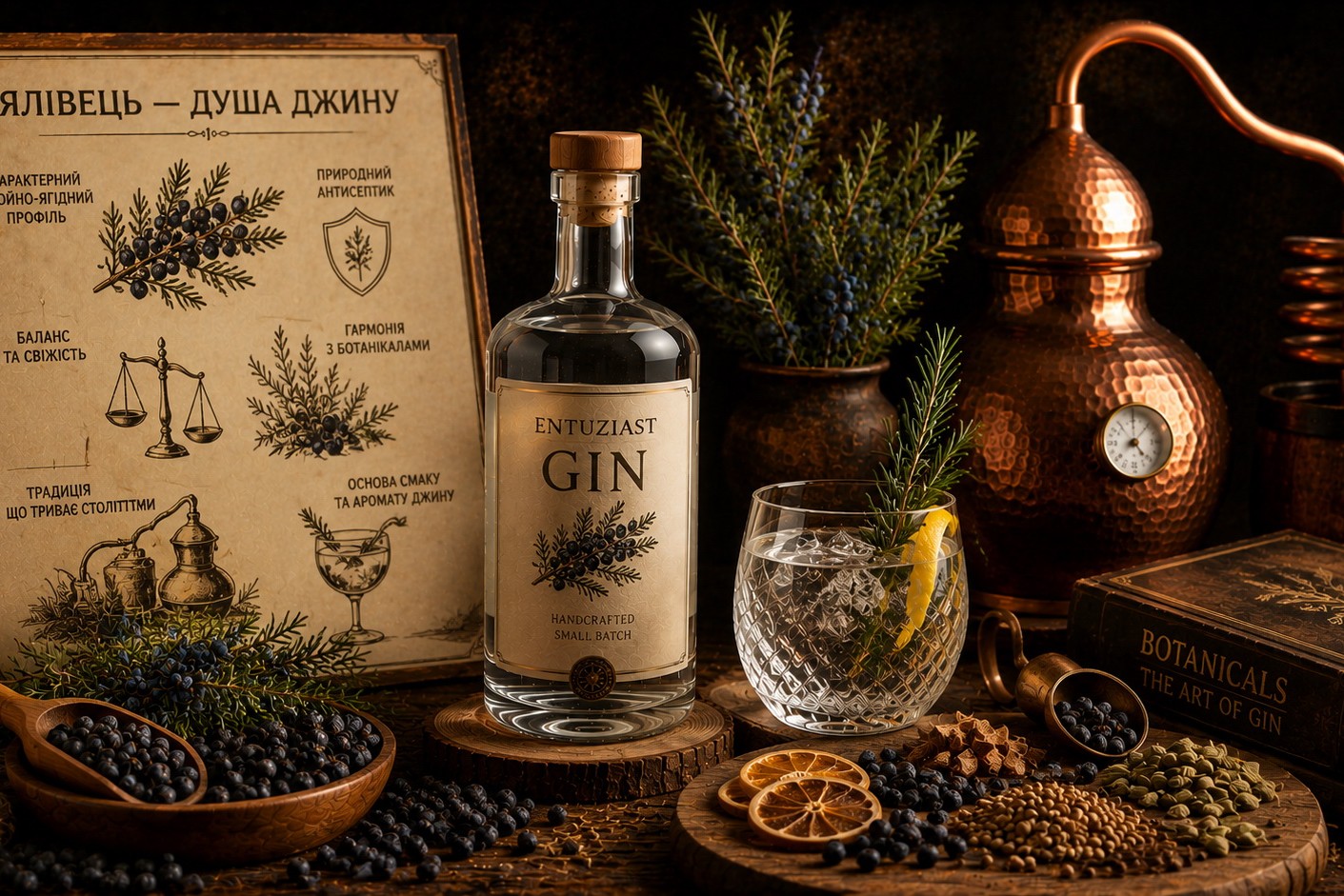
Gin can have citrus, floral, herbal, berry, or spicy notes. Dozens of different botanicals can be used in its recipe, but juniper always remains at the heart of the blend. It is juniper that gives the drink its recognizable coniferous character and distinguishes gin from other flavored spirits.
Juniper berries can evoke notes of fresh pine needles, resin, dry forest, aromatic herbs, citrus zest, and a hint of pepper. Their aroma is at once fresh, dry, and complex, making it a perfect match for citrus fruits, berries, roots, flowers, and spices.
However, juniper isn’t simply added to the spirit. Its character depends on the origin of the raw materials, the ripeness of the berries, the preparation method, the strength of the base spirit, the duration of maceration, and the distillation process. It is precisely the manipulation of these parameters that determines whether the gin will be sharp and resinous, light and citrusy, or deep and spicy.
What Are Juniper Berries?
What are commonly called juniper berries are, botanically speaking, a special type of cone-berry. They form on the plant gradually and, as they ripen, change color from green to dark blue or nearly black.
Inside, they contain seeds, resinous compounds, and essential oils, which give them their characteristic aroma. For gin production, the ripeness, moisture content, and overall condition of the raw material are crucial.
Underripe berries may have a greener, grassier, and sharper flavor profile. Ripe berries typically reveal a more complex profile, combining piney, spicy, resinous, and light fruity notes.
What Does Juniper Smell Like?
The aroma of juniper is difficult to describe in a single word. It can simultaneously evoke forest freshness, resin, dry grasses, pepper, citrus peel, and a cool bitterness.
The most common associations:
- fresh pine needles;
- a pine or fir forest;
- resin and tree bark;
- dried, spicy berries;
- citrus zest;
- mild pepper;
- cool herbs;
- a dry bitterness in the finish.
The balance of these notes depends on the specific batch of juniper and how it’s used. One gin might be almost woodsy and resinous, while another might be lighter, with a noticeable citrus freshness.
Why gin loses its character without juniper
The recipe can include citrus, coriander, herbs, flowers, berries, and spices. However, without the dominant juniper note, the drink will be perceived as a different type of flavored spirit.
It is juniper that creates the foundation around which the entire composition is built. Citrus makes it fresher, berries add fruitiness, spices add warmth, and roots add structure. But it is the juniper’s dryness that sets the tone.
A well-balanced gin doesn’t necessarily have to be overly piney. Juniper can come across as subtle, but it must remain recognizable in the aroma, taste, or finish.
Why juniper pairs well with an alcoholic base
Juniper berries contain volatile aromatic compounds that are easily extracted by alcohol. During maceration, these compounds are transferred to the distillate, creating a rich aroma.
Some components dissolve more readily at higher alcohol strengths, while others require the presence of water. Therefore, the alcohol strength of the base is selected to achieve the desired balance between resinous, citrus, herbal, and spicy notes.
After maceration, the aromatic base can be redistilled. Volatile substances are carried over into the vapor along with the alcohol and then condense into the finished clear beverage.
Juniper Maceration
During maceration, the berries come into contact with the alcohol base for a specified period of time. The alcohol gradually extracts the essential oils and other aromatic components.
The result is influenced by:
- the quantity of berries;
- their ripeness and dryness;
- the degree of crushing;
- the strength of the distillate;
- temperature;
- the duration of maceration;
- the subsequent distillation process.
A short maceration can yield a light coniferous note. A longer maceration can create a deeper, resinous, and spicy profile, but excessive contact may result in a harsh bitterness.
Should the berries be crushed?
The intact skin slows the release of aromatic compounds. Therefore, juniper berries are often lightly crushed to expose the interior of the berry.
Crushing them too much speeds up extraction but can make the process harder to control. Heavy, bitter, and herbal components are transferred to the alcohol base more quickly.
In addition, finely crushed material makes filtration more difficult. Therefore, the goal is not to break down the berries as much as possible, but to properly unlock their aromatic potential.
Juniper in a botanical basket
Juniper can not only be macerated but also placed in a special basket through which hot alcohol vapors pass.
The vapor captures the volatile aromatic compounds and carries them to the cooling system. This method often produces a lighter, cleaner, and fresher profile.
Maceration yields a deeper, richer character, while steam distillation can highlight the top notes of conifer and citrus.
Combining the two methods yields a multi-layered aroma: part of the juniper creates the base, while the other part adds freshness.
How a Copper Alembic Affects the Juniper Profile
After maceration or while working with the botanical basket, distillation can take place in a copper still.
The contact of the vapors with copper helps produce a cleaner aroma by reducing the influence of some unwanted volatile compounds. At the same time, the shape of the still and the distillation rate determine how much of the heavier juniper oils will end up in the finished beverage.
A slower distillation rate allows for more precise control over the separation of fractions. A tall neck can promote greater reflux and a lighter character, while a shorter vapor path leaves more dense aromatic components behind.
Thus, juniper forms the foundation of the recipe, but it is the equipment that helps the master distiller choose how it will come through.
Why Gin Can Be Clear
Juniper berries are dark in color, but most of their pigments do not enter the vapor during distillation.
It is primarily the volatile aromatic compounds that are transferred to the finished spirit, while the pigments and most non-volatile substances remain in the still.
That is why classic distilled gin is usually clear, even if the alcohol base had a noticeable tint before distillation.
Color may develop later as a result of additional maceration of berries, aging in oak, or other production steps.
Juniper and Citrus
Citrus fruits are one of juniper’s most natural partners. The juniper aroma itself often evokes subtle associations with citrus zest, so lemon, orange, or citron build upon this existing profile.
Lemon adds dry freshness, orange adds roundness, and citron adds a distinct zesty structure.
Citrus fruits help lighten the resinous aroma, but too much of them can turn the gin into a plain citrus-flavored spirit.
In a well-balanced blend, juniper is the first note to emerge, while citrus expands it and refreshes the finish.
Juniper and Coriander
Coriander is often used as a spicy component in gin recipes. Its seeds can add citrus, dry, nutty, and peppery notes.
When combined with juniper, it maintains the dry character and creates a transition between the coniferous base and the citrus zest.
Too much coriander can make the aroma too spicy or even harsh, so it usually plays a supporting role.
Juniper and Berries
Raspberries, blackthorn, and other berries add fruitiness and natural tartness to gin. In such a blend, juniper provides a dry structure and prevents the flavor from becoming too simple or syrupy.
Fresh raspberries create a light aroma and a soft berry note. Blackthorn adds dark fruit, tartness, and depth.
In berry gin, it’s important to maintain balance. If the berries completely mask the juniper, the drink loses its gin character. If the juniper is too strong, the delicate fruitiness disappears.
Juniper and Honey Distillate
In the classic approach, gin is often made using the most neutral spirit base possible. MeadGIN uses a honey distillate, which has its own distinctive aromatic character.
The honey base can retain notes of wax, honeycomb, flowers, bread, and a light creaminess. It should not overpower the juniper, but rather make its profile softer and rounder.
The flavor unfolds in a multi-layered sequence:
- the piney freshness of juniper;
- a citrus or berry accent;
- a spicy mid-palate;
- a soft honeyed or creamy finish.
This is how the traditional gin profile gets a unique honey twist.
Does honey make juniper gin sweet?
If honey is used as a raw material for fermentation rather than as an added sweetener, the finished distillate will not necessarily be sweet.
During fermentation, sugars are converted into alcohol, and during distillation, non-volatile sugars do not carry over into the gin.
Therefore, MeadGIN can remain dry and spicy. Its honey character is expressed primarily through its aroma, texture, and aftertaste.
The sweeter perception of the berry version may be due not only to sugar but also to the aroma of ripe berries, vanilla, and honeycombs.
Why one gin seems more piney and another more spicy
Even with the same amount of juniper, the recipe can unfold differently. The result is influenced by other botanicals and the production method.
A large amount of citrus zest highlights the fresh side of juniper. Spices make it warmer and drier. Flowers soften the flavor, berries add fruitiness, and roots create a richer aftertaste.
The following factors also remain important:
- the strength of the base;
- the maceration time;
- temperature;
- the shape of the still;
- distillation rate;
- fraction collection limits;
- final alcohol content of the beverage.
Therefore, the term “juniper” does not describe a single, fixed flavor. It defines a category within which many styles exist.
Can There Be Too Much Juniper?
An excessive amount of juniper can make the spirit sharp, resinous, bitter, and heavy. Instead of forest freshness, there is a sensation of concentrated pine needles or essential oil.
Crushed berries can be particularly intense during prolonged maceration. A high-proof base also actively extracts the essential components.
That is why, even though juniper plays the leading role, it doesn’t mean you should use as much of it as possible. It’s important that it remains the dominant flavor but allows other botanicals to create balance.
Can there be too little juniper?
If the juniper note is too weak, citrus, flowers, berries, or spices may completely take center stage.
The drink may still be high-quality and aromatic, but it will be harder to recognize as gin. It will resemble a fruity, herbal, or spicy spirit.
Therefore, when creating signature blends, it’s important not to let the base get lost among the bold additional components.
How juniper’s origin affects the flavor
Juniper grows in various regions and climatic conditions. Soil, temperature, sunlight, and precipitation all influence the plant’s development and essential oil content.
One batch may have a more coniferous and resinous flavor, while another may be drier, spicier, or citrusy.
Drying and storage conditions are also important. Improper storage leads to the loss of volatile aromatic compounds, and the berries become weak or flat.
In craft production, each batch must be evaluated individually, rather than relying solely on the weight of the raw material.
Juniper in the Classic MeadGIN
In ENTUZIAST’s classic MeadGIN, juniper is the centerpiece of the aromatic composition. It is combined with lemon, citron, and orange.
The drink is clear in color. The aroma initially reveals juniper freshness, followed by citrus notes.
The taste is dry, spicy, and medium-bodied, with a light, creamy, and refreshing finish supported by a honey base.
The alcohol content is 40%.
Juniper in MeadGIN Raspberry
In MeadGIN Raspberry, the juniper must hold its own alongside vibrant natural raspberries.
The berries are macerated in honey distillate, and distillation takes place in a copper still with a basket of botanicals.
The aroma combines spices, honey, juniper, and raspberries. The taste remains dry and medium-bodied, despite its distinct berry character.
Juniper provides structure and prevents the raspberry profile from becoming a simple, sweet flavor.
Juniper and Blackthorn in Sloe Blackthorn
Blackthorn has a denser, more tart, and astringent profile than raspberry. In MeadGin Sloe Blackthorn, it creates a rich, berry-forward core.
The honey base adds roundness, while further aging in new barrels brings out vanilla and woody notes.
In this blend, the juniper character may come across as softer, giving way to dark berries, white pepper, and honeycombs. However, it is the gin tradition that forms the technical foundation of the product.
How to Taste the Juniper Profile
When tasting, pour a small amount of gin into a clean glass and let it sit for a moment.
Try to evaluate the following in turn:
- Is the aroma fresh or resinous?
- Does it remind you of pine needles, dry grass, or the forest?
- What citrus or spicy notes complement it?
- Does the juniper linger in the mid-palate?
- What carries over into the finish—pine needles, berries, honey, or spices?
Don’t just look for the scent of pine. Juniper can manifest more subtly—through dryness, coolness, bitterness, and texture.
How Tonic Changes the Perception of Juniper
Tonic water dilutes the alcohol content and can make the aromatic notes more accessible. The bubbles lift the volatile components, making the juniper and citrus notes more noticeable.
At the same time, the tonic’s bitterness and sweetness affect the balance. A drink that’s too aromatic or sweet can mask the delicate honey and berry profile.
To get to know a craft gin, it’s best to try it neat first, and then assess it paired with a more neutral tonic.
Why Juniper Has Become a Symbol of Gin
Juniper combines several properties that are important for a spirits drink. Its aroma is distinctive, it withstands distillation well, and it pairs easily with various botanicals.
It can be fresh or warm, dry or resinous, light or rich. Thanks to this, a single juniper base can be used to create a multitude of styles.
It is precisely this distinctiveness and versatility that have made it not just one of many ingredients, but the centerpiece of the entire gin culture.
Frequently Asked Questions About Juniper in Gin
Why does gin have to smell like juniper?
Juniper forms the primary coniferous-spicy character that distinguishes gin from other flavored spirits.
What does juniper taste like?
It can be reminiscent of pine needles, resin, dry wood, herbs, citrus zest, and a hint of pepper.
Are juniper berries added to the finished gin?
They are typically used during maceration, steam extraction, and distillation. The specific process depends on the recipe.
Why are the berries crushed?
To break open the skin and facilitate the release of essential oils. Over-crushing can add unnecessary bitterness.
How does maceration differ from the botanicals basket?
During maceration, juniper berries are steeped in an alcoholic liquid, whereas in a botanical basket, hot alcoholic vapors pass through them.
Can gin be both berry-forward and juniper-forward at the same time?
Yes. Berries can provide the dominant aromatic note, but the juniper’s dryness and structure must remain recognizable.
How does honey distillate affect juniper?
It can round out the profile, adding floral, waxy, bready, or creamy notes to the mid-palate and finish.
Why do different gins have different juniper aromas?
Due to differences in raw materials, proportions, base spirit strength, maceration, equipment, distillation method, and other botanicals.
Juniper as the Centerpiece
It’s no coincidence that juniper became the foundation of gin. It has a distinctive aroma, interacts well with the spirit base, and allows for the creation of various styles—from dry and piney to citrusy, berry, and spicy.
But its true character comes not only from the berries. It is shaped by maceration, the botanical blend, the copper still, the selection of fractions, and the balance with other components.
In ENTUZIAST’s MeadGIN line, juniper meets honey distillate. In the classic version, it’s complemented by citrus; in Raspberry, by fresh raspberries; and in Sloe Blackthorn, by blackthorn and oak aging.
Thus, the quintessential symbol of gin retains its traditional role but takes on a new character thanks to the honey base and the distillery’s signature approach.