





What are the types of gin?
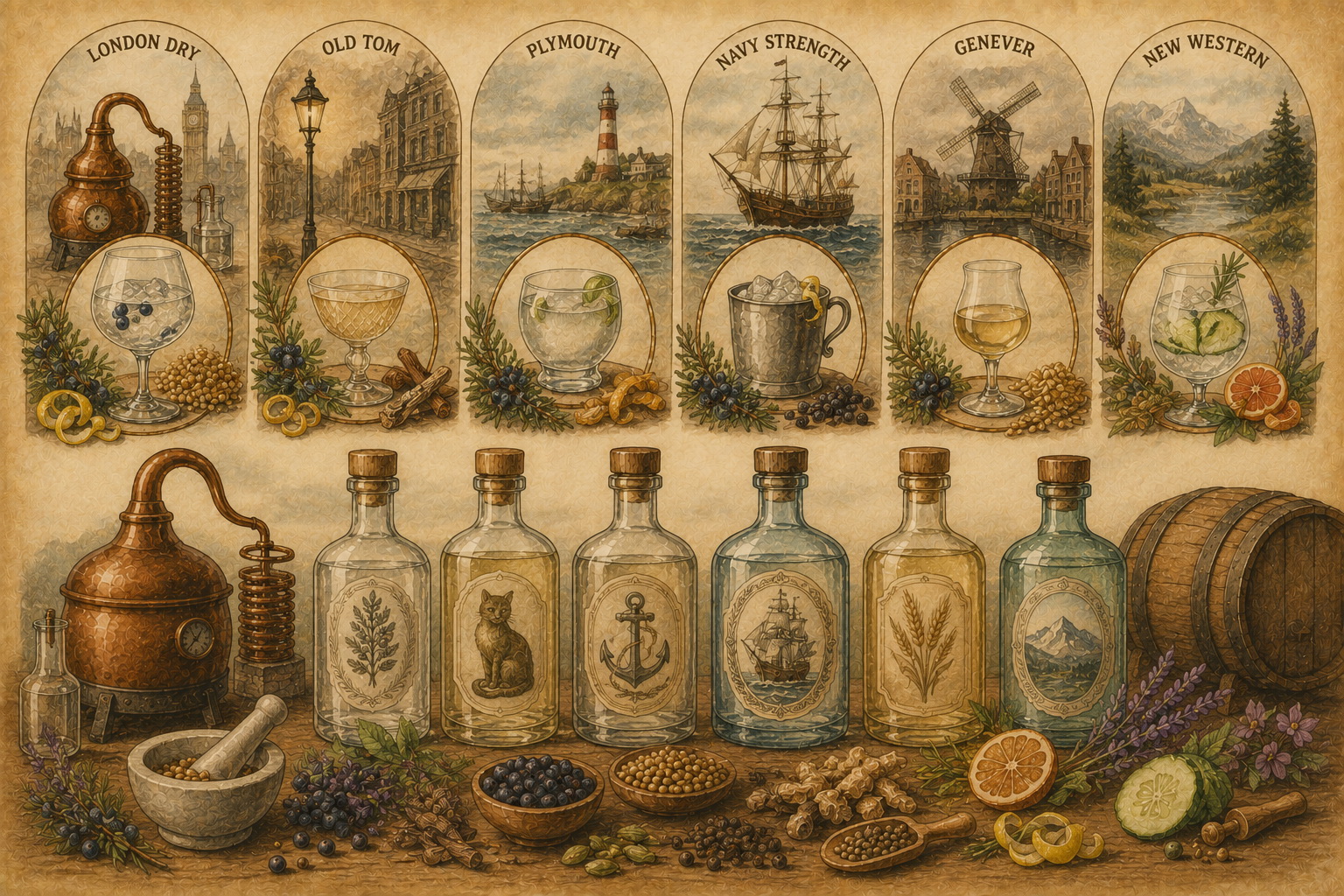
There is no “right” gin
One day a person decides to buy a good gin. He opens the catalog and sees dozens of incomprehensible names: London Dry, Old Tom, Plymouth, Navy Strength, Genever… It seems that these are completely different drinks.
In fact, they all speak the same language. Each one just has its own accent.
All styles of gin were born not because producers wanted to come up with as many names as possible. They appeared due to different historical eras, production technologies and people's tastes.
London Dry is a classic with which acquaintance begins
This is the style that most people imagine when they hear the word “gin”.
Its character is easy to recognize: a fresh juniper aroma, a clean taste, a dry aftertaste and well-balanced botanicals. It was London Dry that became the basis for most classic cocktails and has remained an international standard for many decades.
It is not without reason that we talked about this style separately in the previous article.
Old Tom - a bridge between the past and the present
Once upon a time, gin was much coarser than it is today. To make it more pleasant, manufacturers began to soften the taste a little.
This is how Old Tom Gin appeared - a style that can be called a historical compromise. It is softer than London Dry, sometimes has a slight sweetness, but at the same time does not turn into a liqueur.
If London Dry resembles a neatly ironed suit, then Old Tom is a tweed jacket with a rich history.
Plymouth - a gin with its own character
Unlike London Dry, the name Plymouth is really connected with geography. Historically, this style was produced in the British city of Plymouth.
Its flavor is usually milder, with less juniper and more rounded earthy and citrus notes. That's why many bartenders like to use Plymouth in classic cocktails that require a more delicate balance.
Navy Strength - when strength was a matter of trust
This style originated with the British Navy.
Gin was carried on ships alongside gunpowder. If the barrel accidentally leaked, the alcohol wouldn't render the gunpowder unusable. Thus began the tradition of producing gin of increased strength - approximately 57% alcohol.
Today, Navy Strength is valued not for its military history, but for its more concentrated aroma, which is especially vividly revealed in cocktails.
Genever is the great-grandfather of modern gin
If London Dry can be called a classic, then Genever is the story that started it all.
It was in the Netherlands and Flanders that a drink was born several centuries ago that became the predecessor of modern gin. It is made from malt alcohol, so it has a more grainy, bready and even slightly waxy character.
Tasting Genever, it is easy to understand how far gin has evolved over the past centuries.
New Western - freedom of experimentation
At the end of the 20th century, distillers asked themselves an interesting question: what would happen if juniper ceased to be the main star?
Thus was born the modern trend, often called New Western or Contemporary Gin.
Here, citrus fruits, flowers, lavender, basil, cucumber, berries or even local plants characteristic of a particular region can come to the fore. Juniper is still present, but it no longer always dominates.
It is this style that today opens up the most opportunities for creativity for craft distilleries.
Which style should you choose?
The best gin is not the one that has received the most awards, but the one that suits your taste.
If you are just starting to get acquainted with this drink, it is almost always worth starting with London Dry. It will help you understand the classic character of gin.
If you like softer drinks, pay attention to Old Tom or Plymouth. If you like a rich aroma, try Navy Strength. And if you are interested in discovering new combinations of botanicals, modern New Western Gin can surprise even experienced connoisseurs.
Conclusion
The world of gin is much more diverse than it seems at first glance. All its styles did not arise by chance: some were the result of technological developments, others were a response to historical events, and still others were the desire of distillers to search for new flavors.
And this is what makes gin one of the most interesting spirits of our time. It does not force you to choose between tradition and experimentation. It allows you to enjoy both, depending on your mood, the occasion, and your own taste.