





What is London Dry Gin?
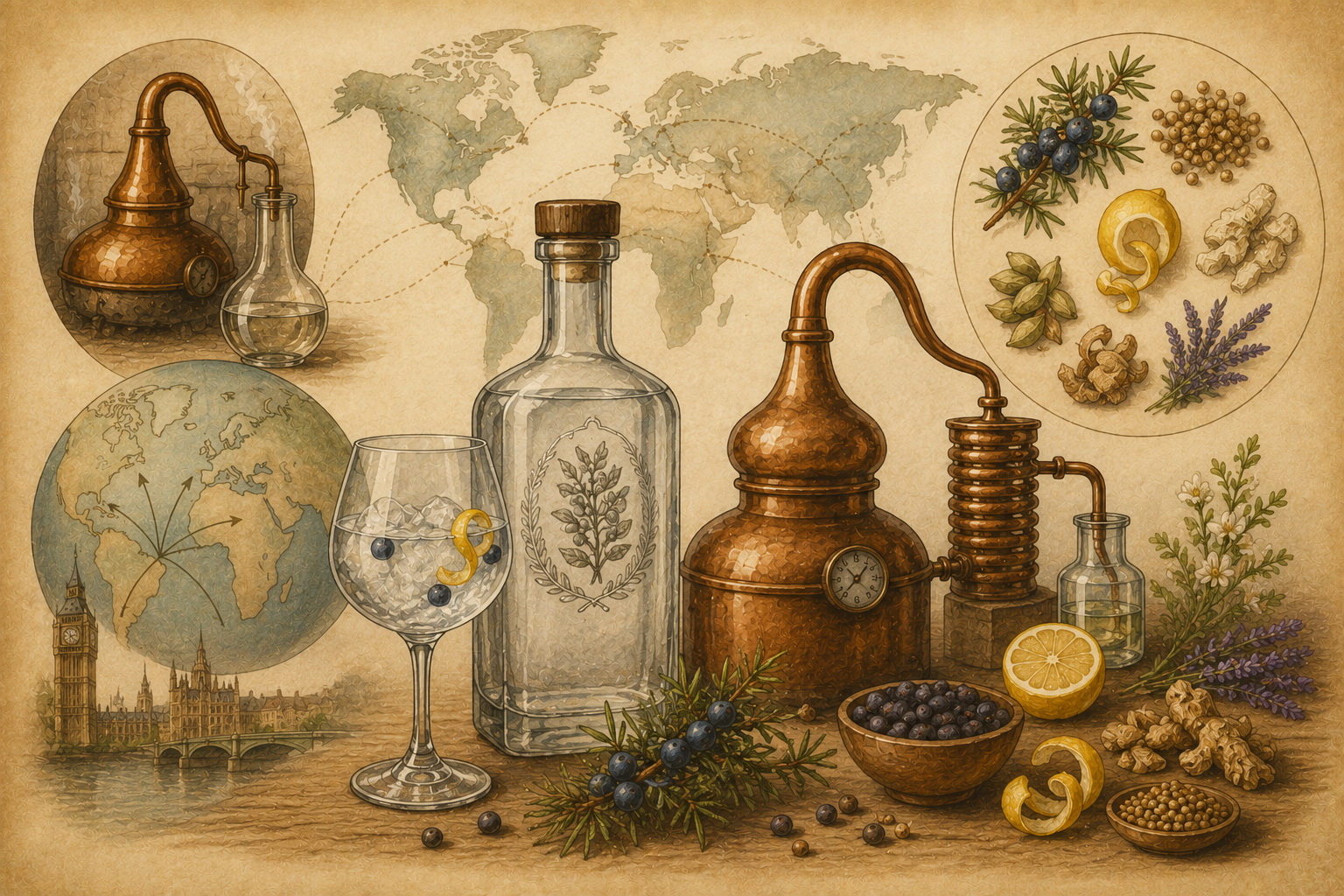
The most common misconception about London Dry Gin
If you ask someone who is just starting to get acquainted with the world of gin to explain what the inscription London Dry Gin means, the answer will almost always be the same.
“It was probably made in London.”
It sounds logical. But this is where one of the biggest misconceptions lies.
In fact, a bottle of London Dry Gin can be made in Ukraine, Japan, Australia, the USA or any other country in the world. If the manufacturer follows certain production rules, he has the right to use this name regardless of where his distillery is located.
London Dry Gin is not a geography. It is a technology.
Then why “London”?
The name really comes from England. It was the British distilleries in the 18th and 19th centuries that gradually shaped the style of gin that is considered classic today.
By that time, alcohol production was becoming more and more precise. More modern stills, purified alcohol, and new approaches to working with plant ingredients were emerging. It was then that gin was born, in which the main role was played not by alcohol, but by the aroma of juniper and other botanicals.
Later, this technology became so authoritative that its name became an international standard.
What does the word "Dry" mean?
Another interesting detail is the word Dry.
Many people think that it means high strength or a sharp taste. In fact, it is completely different.
Dry means that after distillation is complete, sugar is not added to the gin in an amount that noticeably changes its taste. The drink remains dry, clean and transparent in its aroma.
That is why a quality London Dry Gin does not mask the botanicals with sweetness. It allows them to sound natural.
Juniper always comes first
There are dozens of styles of gin in the world, but London Dry Gin has a rule that has not changed for many years: juniper must remain the dominant aroma.
It is he who creates that fresh coniferous character, thanks to which gin cannot be confused with any other strong drink.
This does not mean that manufacturers cannot experiment. Instead, they add coriander, citrus zest, angelica root, cardamom, pepper, lavender, chamomile, berries, flowers, and dozens of other botanicals.
However, all of them should complement the juniper, not overshadow it.
How is London Dry Gin different from other styles?
The main difference is not in the recipe, but in the principle of production.
All the natural flavors should enter the drink during the second distillation along with the botanicals. It is then that the alcohol vapors pass through the plant material or come into contact with it inside the still, delicately taking away the most volatile aromatic components.
That is why the aroma of London Dry Gin seems holistic. It does not resemble a set of individual spices. This is the only composition in which dozens of ingredients sound like one orchestra.
Why has this style become a standard?
The answer is quite simple. London Dry Gin has proven to be extremely versatile.
It is a pleasure to taste on its own, it opens up beautifully with tonic and has become the basis for hundreds of classic cocktails - from Martini to Negroni and Gin & Tonic.
It is precisely thanks to its clean, predictable and well-balanced taste that this style has become loved by bartenders, professional tasters and millions of people around the world.
Does London Dry Gin mean that other gins are worse?
Absolutely not.
Today, distilleries are actively experimenting with styles. Gins with bright citrus notes, floral aromas, oak barrel aging, or even local botanicals characteristic of a particular region are emerging.
London Dry Gin is not the “best” style. It has become a classic, just as a classical symphony does not cancel out jazz or modern music.
Conclusion
London Dry Gin is not an address on a map or a marketing slogan on a label. It is the result of a certain production philosophy, in which the purity of distillation, natural botanicals and the undisputed leadership of juniper play a major role.
And perhaps that is why this style has remained a reference point for distillers in different parts of the world for over two centuries. He proves that a true classic is born not where it was invented, but where it continues to be made with respect for tradition.