





Oloroso, Sauternes, Tempranillo and Garnacha: what do these names mean in aged distillates?
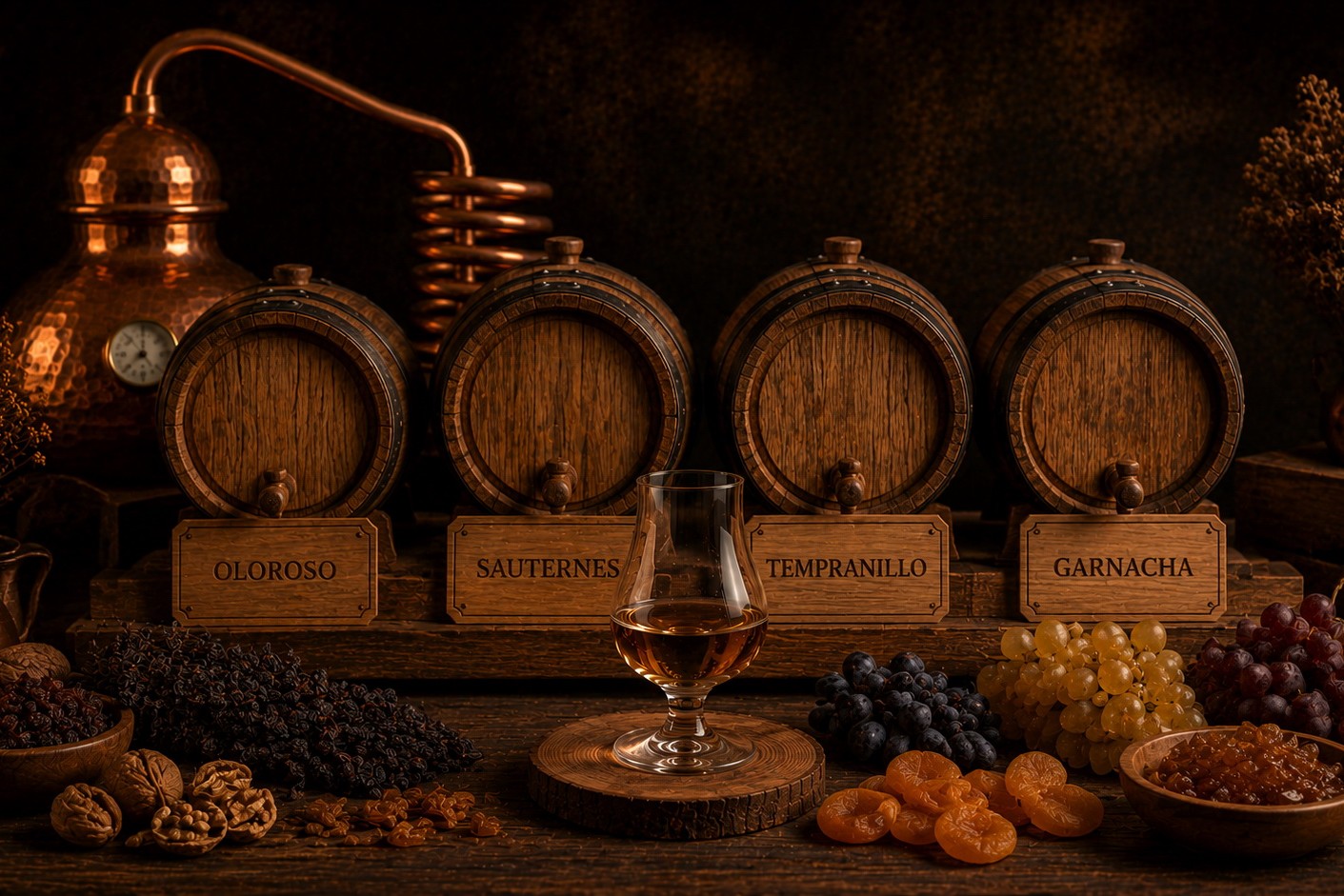
In descriptions of aged craft spirits, you’ll often come across complex names like Oloroso, Sauternes, Tempranillo, or Garnacha. To someone just getting acquainted with the world of spirits, these might seem like types of oak, specific distillation techniques, or even ingredients in a drink.
In reality, these names are related to wine. Oloroso is a style of sherry, Sauternes is a French sweet white wine and the name of the appellation, while Tempranillo and Garnacha are red grape varieties.
When a producer notes that a spirit has been aged in a barrel that previously held a specific wine, this reveals the wood’s history. The oak has already been in contact with the wine, absorbing some of its aromatic and flavor components, and has subsequently been used to age a new spirit.
This approach allows the character of the distillate to be enhanced with winey, fruity, spicy, nutty, or honeyed notes. However, the result depends not only on the name of the wine but also on the type of oak, the condition of the barrel, the aging period, and the skill of the blender.
What Does “Wine Barrel” Mean?
A wine barrel is an oak container in which wine was previously fermented or aged. After it is emptied, some of the wine’s components remain trapped in the wood’s pores.
When a strong distillate is poured into such a barrel, it begins to interact with two sources of character at once: the oak and traces of the previous beverage.
The wood can impart vanilla, spicy, toasted, and tart notes. The previous wine can complement these with fruity, berry, floral, nutty, or wine-like associations.
However, the wine itself is not added to the distillate as a regular ingredient. The influence occurs gradually, through contact with the barrel’s inner surface.
Why a used wine barrel differs from a new one
A new oak barrel is highly active. It quickly imparts color, woody notes, vanilla, spices, and other oak components to the spirit. If the process isn’t controlled, the barrel can begin to dominate the character of the distillate itself.
A used wine barrel has already imparted some of its most active substances to the previous beverage. Therefore, its influence is often milder and slower.
At the same time, the wine’s profile remains in the wood. This is what makes each barrel unique: oak from dry sherry behaves differently than a barrel from sweet white or full-bodied red wine.
The master’s task is not simply to extract as many aromas as possible, but to integrate them with the original distillate.
What Is Oloroso
Oloroso is a dry style of sherry that matures through active contact with oxygen. This aging method helps develop a structured, rich, and complex character.
The wine itself may exhibit nutty, woody, spicy, dried-fruit, and deep oxidative notes. This is why Oloroso casks are highly valued in the production of aged spirits.
After the wine has been removed, the wood may retain part of this profile. When in contact with the distillate, it can impart notes of nuts, dried fruit, spices, wine, and a noble dryness.
However, the phrase “aged in Oloroso” usually refers to aging in a barrel that previously held this wine, rather than adding Oloroso directly to the finished product.
How an Oloroso cask can alter the distillate
Oloroso has a distinct and structured character, so such a barrel is well-suited for beverages that already have a sufficiently dense base.
It can accentuate:
- notes of dried fruit;
- nutty undertones;
- warm spices;
- woody dryness;
- wine-like depth;
- a long and warming finish.
In a honey distillate, this finish can interact with aromas of wax, honey, honeycomb, vanilla, and pepper. Instead of straightforward sweetness, a more complex composition emerges with spicy and dry wine-like notes.
The duration of contact is of great importance. An overly active barrel can overpower the honey base, so the final aging requires regular tasting.
What Is Sauternes
Sauternes is a famous French sweet white wine from Bordeaux. Its aromatic profile can include citrus, floral, apple, pear, tropical, spicy, nutty, dried, and candied fruit notes.
The wine has a distinct sweetness but at the same time retains acidity and complexity, thanks to which it is not perceived as a simple dessert syrup.
A Sauternes barrel can retain some of this rich fruity-floral profile. It is particularly interesting for distillates that already have honey, apple, or floral notes.
How a Sauternes barrel affects a distillate
Finishing in such a barrel can complement the composition with notes of ripe fruit, flowers, honey, citrus zest, dried fruit, and delicate spices.
This does not mean that the finished spirit automatically becomes sweet. Much of the influence is evident in the aroma, texture, and finish.
For apple distillate, a Sauternes cask can be particularly well-suited. The apple’s tartness preserves its freshness, while the wine cask adds roundness, floral notes, and fruity depth.
When combined with a honey-based spirit, notes of baked apples, honey blossom, wax, spices, and ripe fruit may emerge.
Oloroso and Sauternes—What’s the Key Difference?
These two wines belong to different traditions and have distinct characters.
Oloroso casks are more commonly associated with:
- nuts and dried fruits;
- dryness;
- spiciness;
- oxidative notes;
- a more structured finish.
A barrel previously used for Sauternes may lean more toward:
- honey and floral notes;
- ripe and dried fruits;
- citrus notes;
- spicy sweetness in the aroma;
- a softer, rounder fruitiness.
These aren’t strict rules. The specific result depends on the history of the barrel and the distillate aged in it.
What Is Tempranillo
Tempranillo is one of Spain’s most famous red grape varieties and a key variety in many Rioja wines.
Wines made with it can have fruity, berry-like, and spicy characteristics. During aging in oak, woody, vanilla, and other mature notes are added to this profile.
When the description of a distillate mentions “French oak from Tempranillo,” it refers to a barrel that was previously used for wine made from this variety or containing a significant proportion of it.
The wood may retain wine-like and dark-fruit nuances, which subsequently interact with the honey- or apple-flavored distillate.
What Is Garnacha
Garnacha is another important Spanish red grape variety. It is prized for its fruitiness, freshness, softness, and versatility across different wine styles.
Wines made from Garnacha can add a ripe, fruity character, roundness, and warmth to the barrel. However, the specific profile depends on the region, the ripeness of the grapes, the winemaking method, and subsequent aging.
When blended with Tempranillo, this variety can complement the structure with softer and juicier fruit notes.
Why Tempranillo and Garnacha Are Often Mentioned Together
Both varieties are traditionally used in the production of Spanish red wines and can be part of the same blend.
Tempranillo provides the foundation, structure, and a distinct, mature character. Garnacha complements the blend with fruitiness, softness, and freshness.
After such a wine is aged in an oak barrel, the wood develops a multi-layered profile. When the distillate is later poured into it, it comes into contact not only with the oak but also with the residual wine history of the two varieties.
That is why the phrase “a barrel that once held Tempranillo and Garnacha” describes much more than just a storage vessel.
Does the flavor of the grapes transfer directly to the distillate?
Don’t expect the distillate to taste like fresh Tempranillo or Garnacha grapes after aging. The influence is more complex and subtle.
During wine production, the grapes undergo fermentation and, often, a long aging process. What remains in the barrel are the fully developed wine components, not the original flavor of the berries.
Therefore, the distillate may evoke associations with dark fruits, berries, spices, wine, vanilla, and oak. The intensity depends on the condition of the barrel and the duration of contact.
Primary and Final Aging
A wine barrel can be used for both primary aging and final finishing.
Primary aging
The distillate spends a long time in the barrel. The oak and the barrel’s previous wine profile become an important part of its overall character.
Finishing
The spirit first matures in one barrel and is then transferred to another—for example, an Oloroso or Sauternes barrel—for a shorter period.
The finish adds a new aromatic layer but should not completely alter the already established foundation.
Why the finishing period is often shorter
By the time of the finish, the distillate already has a well-defined profile. The goal is not to start the aging process over, but to add an extra accent.
A wine barrel can be quite active, especially if it’s fresh after being emptied. Therefore, the spirit is regularly checked to ensure that nutty, fruity, or winey notes do not begin to dominate.
The finishing process can last several months or longer, depending on the recipe. There is no universal timeframe: the master distiller focuses on achieving the right balance of aromas and flavors.
Why Identical Barrels Yield Different Results
Two barrels that previously held Oloroso or Sauternes are not completely identical. They may differ in oak type, age, volume, toasting level, and the number of previous fillings.
It also matters how long the wine was aged inside the barrel and how quickly the barrel was refilled with distillate after being emptied.
The result is also influenced by:
- the strength of the distillate at the time of filling;
- the temperature of the storage facility;
- humidity;
- the size of the barrel;
- aging period;
- the initial character of the spirit.
Therefore, the name of the base wine sets the direction but does not guarantee a specific set of aromas.
Oloroso in the Creation of Honey Spirit Aged
Honey Spirit Aged by ENTUZIAST is made from fermented May honey and undergoes three stages of distillation. Afterward, the spirit matures for over two years in French oak barrels previously used for Tempranillo and Garnacha red wines.
Some of the spirits are aged in Ukrainian oak barrels previously used for blackthorn. After blending, the spirit undergoes an additional six months of finishing in an Oloroso cask.
This finishing touch complements the honey-based profile with wine-like depth, spiciness, and a more complex finish. The aroma blends notes of wax with honey, spices, and vanilla, while the flavor retains a mineral and warming character with hints of honey and spicy pepper.
Sauternes in the creation of Honey Spirit Apple
Honey Spirit Apple combines honey distillate with classic apple spirits produced using Calvados production technology.
The primary aging lasts for two years in French oak barrels previously used for Tempranillo and Garnacha red wines. Part of the blend matures in Ukrainian oak barrels previously used for blackthorn.
After blending, the spirit undergoes a six-month maturation in a barrel previously used for Sauternes. This finish naturally enhances the apple-honey profile, adding layers of fruit and wine complexity.
The aroma reveals notes of baked apples, honey blossom, wax, and wood. The taste remains fresh and spicy, with a pleasant apple tartness and a long finish of spices and apples.
How to Interpret the Description of an Aged Distillate
When a product page lists several types of barrels, you should interpret them as a sequence that shapes the spirit’s character.
For example:
- honey distillate defines the initial base;
- French oak adds structure and woody notes;
- a barrel previously used for Tempranillo and Garnacha brings a wine-like and fruity-spicy layer;
- Ukrainian blackthorn oak adds a local berry accent;
- a finish in Oloroso or Sauternes rounds out the composition.
This does not mean that every note can be clearly distinguished. The goal of blending and aging is precisely to ensure that all components come together as a single beverage.
How to Taste a Wine-Aged Distillate
After pouring the drink, let it sit in the glass for a moment. The alcohol fumes gradually become less sharp, and the wine and oak notes become more pronounced.
First, identify the base notes: honey, apple, berries, or spices. Then pay attention to the background notes—vanilla, wood, dried fruit, nuts, flowers, or wine acidity.
The finish most often reveals the influence of the final barrel. Oloroso can emphasize dryness, nuts, and spices, while Sauternes highlights fruity roundness and honey-floral notes.
Don’t try to identify absolutely every noted aroma. Aromatic perception is individual, and the main criterion remains overall harmony.
Does a wine barrel make the drink better?
A wine barrel is not an automatic guarantee of quality. It merely provides the producer with an additional tool.
If the initial distillate is unbalanced, the barrel may not be able to correct its flaws. If aging lasts too long, the wine or wood profile can overpower the base spirit.
The best result is achieved when the barrel complements the character of the base spirit. Oloroso can successfully round out a complex, aged honey distillate, while Sauternes can enhance a blend of apple spirits and honey.
Frequently Asked Questions About Wine Barrels
Is Oloroso a grape variety?
No. It is a style of dry sherry wine that undergoes oxidative aging and has a structured, complex character.
Is Sauternes a grape variety?
No. It is a French appellation and a style of sweet white wine from Bordeaux.
Are Tempranillo and Garnacha wines or grape varieties?
They are red grape varieties that can be used separately or together in wine blends.
Are Oloroso or Sauternes added directly to the distillate?
The term “aging” usually refers to contact with a barrel that previously held the corresponding wine, rather than the direct addition of wine.
Does the distillate become sweet after Sauternes?
Not necessarily. The barrel may impart honey, floral, and fruity notes, but the finished drink may remain dry.
What does an Oloroso cask contribute?
It can complement the distillate with nutty, dried-fruit, spicy, wine-like, and woody notes.
Why use several different barrels?
The primary aging shapes the drink’s structure, while the additional finish helps add a new aromatic layer and make the composition more complex.
The barrel preserves the memory of the wine
Oloroso, Sauternes, Tempranillo, and Garnacha aren’t just fancy foreign words in a drink’s description. They help us understand the history of the barrel before the distillate was placed inside it.
Oloroso can add nutty, dried-fruit, and spicy depth. Sauternes brings fruity, floral, and honeyed notes. Tempranillo and Garnacha shape the character of red wine, which is partially preserved in French oak.
At ENTUZIAST, wine barrels are used as a tool to create a complex composition. They do not mask the honey or apple base, but rather help it unfold through the wood, wine, blending, and time.