





Honey distillate or mead: what's the difference?
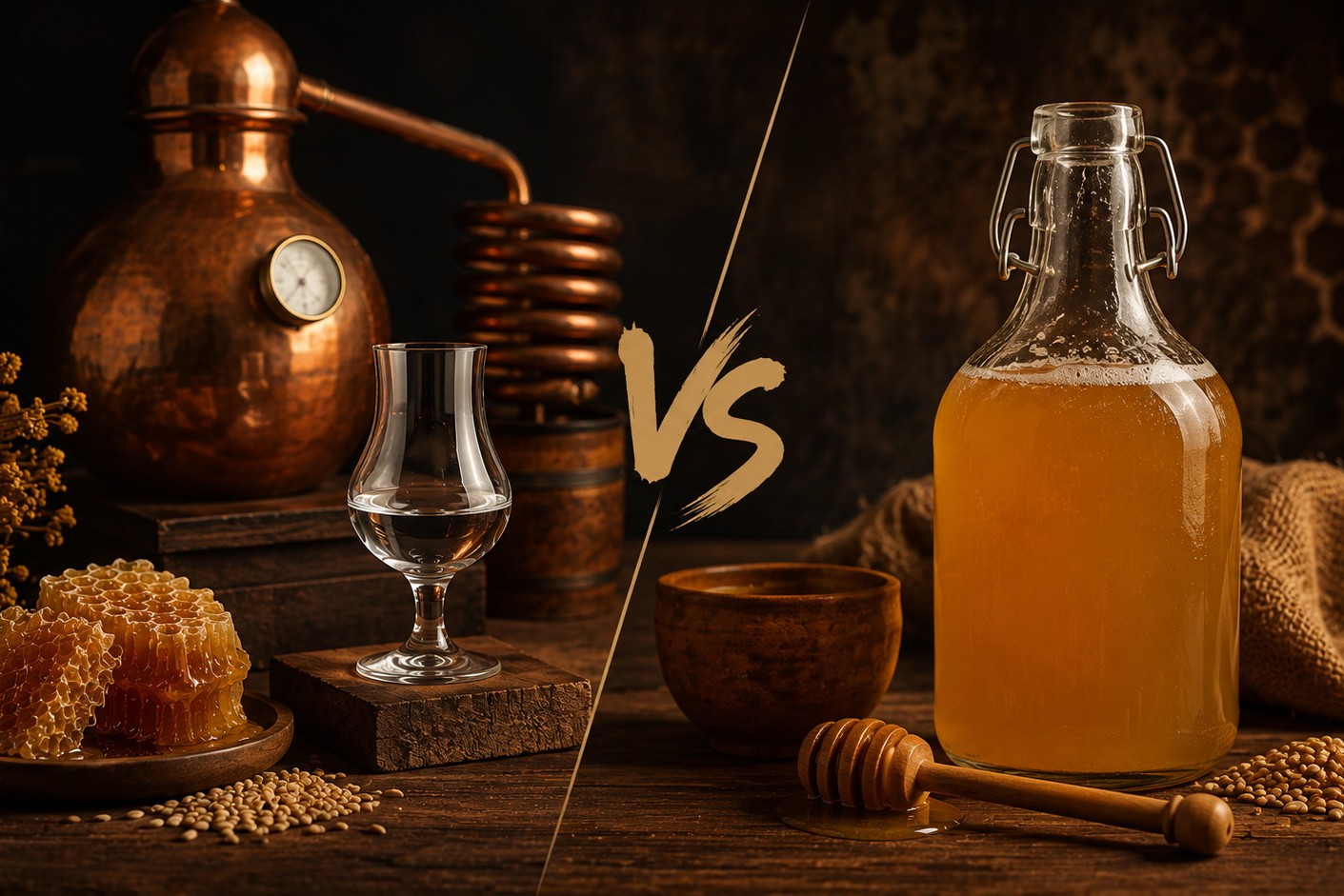
When it comes to alcoholic beverages made from honey, most people automatically think of mead. However, modern craft production has long gone beyond traditional recipes. Today, along with mead, one can increasingly find another category - honey distillate.
Despite the common basis in the form of natural honey, these are two completely different drinks. They differ in production technology, strength, taste, aroma, and even the method of tasting.
What do they have in common?
Both mead and honey distillate start the same way - with natural honey. It is dissolved in water and the process of alcoholic fermentation is started. It is at this stage that yeast converts natural sugars into alcohol.
That's where the similarity practically ends.
Mead is a product of fermentation
After fermentation is complete, mead is already a ready-made drink. It can be matured, clarified, sometimes aged or flavored with berries, fruits or spices, but most importantly, it is not distilled.
That is why mead retains the character of a fermented drink, has a relatively low strength and is often associated with a light natural sweetness.
Honey distillate - the next level
After fermentation is complete, honey distillate goes through another extremely important stage - distillation.
During distillation, the master does not just increase the strength. It selects only the most valuable part of the future drink, which contains the desired aromatic components and provides a clean, soft taste.
It is thanks to this that the honey distillate acquires a completely different structure, depth and character.
Why is the taste so different?
Meadow is more reminiscent of wine or cider with honey notes. Honey distillate is closer to the world of noble spirits.
It almost does not have the natural sweetness of honey. Instead, its aromatic features remain: floral shades, wax, honeycombs, field herbs, sometimes light fruity or spicy notes.
That is why high-quality honey distillate often surprises people who expected to get "sweet alcohol from honey".
Strength also varies
Meadow usually has a moderate strength, since alcohol is formed only during natural fermentation.
Honey distillate after distillation acquires a significantly higher strength. However, it is not an end in itself. The main task of distillation is to convey the aromatic character of the honey raw material as cleanly as possible.
What happens after distillation?
This is where almost unlimited possibilities open up for the master.
Some honey distillates remain transparent, allowing you to assess the purity of the distillation and the natural nature of the raw material.
Others are aged in oak barrels, where they gradually acquire notes of vanilla, spices, dried fruits, wood and a noble amber color.
Some become the basis of signature drinks, in which honey distillate is combined with berries, apple spirits or botanicals.
Why is honey distillate becoming more and more popular?
Global interest in craft distillates is constantly growing. People are increasingly interested in the origin of the product, the natural raw materials and the craftsmanship of the producer.
That is why honey distillate opens a new perspective on traditional honey. It demonstrates that this natural raw material can become the basis not only for fermented beverages, but also for complex, signature distillates with their own character.
How it is implemented at ENTUZIAST
At the ENTUZIAST honey distillery, honey is not just an ingredient, but the main basis of the entire production philosophy.
That is why the collection presents both pure honey distillates and signature products created on their basis. The Honey Spirit series demonstrates the character of the honey distillate itself, while MeadGIN combines the honey base with the classic culture of gin production.
What to choose?
If you like light fermented drinks, you should pay attention to mead.
If you are interested in discovering a more complex world of aromas, noble distillates, aging, master's work and modern craft production, honey distillate will be the next step.
Conclusion
Mead and honey distillate are not competitors. They are two different directions of development of the same natural product - honey.
The first demonstrates the beauty of fermentation, the second - the art of distillation.
That is why honey distillate today occupies a special place among modern craft of strong drinks, opening up new opportunities for producers and new experiences for connoisseurs.