





The History of Gin: From Medicine to Premium Drink
A drink that had no chance of becoming a legend
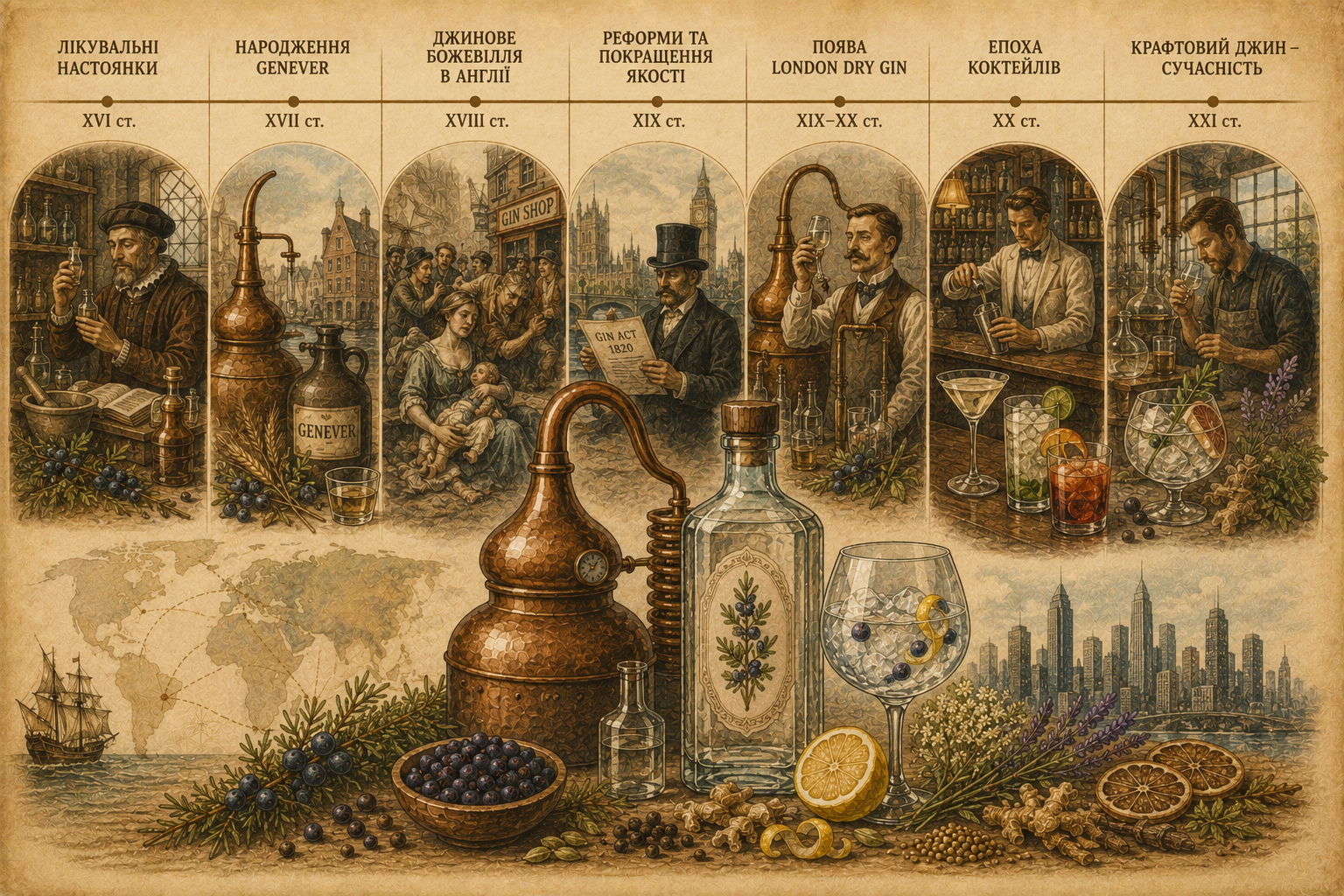
If someone had told a 16th-century apothecary pounding juniper berries in a mortar that his tincture would one day be served in the best bars in London, New York, Tokyo or Sydney, he would have just smiled.
Nobody was creating new alcohol back then.
Nobody was thinking about cocktails.
Nobody was imagining premium distilleries.
People were just trying to make medicine.
That's why the history of gin is so interesting. It didn't start where it ended.
When juniper was more important than alcohol
Long before the advent of modern gin, juniper berries already held a special place in European medicine.
They were used as an aromatic additive, preservative, and component of medicinal tinctures. People believed that juniper cleanses the body, helps with colds, facilitates digestion, and even protects against infections.
Modern medicine does not confirm all of these properties, but one thing is certain: it was the love for juniper that led to the emergence of the future gin.
The Netherlands. The Birth of Genever
The homeland of gin is not England, but the Netherlands.
It was here in the 16th and 17th centuries that Genever appeared - a grain distillate with a characteristic juniper aroma. It was not made in the same way as modern London Dry. It was based on malt alcohol, which gave the drink a dense, almost bready character.
To the modern taster, Genever may seem like a strange combination of young whiskey and gin. But it was he who became the starting point for the whole story.
How the English fell in love with gin
At the end of the 17th century, England was experiencing political and economic changes. The government encouraged the production of local spirits, and the import of French alcohol was limited.
Gin quickly became available to almost everyone.
So accessible that very soon the country faced an unexpected problem.
Gin Craze
Historians have called this period the Gin Craze.
In the first half of the 18th century, London literally drowned in cheap gin. It was produced by thousands of small distilleries, often without proper quality control.
For many poor city dwellers, it was the most affordable way to forget about their hard lives.
It was then that the artist William Hogarth created the famous engraving Gin Lane, which is still considered one of the most famous anti-drinking posters in history.
Gin first became famous. But it was not the glory that one could be proud of.
From chaos to quality
Gradually, the state began to introduce new rules for production, licensing, and taxation.
Random producers disappeared from the market.
Instead, distilleries appeared that invested money in equipment, recipes, and the quality of alcohol.
It was then that gin began to change its reputation.
It ceased to be cheap alcohol and gradually became a noble distillate.
The emergence of London Dry Gin
In the 19th century, the development of distillation apparatus made a real revolution.
Purer alcohol allowed distillers not to hide the shortcomings of the raw materials, but, on the contrary, to emphasize the aroma of botanicals.
Juniper, coriander, zest lemon, angelica root, cardamom, pepper, lavender — each ingredient began to sound much cleaner.
Thus was born the style that the whole world knows today as London Dry Gin.
Why the 20th century could change everything
It is interesting that gin could lose its popularity again.
World wars, economic crises and changing consumer habits have repeatedly forced people to abandon expensive alcoholic beverages.
But it was during this period that the cocktail culture was born.
Martini.
Negroni.
Gin & Tonic.
Tom Collins.
Gin turned out to have an amazing ability to combine with other ingredients without losing its own character.
The era of craft distilleries
At the beginning of the 21st century, history took another unexpected turn.
Small independent distilleries began experimenting with local botanicals. Some used lavender, some used seaweed, some used berries, flowers, herbs or even plants that grow only in one specific region.
Gin ceased to be just a category of alcohol.
It became a way to tell the story of a place, nature and people.
Today, gin is a culture
If you look closely at the path of gin, it becomes clear that it never became popular by accident.
Each generation rediscovered it.
For apothecaries, it was a medicinal tincture.
For 18th-century Londoners, it was an affordable alcohol.
For 20th-century bartenders, it was the perfect base for cocktails.
For modern distillers, it was a canvas on which to create new aromatic compositions.
Conclusion
The history of gin has been going on for almost five hundred years. During this time, it has changed many times, experienced It has gone through periods of admiration and criticism, lost popularity and returned to the top again.
But the main thing has remained unchanged - the aroma of juniper, which once led pharmacists to the first tinctures, and today inspires distillers around the world to create drinks that combine tradition, skill and creativity.
Perhaps this is the secret of gin. It has never stopped evolving. And that is why its story is far from over.