





French and Ukrainian Oak: What's the Difference?
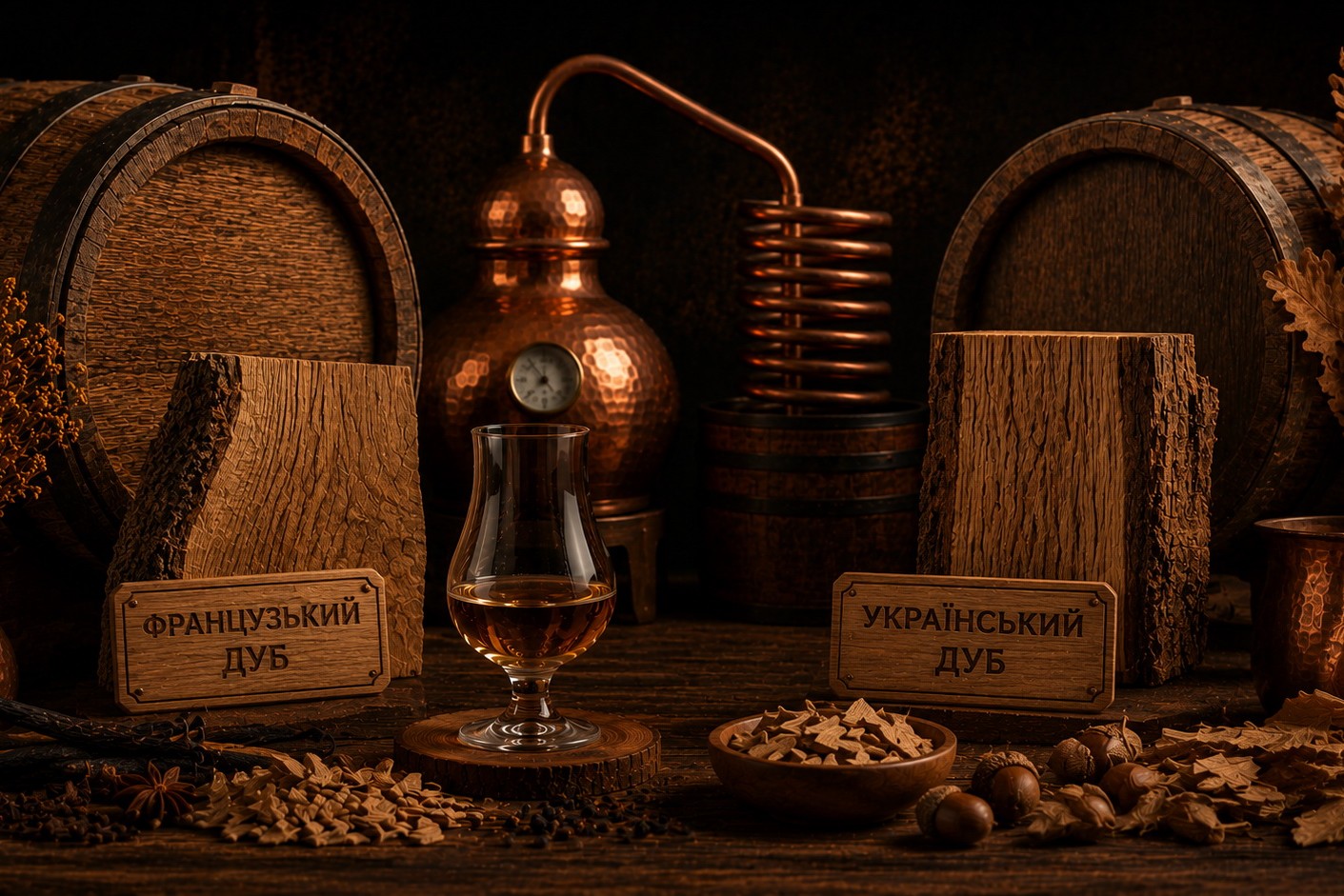
When the distillate is placed in an oak barrel, a slow process of transformation begins. The spirit interacts with the wood, acquiring new aromatic nuances and changing its color, texture, and aftertaste. However, the result depends not only on the length of aging. The origin of the oak itself plays a significant role.
French and Ukrainian oak can bring out different qualities in the same distillate. One barrel may impart delicate spice, vanilla, and body, while another may add distinct woody warmth, density, and characteristic regional nuances.
That said, it would be incorrect to claim that one type of oak is unconditionally better than another. The quality of aging is determined not only by the country of origin of the wood but also by the specific type of tree, its growing location, age, the method of drying the staves, the level of toasting, the size of the barrel, and its previous use.
Why the Origin of Oak Matters
Oak grows in a variety of climatic and soil conditions. Temperature, precipitation, soil composition, the tree’s growth rate, and its age all influence the structure of the wood.
Trees that grow more slowly often develop a denser structure with finer annual rings. Faster growth can result in a different balance of porosity and natural components in the wood.
For a barrel maker, these differences are important because they affect the rate at which the distillate interacts with the oak. Through the structure of the staves, the beverage acquires color, aromatic compounds, and a small amount of oxygen necessary for gradual aging.
This is precisely why oak from different regions is not entirely interchangeable. It can produce distinct aging styles even with the same duration and level of toasting.
What Is French Oak
French oak is widely used to make barrels for wine and spirits. It is valued for its ability to gradually impart structure, as well as spicy, vanilla, and woody notes to the beverage without becoming overly dominant too quickly.
The term “French oak” is quite broad. The wood can come from different regions of France and vary in density, grain, and aromatic potential.
Therefore, two French oak barrels will not necessarily produce the same result. The origin of the staves, the method of their preparation, the barrel maker, and the heat treatment process all play a role.
How French oak can influence the distillate
French oak is often chosen for delicate and extended aging. It can gradually impart vanilla, spice, nutty, and woody notes to the composition, create a richer texture, and sustain a long finish.
In a well-balanced spirit, the influence of the barrel should not come across as a distinct layer of raw wood. The oak components integrate with the distillate’s original character—whether honeyed, fruity, berry-like, or grainy.
For example, a honey-flavored distillate may combine notes of wax, honeycombs, vanilla, and spices. In an apple spirit, oak can enhance tones of baked apples, spices, and wood.
The final result depends on the barrel’s activity. A new French oak barrel is more active, while a wine barrel imparts a more complex and mellow profile to the distillate.
What Is Ukrainian Oak
Ukrainian oak is a locally sourced wood that can be used to make barrels and age craft spirits. It allows producers to work not only with international technologies but also with local raw materials, which helps shape the product’s unique style.
As with French oak, the characteristics of Ukrainian wood depend on the specific region where it grows, the age of the tree, its density, and the method of sawing and drying.
Therefore, Ukrainian oak cannot be described by a single, universal set of aromas. However, with proper preparation and controlled aging, it can impart a distinct woody warmth, spiciness, structure, and character to the distillate.
How Ukrainian Oak Affects the Flavor
Ukrainian oak can express itself more distinctly, especially when it comes to new or active barrels. Woody, spicy, vanilla, and slightly tart notes may emerge in the flavor.
It’s important to monitor such a barrel regularly. Excessively long contact with active wood can make the spirit dry and overly oaky. At the same time, a properly determined aging period allows the distillate to gain depth without overpowering its natural aroma.
An interesting result can be achieved using a Ukrainian barrel that previously held a berry-based or other aromatic beverage. The wood retains part of its previous flavor profile and imparts it to the new distillate.
In such cases, the classic oak notes may be complemented by berry tartness, fruity acidity, or dark, spicy undertones.
Is it possible to accurately distinguish French oak from Ukrainian oak by taste?
It’s difficult to determine a barrel’s origin from just one sip. Too many factors influence the final flavor: the distillate’s raw materials, the proof, the barrel’s age, the char level, the aging duration, storage conditions, and the barrel’s previous contents.
French oak can come through quite intensely if the barrel is new and small. Ukrainian oak comes through more gently if the barrel has already been used and is part of a complex blend.
Therefore, it’s more accurate to speak not of a rigid set of flavor characteristics, but of the overall style of working with the wood. The master distiller chooses a barrel not by the country of origin, but based on the result they aim to achieve.
Wood Structure and Grain
One of the characteristics of oak is its grain—a general description of the density and width of the growth rings. Fine-grained wood typically interacts with the beverage more gradually, whereas a wider grain can promote more active extraction.
This does not mean that fine grain is always better. A slower interaction may be necessary for long, delicate aging. For shorter aging or to create a distinct oak character, the producer may choose a more active barrel.
Grain size affects more than just the rate of extraction. It is also related to the wood’s permeability and the characteristics of micro-oxidation.
Why Natural Drying of Staves Is Important
After harvesting, oak does not immediately become a barrel. The staves must undergo drying and stabilization. During this process, the wood’s moisture content decreases, and some of the harsh vegetal and astringent components are gradually transformed or leached out.
During natural drying, the oak is left outdoors for a certain period of time, exposed to air, rain, and seasonal temperature fluctuations. This preparation helps make its interaction with the beverage more predictable.
Insufficiently prepared wood can impart harsh, green, and excessively astringent notes to the distillate. Therefore, the quality of a barrel begins long before it is assembled.
How Toasting Shapes the Barrel’s Aroma
During production, the inner surface of the barrel is heated. This heat treatment helps bend the staves and alters the wood’s aromatic properties.
With light toasting, oak can retain more fresh woody and spicy notes. A medium toasting level can enhance vanilla, caramel, and toasted notes. More intense heating can add notes of smoke, dark caramel, charcoal, and toasted wood.
The degree of toasting often affects the beverage just as much as the geographical origin of the oak. French and Ukrainian barrels with different heat treatments may differ more significantly than two barrels from different countries but with the same preparation.
New Barrel or Used Wine Barrel
New oak barrel
A new barrel has the highest concentration of active wood components. It quickly imparts color and distinct oak nuances, so it requires careful monitoring.
It is used when a pronounced vanilla, spicy, and woody character is desired.
A wine barrel
A wine barrel has already imparted some of its most active components to the previous beverage. Its influence becomes milder, but the wine’s history is added to the oak profile.
A red wine barrel can impart berry, fruit, and spicy notes. A white dessert wine barrel imparts honey, floral, and fruit notes. A sherry barrel imparts dried fruit, nuts, and wine depth.
It is the previous contents that are often more important than the country of origin of the oak.
Why Combine French and Ukrainian Oak
Blending spirits from different barrels gives the master distiller more options. Instead of deriving all characteristics from a single source, one can combine the strengths of several aging styles.
French oak can add delicate spice, structure, and wine-like nuances. Ukrainian oak contributes distinct woody warmth, density, or the character of the previous beverage.
After blending, the components do not always immediately form a unified composition. The spirit is given time to rest or undergoes additional finishing aging.
This is how a complex distillate is created, in which no single type of oak dominates. Each barrel fulfills its own specific role.
Does barrel size affect the differences between oak types?
In a small barrel, the ratio of wood surface area to liquid volume is greater. Therefore, extraction occurs more quickly, and the differences between the active oak species can manifest more intensely.
In a large barrel, the influence of the wood develops gradually. The distillate has more time for slow oxidation and the integration of aromas.
For this reason, you cannot compare a large-volume French barrel with a small Ukrainian one based solely on aging duration. Even the same number of months can result in different intensities of contact.
How Storage Conditions Affect the Behavior of Oak
The temperature and humidity of the room affect the rate at which the beverage penetrates the wood, evaporation, and the overall pace of maturation.
At higher temperatures, the interaction is usually more active. In cooler conditions, it is slower and more delicate. Seasonal fluctuations cause the beverage to expand and contract, intensifying contact with the inner layers of the staves.
Therefore, the same French or Ukrainian barrel can yield different results in different storage facilities. The origin of the oak is just one part of the equation.
French Oak in Honey Spirit Aged
To create Honey Spirit Aged by ENTUZIAST, the spirit is aged in French oak barrels previously used for Tempranillo and Garnacha red wines.
This approach combines the influence of the wood with the character of the wine that previously occupied the barrel. Spicy, winey, vanilla, and fruity notes may be added to the honey distillate.
The drink retains notes of wax, honey, and spices at its core, while the oak aging adds depth and helps create a longer, warming finish.
Ukrainian blackthorn oak
Some of the Honey Spirit Aged spirits are aged in Ukrainian oak that previously held blackthorn. This allows the character of the local wood to blend with the berry-forward profile of the previous aging.
Blackthorn has a rich profile with natural acidity, tartness, and dark berry notes. Some of this character can remain in the wood and gradually transfer to the honey distillate.
In this blend, Ukrainian oak does not function in isolation but as part of the overall composition. It complements the French aging, adding another layer of aroma to the drink.
French and Ukrainian Oak in Honey Spirit Apple
Honey Spirit Apple combines honey distillate with classic apple spirits. The primary aging takes place in French oak barrels previously used for Tempranillo and Garnacha, while part of the blend is aged in Ukrainian oak barrels previously used for blackthorn.
The French oak helps integrate apple, wine, woody, and spicy notes. The Ukrainian oak adds its own structure and a berry-like nuance to the blend.
After blending, the distillate undergoes additional aging in a barrel previously used for Sauternes. This allows notes of baked apples, honey blossom, wax, and wood to form a multi-layered composition.
Which type of oak is best for a honey distillate?
There is no one-size-fits-all answer. The choice depends on the initial aroma, the desired aging duration, and the style of the finished drink.
For a delicate honey distillate, a softer, used wine barrel may be suitable, as it won’t overpower the floral and waxy notes. For a richer product, the distiller can use more assertive oak or combine several types of aging.
The key is to maintain balance. The drink should retain its honey, apple, or berry character rather than becoming dominated solely by woody flavors.
Why the country of origin isn’t the only criterion
The label “French oak” or “Ukrainian oak” provides important information but does not fully describe the barrel.
For a more accurate understanding of aging, consider:
- the species and region of origin of the wood;
- the grain of the wood;
- the method used to dry the staves;
- the level of heat treatment;
- the barrel’s volume;
- number of previous fillings;
- the beverage previously aged in the barrel;
- the strength of the distilled spirit poured into the barrel;
- storage temperature and humidity;
- the total aging duration.
It is the combination of these factors that shapes the final flavor.
How to Assess the Influence of Oak During a Tasting
First, pay attention to the aroma. Oak can manifest as vanilla, spices, toasted wood, nuts, or wine-like notes.
On the palate, assess the balance between the primary fruit and the oak. If honey, apple, or berries are completely overshadowed by the wood, the aging may have been too intense.
Well-integrated oak unfolds gradually. It adds texture, supports the mid-palate, and lingers in the finish, but doesn’t create a sensation of raw wood or excessive dryness.
In a complex blend, it’s sometimes impossible to determine which specific note comes from French oak and which from Ukrainian oak. And that’s normal: the main result is a harmonious composition.
Frequently Asked Questions About French and Ukrainian Oak
Which oak is better—French or Ukrainian?
Neither is definitively better. The choice depends on the distillate, the style of the drink, the barrel preparation, and the desired result.
Is French oak always softer?
Not always. The intensity depends on the barrel’s age, grain size, toasting level, size, and aging period.
What flavor profile does Ukrainian oak impart?
It can add woody warmth, spice, vanilla, and tart notes, but the specific profile depends on the origin and preparation of the wood.
Why blend spirits from different barrels?
Blending allows you to combine softness, structure, spice, and wine- and berry-like notes into a single, balanced drink.
Is the origin of the oak more important than the barrel’s previous contents?
Both factors are important. In a used barrel, the character of the previous wine or other beverage can influence the distillate just as much as the wood itself.
Can a single distillate be aged in several types of oak?
Yes. Individual batches can be aged in different barrels, after which they are blended or sent for final aging.
Two traditions—one complex character
French and Ukrainian oak should not be pitted against each other. Each serves as a distinct tool in the master distiller’s craft.
A French barrel can impart a delicate structure, spice, and wine-like depth. A Ukrainian barrel adds local distinctiveness, woody warmth, and the character of prior aging. Together, they open up more possibilities for blending.
In ENTUZIAST beverages, different types of oak are used not merely to create a complex description on the label. Each barrel fulfills its own purpose, helping the honey distillate, apple spirits, and berry notes come together in a harmonious composition.