





Clover Club: Gin, Raspberry and a Classic of Cocktail Culture
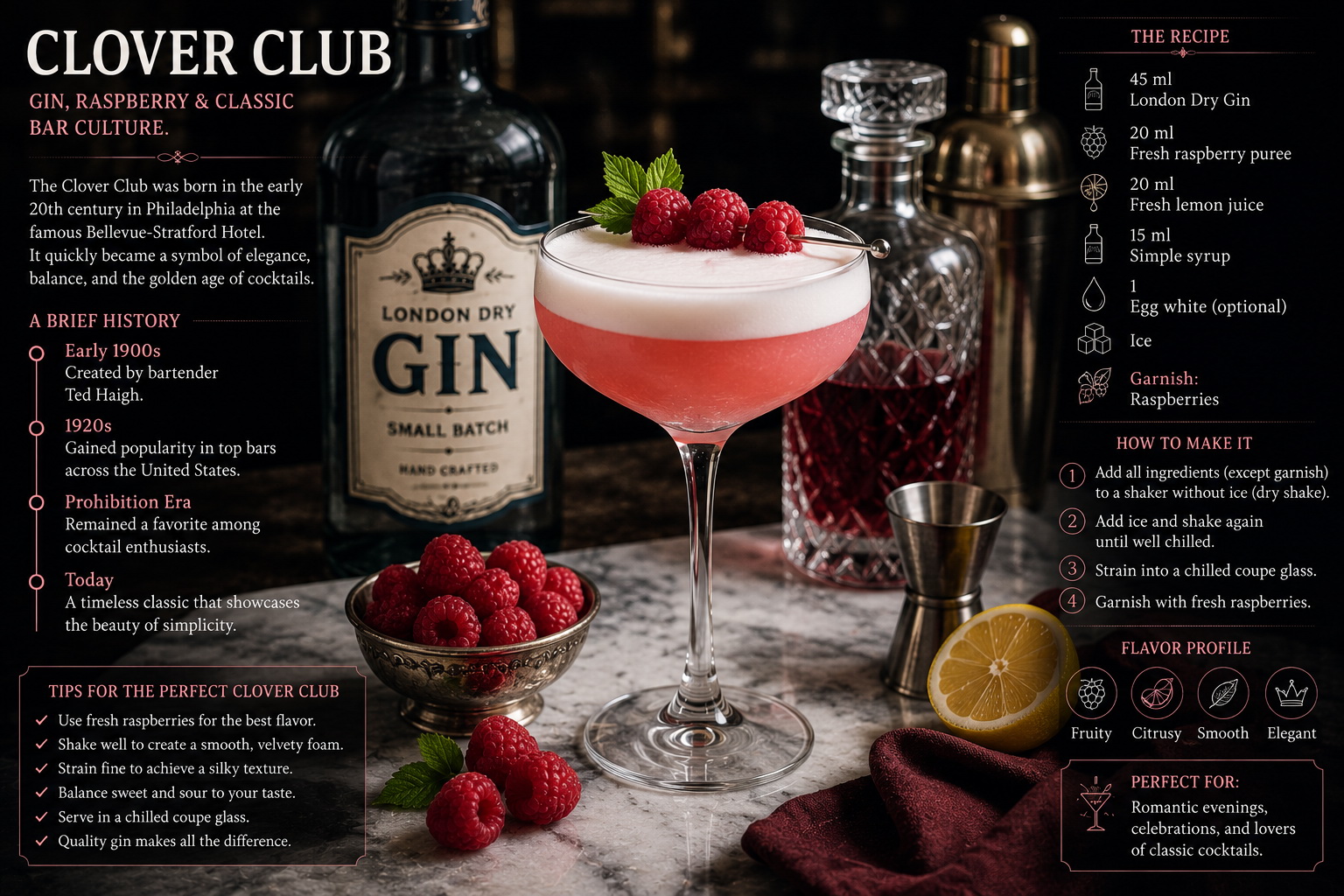
The delicate pink color of a Clover Club may make it look like a modern fruit cocktail. In reality, its history reaches back to the cocktail culture of the late nineteenth and early twentieth centuries.
Where Did the Clover Club Come From?
The name is associated with the Clover Club in Philadelphia. The cocktail became known long before the modern popularity of colorful and fruit-forward drinks.
Its character is based on contrast: dry botanical gin, fresh lemon acidity, aromatic raspberry, and a soft foamy texture.
Clover Club Recipe
- 45–50 ml gin;
- 20–25 ml fresh lemon juice;
- 15–20 ml raspberry syrup;
- 15–20 ml egg white or a suitable alternative.
The ingredients can first be shaken without ice to develop foam. Add ice, shake again, and strain into a chilled cocktail glass.
Why Use Egg White?
Its primary purpose is texture rather than flavor. Egg white creates the characteristic silky mouthfeel and stable foam that makes the cocktail feel softer.
Can You Make a Clover Club Without Egg White?
Yes. The combination of gin, raspberry, and lemon works without it, although the texture will be different. Aquafaba is also commonly used as an alternative foaming ingredient.
Which Gin Works Best?
Juniper provides a useful dry contrast to raspberry fruitiness. Berry-influenced gins can also work particularly well, but sweetness should be controlled carefully.
Conclusion
Clover Club is a historical cocktail that still looks completely contemporary. Raspberry does not need to hide the gin; instead, it creates a fruit contrast supported by bright lemon acidity.