





How Did Wine Barrels Come to Be Used for Aging Spirits?
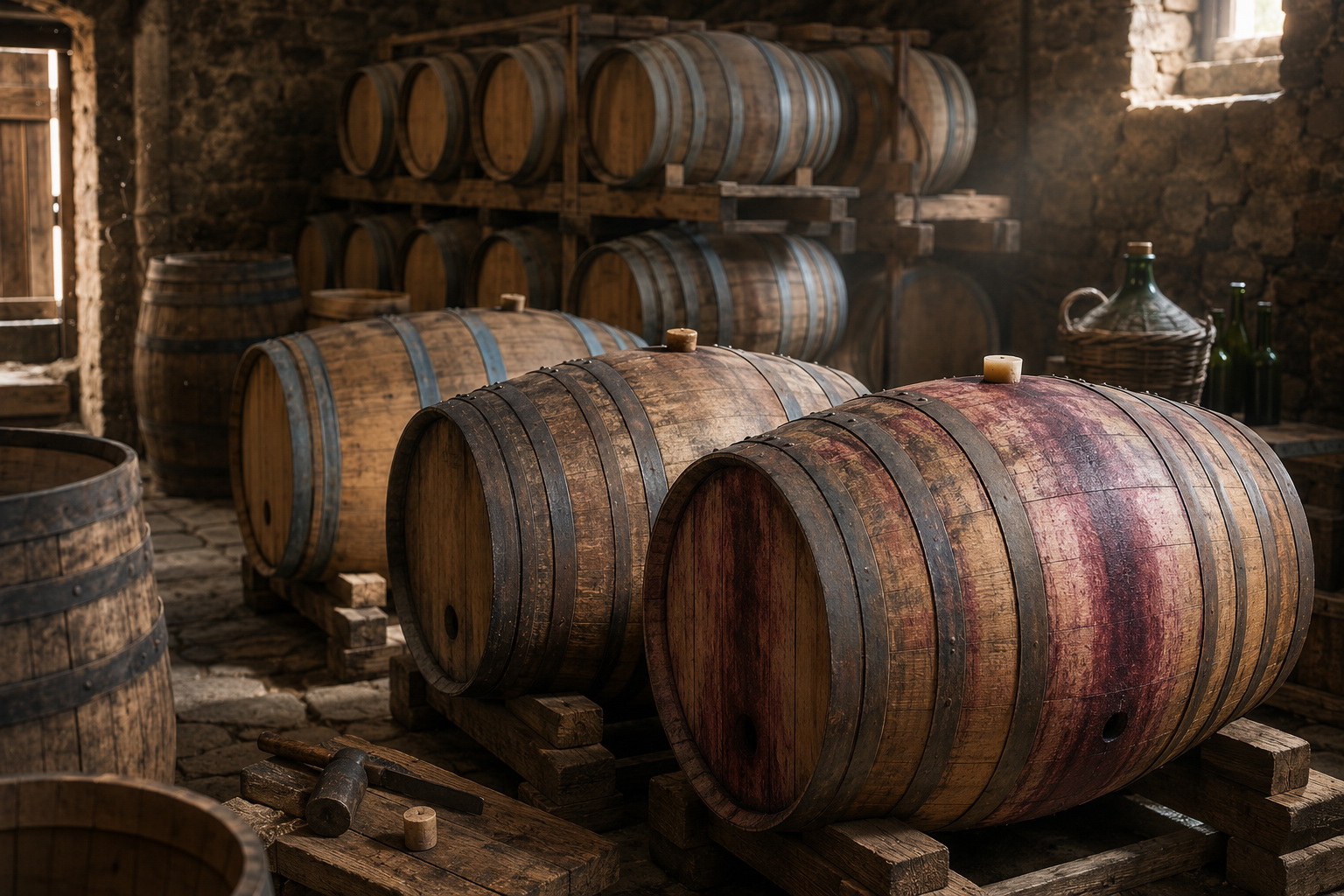
Today, labels on aged spirits often feature expressions such as Sherry Cask, Port Cask, Wine Cask, Madeira Cask, or Sauternes Cask Finish.
To the modern drinker, this sounds like a carefully designed production technique: a distiller deliberately selects a particular barrel, fills it with spirit, and uses the influence of the previous wine to shape a new aromatic profile.
Today, that is often exactly what happens.
But the tradition began in a much more practical way.
Barrels were reused first and foremost because they were expensive, durable, and far too valuable to turn into firewood after a single use.
Economics, trade, and logistics unintentionally created a practice that eventually became one of the most fascinating tools in modern spirit maturation.
Why Were Old Barrels Reused?
Even today, a well-made oak barrel is expensive.
Several centuries ago, its value was even more obvious.
A suitable tree had to be grown and harvested, the wood prepared and seasoned, the staves shaped, and the barrel assembled by a skilled cooper.
A good barrel represented a considerable amount of material and skilled labor.
Using it once and throwing it away simply made no economic sense.
After wine or another product was removed, the barrel often began a second life.
Barrels Were Part of International Trade
Before modern glass bottles, stainless steel tanks, road tankers, and shipping containers became widespread, enormous quantities of liquid goods traveled in wooden barrels.
Wine moved by sea and land from producing regions to major trading centers.
The container traveled with it.
Once the wine had been unloaded, a perfectly usable wooden barrel remained.
Sending an empty barrel hundreds or thousands of kilometers back to its place of origin was not always economically sensible.
Using it locally was often the more practical choice.
What Happened to Empty Wine Barrels?
They could be reused for other wines, beer, spirits, or various food products.
Barrels were repaired, cleaned when necessary, and filled again.
To people at the time, this was not an exotic technique known as “cask finishing.”
It was simply sensible use of valuable packaging.
But wood has a memory.
Does a Barrel Really Retain Traces of Its Previous Contents?
Yes.
Oak has a porous structure.
During prolonged contact, some of the wine penetrates into the upper layers of the staves.
Along with it, various aromatic and flavor compounds remain within the wood.
When a new spirit is later filled into the barrel, another interaction begins.
The distillate is no longer interacting with oak alone.
It is interacting with oak that already has a history.
What Can Wine Leave Behind in a Barrel?
The answer depends on the type of wine, its alcohol content, the time it spent in the cask, the oak species, and many other factors.
The wood may retain compounds associated with fruit, berries, nuts, spices, and other aromatic characteristics.
During the next fill, part of that influence may be transferred to the new spirit.
At the same time, the oak itself continues to release its own compounds.
The result is not simply oak influence, but a combination of:
distillate + oak + the history of the previous drink + time.
Why Did Sherry Casks Become So Important?
One of the best-known examples of reused wine casks comes from the historic trade in sherry.
Spanish wines were exported to Britain for centuries, where they became extremely popular.
Historically, much of this wine traveled in wooden casks.
Once the sherry was sold or bottled, empty barrels remained.
For spirit producers, these casks represented a useful resource.
Over time, it became clear that ex-sherry barrels could give distilled spirits a remarkably distinctive character.
What Flavors Can an Ex-Sherry Cask Contribute?
There is no single universal “sherry cask flavor.”
Sherry itself comes in many styles, and the history and condition of each barrel can vary considerably.
Nevertheless, maturation in ex-sherry casks is often associated with notes such as:
- dried fruit;
- raisins;
- figs;
- nuts;
- dark fruit;
- spices;
- chocolate;
- caramel and wine-like notes.
This rich aromatic potential helped make sherry casks especially desirable in the world of aged spirits.
Where Did Ex-Bourbon Barrels Come From?
The story of American barrels developed somewhat differently.
Under the legal requirements for bourbon whiskey, maturation takes place in new charred oak containers.
After a barrel has been used for bourbon, it is no longer new.
But physically, it may still be an excellent vessel for aging.
This created a huge international market for used American oak barrels.
They now receive a second life in the production of other whiskies, rum, and countless other spirits around the world.
Why Are Ex-Bourbon Barrels So Popular?
During its first use, a new American oak barrel has already released some of its most active wood compounds.
During subsequent fills, its influence often becomes gentler.
At the same time, the barrel retains part of the character created during its earlier use.
Ex-bourbon casks are often associated with notes such as:
- vanilla;
- caramel;
- coconut;
- sweet spices;
- toasted oak.
They also became a relatively available and standardized resource for distilleries in many different countries.
How Did Port and Madeira Casks Enter the Picture?
Through the same general combination of wine trade and experimentation with reused barrels.
Fortified wines have distinctive aromatic profiles, making their former casks particularly interesting for further spirit maturation.
Port casks may contribute associations with dark berries, plums, dried fruit, and sweet spices.
Madeira casks can bring nutty, fruity, caramelized, and oxidative notes.
Eventually, distillers began seeking these barrels deliberately rather than simply using whatever was available.
Why Use Barrels That Previously Held Table Wine?
The world of wine is enormously diverse.
Cabernet Sauvignon, Pinot Noir, Tempranillo, Garnacha, Sauternes, and many other styles can leave different aromatic traces within oak.
This gives the distiller a huge field for experimentation.
A cask that previously held red wine may emphasize berry and fruit characteristics.
Casks from sweet wines may contribute a very different range of aromatic associations.
But the final result is never determined by the name of the wine alone.
Is There Actually Wine Left Inside the Barrel?
After a cask is emptied, some liquid does remain within the wood.
However, the effect of reusing a cask should not be imagined as simply “mixing spirit with leftover wine.”
The process is far more complex.
The new spirit penetrates the wood and interacts with oak compounds as well as substances left behind from previous use.
At the same time, oxidation, extraction, and other maturation reactions continue.
How Is a New Barrel Different from a Used Wine Cask?
A new oak barrel usually has a very active influence.
Many readily extractable wood compounds are still present.
After the first fill, some of those compounds have already been removed.
A used barrel therefore often works more gently.
That can be an advantage.
The spirit can mature for longer without developing excessive fresh-oak intensity.
How Many Times Can One Barrel Be Used?
There is no universal number.
With each fill, the wood gradually becomes less active.
But that does not mean the barrel suddenly becomes useless after a particular number of cycles.
Its role simply changes.
A young, active cask may strongly shape aroma.
An older, more neutral cask can be valuable for long maturation when the goal is time and slow development without excessive oak extraction.
Can an Old Barrel Be Reactivated?
There are various ways to refresh the internal surface of a used cask.
For example, part of the old inner layer can be mechanically removed before the wood is subjected to heat treatment again.
This exposes deeper layers of oak.
However, a rejuvenated barrel still has its own history and does not become literally identical to a completely new cask.
What Is Cask Finishing?
Over time, distillers realized that a spirit did not necessarily need to spend its entire maturation period in one type of barrel.
It could mature for several years in one cask and then be transferred into another for the final stage.
This practice is often called cask finishing.
The purpose is usually not to completely replace the original character of the spirit, but to add another aromatic layer.
How Does Cask Finishing Work?
Imagine a spirit that has already matured for several years in oak.
Its basic profile is established.
It is then transferred, for example, into an ex-sherry cask.
During the following months, it begins interacting with a different wood history and the compounds remaining from the previous drink.
New fruity, vinous, nutty, or spicy notes may appear.
The word finish describes the idea well: it acts as a final brushstroke.
Does Cask Finishing Always Improve a Spirit?
No.
Like any production tool, finishing requires balance.
If the influence of the second cask is too weak, the difference may be barely noticeable.
If it is too strong, wine or wood character can overwhelm the distillate itself.
The best results appear when the two characters complement rather than compete with each other.
Why Can Two Casks with the Same Name Produce Different Results?
A label such as Wine Cask or even Sherry Cask does not tell the entire story.
Many other factors matter:
- the oak species;
- the age of the barrel;
- its toast or char level;
- how many times it has already been filled;
- the exact drink it held previously;
- how long the previous drink remained in contact with the wood;
- how the barrel was stored and transported;
- how long the new spirit will remain inside it.
Two barrels with the same formal description can therefore behave very differently.
Why Did Good Used Casks Become Valuable Commodities?
Once producers understood how strongly a barrel’s previous life could influence a distillate, attitudes toward used casks changed.
What had once been simply a cheaper alternative to new oak became a valuable resource in its own right.
Distilleries began searching for barrels of specific origins, working with wineries, and paying close attention to how those casks had been used before.
In some cases, the history of the barrel can now be nearly as important as the origin of the distillate itself.
How Has the Modern Approach to Barrels Changed?
Historically, producers often used whatever suitable casks were available.
Today, cask selection can form part of the recipe before maturation even begins.
A distiller may decide in advance that one batch will spend its main aging period in one type of oak and then several months in a cask that previously held a specific wine.
Different batches can be compared, blended, or matured according to complex cask programs.
The reuse of packaging has evolved into the deliberate management of aroma and flavor.
Why Can a Barrel Have Its Own Biography?
Imagine an oak tree that spent decades growing in a forest.
The timber was harvested and seasoned.
A cooper shaped it into a barrel.
Wine may have matured inside it for several years.
The barrel then traveled to another country.
A distiller filled it with spirit.
Years later, the same cask might be used again.
This means a barrel is not simply a wooden container.
It can participate in the creation of several completely different drinks over the course of decades.
Why Do Distillers Experiment with Increasingly Unusual Casks?
Once it became clear that previous contents could influence the next spirit, the possibilities expanded dramatically.
Today, producers use barrels that previously held many styles of wine, fortified wine, and other alcoholic beverages.
For craft distillers in particular, this can be especially interesting.
Small batches allow producers to compare results and explore unusual combinations.
But experimentation should always have a purpose.
An unusual cask does not automatically create an interesting spirit.
What Matters More: the Distillate or the Barrel?
That is the wrong way to frame the question.
A barrel cannot turn any distillate into an exceptional spirit.
At the same time, even a high-quality distillate can be overwhelmed by excessive or poorly judged oak influence.
The most interesting results appear when the raw material, distillation style, and cask selection work together.
A good barrel should not hide the distillate. It should continue its story.
From Economy to a Craft of Its Own
This may be the most interesting part of the history of reused barrels.
At first, the decision was purely practical:
“We have a perfectly good empty barrel. Why throw it away?”
Then came the observation:
“The spirit from this barrel tastes different.”
Today, the question is far more deliberate:
“Which exact barrel should we choose to create the character we want?”
What began as resourceful reuse gradually evolved into sophisticated maturation technology.
The History of Wine Casks in Spirit Maturation: In Short
- Wooden barrels were expensive and valuable, so they were naturally reused many times.
- Wine was transported in barrels across regions and countries for centuries.
- After wine was removed, those barrels often remained suitable for further use.
- Distillers noticed that a cask’s previous contents could affect the aroma and flavor of the next spirit.
- Ex-sherry, wine, and fortified-wine casks became especially important.
- Ex-bourbon barrels became one of the most widely reused cask types in the world.
- Over time, distilleries began deliberately sourcing barrels of specific origins.
- Cask finishing developed as a separate technique for adding a final layer of character.
- Today, the previous life of a cask is a full-fledged tool for shaping the profile of a spirit.
Conclusion
The use of wine barrels for aging spirits did not begin as a fashionable experiment.
The reason was much more practical.
A good barrel was expensive, durable, and remained valuable after transporting wine.
So it was used again.
Then people noticed that a new spirit received something from the barrel’s past.
Sherry, port, wine, bourbon, and other drinks left traces within the wood, and the next distillate transformed those traces into part of its own character.
What began as economical reuse gradually became an area of experimentation and eventually a sophisticated production technique.
Today, distillers may deliberately seek casks from specific wineries, choose the wine style, oak type, age of the barrel, and length of finishing.
Yet the underlying idea remains beautifully simple.
A good barrel has a memory. And every new spirit can add another chapter to its story.