





Gin & Tonic: History of the Cocktail and the Right Proportions
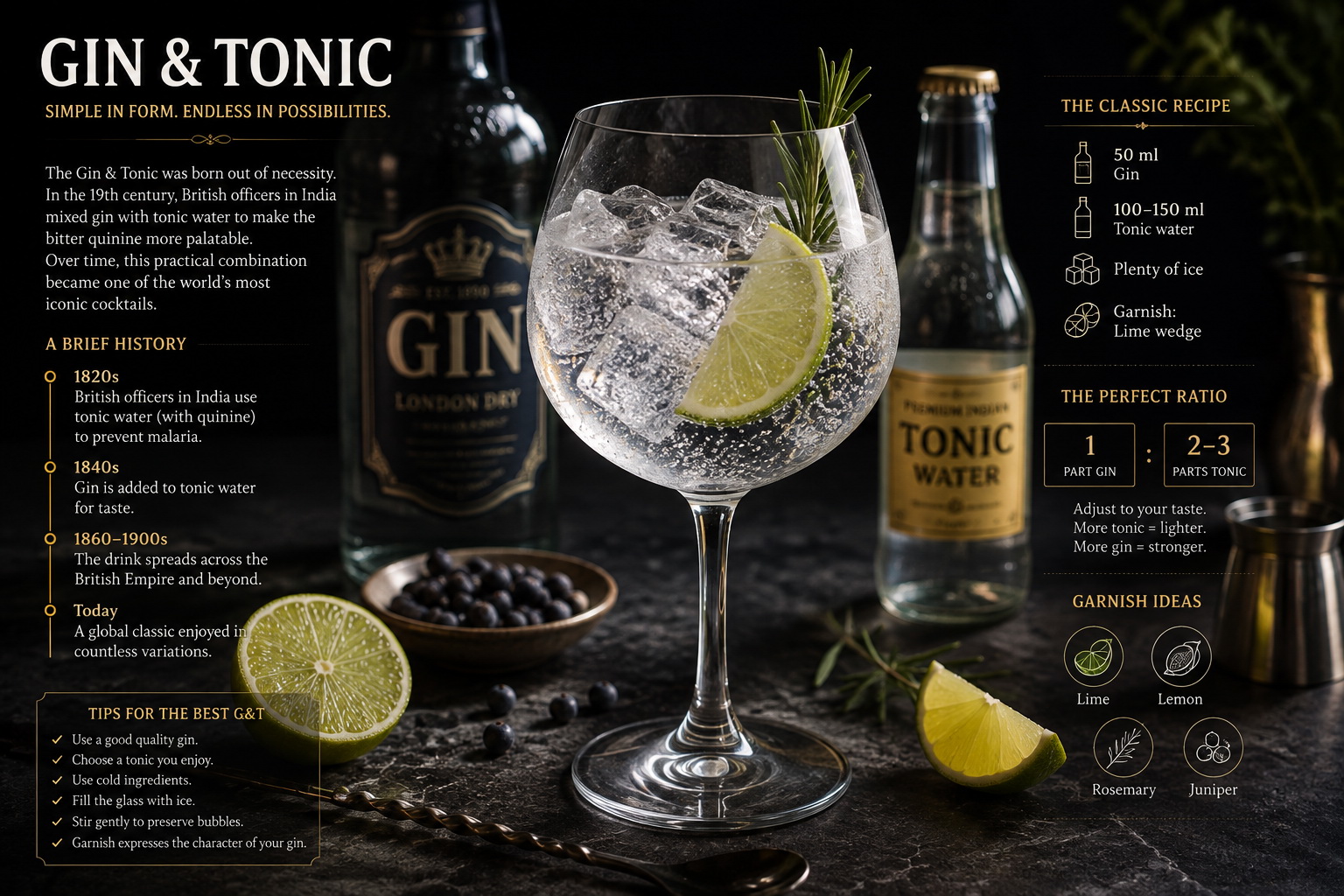
Gin & Tonic may seem like one of the simplest cocktails in the world: gin, tonic water, ice, and a garnish. Yet that simplicity makes every detail surprisingly important. The wrong tonic, too little ice, or a warm glass can noticeably change the result.
A well-made Gin & Tonic is not simply gin diluted with a carbonated mixer. It is a balance between the juniper and botanical character of the gin, the bitterness of quinine, citrus freshness, temperature, dilution, and carbonation.
Where Did the Gin & Tonic Come From?
The history of the drink is closely connected with quinine. Quinine comes from cinchona bark and became associated with tonic preparations. Because quinine has an intensely bitter taste, tonic-style drinks gradually became more pleasant and approachable when combined with other ingredients.
British gin culture and the development of commercial tonic water eventually helped transform the combination into something far beyond its original practical context. Gin & Tonic became one of the most recognizable mixed drinks in the world.
What Is the Right Gin-to-Tonic Ratio?
There is no single mandatory formula. A useful starting point is approximately 1:2 or 1:3.
- 50 ml gin;
- 100–150 ml well-chilled tonic water;
- plenty of ice;
- a suitable citrus or botanical garnish.
A delicate gin can disappear beneath too much tonic, while a powerful juniper-forward gin may remain expressive even at a longer ratio.
Why Should You Use Plenty of Ice?
It may seem counterintuitive, but a glass filled with good ice can dilute a drink more slowly than a glass containing only a few small cubes. Plenty of ice chills the drink quickly and helps keep it cold.
For this reason, it is usually better to fill the glass generously rather than trying to save ice.
Which Tonic Water Should You Choose?
Tonic should complement the gin rather than completely hide it. A relatively dry classic tonic often works well with juniper and citrus-forward gins. More aromatic or flavored tonics can also be interesting, but they should be selected with the botanical profile of the gin in mind.
A useful principle is to understand the gin first and only then decide which additional aromas the tonic should contribute.
Lemon, Lime, or Another Garnish?
Lime is a familiar choice, but it is certainly not compulsory. Lemon peel, grapefruit peel, berries, rosemary, or other botanicals can work beautifully.
The garnish should emphasize something already present in the drink rather than turn the glass into a collection of competing aromas.
How to Make a Gin & Tonic
- Chill the tonic water thoroughly.
- Fill the glass generously with large ice cubes.
- Add about 50 ml of gin.
- Gently pour in 100–150 ml of tonic water.
- Stir very lightly once or twice.
- Add a suitable garnish.
Conclusion
The secret of a good Gin & Tonic is not a complicated recipe but balance. Good gin, cold tonic, plenty of ice, and a restrained garnish allow the botanical character of the spirit to remain at the center of the drink.
The simpler the cocktail, the more important the quality of every ingredient becomes.