





Is there any quality alcohol without aging?
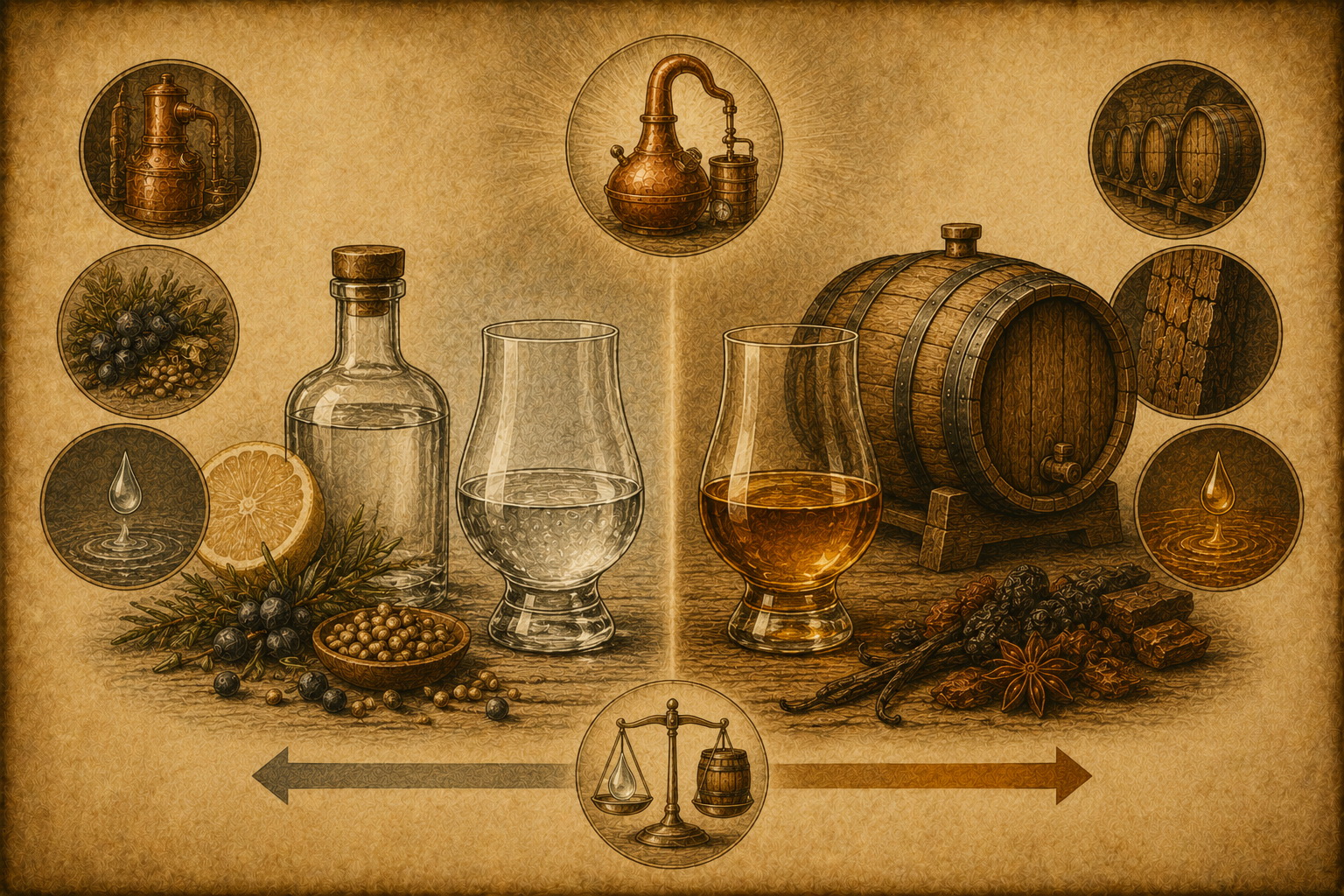
A myth that almost everyone believes
Go to any store and look at the shelves with alcohol.
On many bottles you can see familiar numbers: 5 years, 10 years, 12 years, 18 years.
They are what often attract the buyer's attention.
The thought involuntarily arises:
"If a drink has been aged for many years, then it is definitely better."
This idea has become so firmly entrenched that many people begin to evaluate any alcohol by only one criterion - whether it was in an oak barrel.
But then an interesting question arises.
Why is one of the most famous drinks in the world - gin - almost never in its classic form aged?
Why does high-quality Blanco tequila remain clear?
Why don't the best fruit eau-de-vie also spend years in oak?
The answer is very simple.
Aging does not create quality.
It only changes the character of the drink.
What does aging really mean?
Oak barrels are often spoken of as being able to turn any spirit into a masterpiece.
In fact, it is quite the opposite.
A barrel does not correct serious mistakes made during production.
If the distillate was rough, with unpleasant foreign aromas or made from poor-quality raw materials, oak can hide some of the shortcomings, but it is not able to completely eliminate them eliminate.
Experienced distillers often say:
“A good barrel won’t save a bad distillate.”
That’s why quality is born much earlier — during the selection of raw materials, fermentation, and distillation.
Why don’t some drinks last at all?
There are drinks for which the main value lies precisely in their freshness.
For example, classic London Dry Gin is created in such a way as to maximally show the aroma of juniper, citrus fruits, coriander, and other plant components.
If such a gin spent several years in an oak barrel, it would begin to add its own aromas — vanilla, caramel, wood, spices.
As a result, the drink would become completely different.
Not necessarily worse.
Simply not the gin the master intended.
Therefore, the lack of aging is not a time-saving measure, but a deliberate technological decision.
When youth is an advantage
We are used to the word “young” often sounding like a disadvantage.
But in the world of distillates, everything is much more interesting.
A young fruit distillate can impress with the bright aroma of fresh apples, plums or pears.
A young gin - with an explosion of botanical aromas.
Blanco tequila - with pure notes of agave.
All these features may partially disappear after a long aging in oak.
That is why the master sometimes deliberately refuses the barrel in order to preserve the natural character raw materials.
Which is more difficult - to make a young or aged distillate?
At first glance, it seems that aging is always more difficult.
But there is a completely different opinion among distillers.
Creating a great young distillate is often even more difficult.
The reason is simple.
There is practically nothing to hide behind.
An oak barrel can add complexity, roundness and new aromas.
And a young distillate immediately shows everything that the master has done.
Water quality.
Raw material quality.
Correct fermentation.
Precision of distillation.
Every decision is felt in the glass.
Why people still love aged drinks?
Because aging can really work wonders.
It adds new shades of aroma, softens the taste, makes the aftertaste longer and more complex.
But this is only one of the possible ways.
Just as roasting changes the taste of coffee, it does not mean that light roasting is automatically worse than dark roasting.
It all depends on what result the master wants to get.
Does the lack of aging mean cheapness?
Another common myth is that unaged alcohol is necessarily cheap to produce.
This is partly true - the producer does not need to store barrels for years, lose part of the distillate due to "angel's share" or invest in long aging.
However, this does not mean at all that creating such a drink is easy.
High-quality gin requires carefully selected botanicals.
Fruit distillates - perfectly ripe raw materials.
Honey distillates - high-quality natural honey and very careful distillation.
A mistake at any stage will remain noticeable, because an oak barrel will no longer help smooth it out.
What is more important - aging or skill?
If you ask this question to an experienced distiller, the answer will almost always be the same.
First — skill.
Then — aging.
It is the person who creates the distillate.
The barrel only helps it to open up.
Therefore, good alcohol can be both aged and completely transparent.
The main thing is that the producer clearly understands what character of the drink he wants to show.
Conclusion
High-quality alcohol can exist without aging. Moreover, for many drinks, the absence of an oak barrel is part of the idea. It allows you to preserve the freshness, natural aroma of the raw materials and the individual character of the distillate.
Aging is not a universal sign of quality, but one of the most important tools of the master. If a drink needs time in oak, it will get it. If its strength lies in purity, freshness and bright aroma, the best decision would be to leave it just like that. After all, the true value of alcohol is determined not by the number of years in the barrel, but by the skill with which it was created.